

Public history as public pedagogy
Most people think of history as a collection of dates, heroic figures, or important events worth remembering. While historians certainly study these subjects, history is far more than a chronological record of the past.
It is a systematic inquiry into human experiences and the forces that have shaped societies over time. The word history comes from the Greek historia, meaning “inquiry.” In the Western tradition, history is generally understood as the reconstruction of the human past based on written records.
In Filipino, the word kasaysayan carries a complementary meaning. Zeus Salazar defines it as a meaningful account (salaysay na may saysay) shared with a particular community. Together, these traditions remind us that history is both an evidence-based inquiry and a meaningful account of the past. Instead of just asking what happened, historians investigate why events unfolded as they did, how they affected different groups of people, and what they reveal about the societies in which they occurred. They also interrogate how the past is remembered and represented.
History can never recover the past exactly as it was because the past no longer exists in its original form. We can only approach it indirectly through memory, history, and relics. As David Lowenthal observed, each offers a distinct way of understanding the past. Memory is selective and shaped by personal experience. Relics are the material remains of earlier societies, but they cannot speak for themselves.
Likewise, historical records only become meaningful when historians ask relevant questions. History is the disciplined interpretation of surviving evidence through which we construct informed and meaningful accounts of the past. Many people conflate memory with history, even though they are fundamentally different. When someone recalls the past, for example, their experience of the Marcos regime, they are drawing on memory, not writing history. Personal memory is valuable, but it can never encompass the complexity of a society’s experience during a given historical period. Memory is only one of many sources historians use to examine the past. As Marwick argues, history should be grounded in the “widest possible range of relevant sources.”
Every historical work consists of evidence and interpretation. Horacio de la Costa, S.J. maintained that documents are not history; they are only the raw materials of history. The historical method begins with the formulation of research questions, followed by the collection and critical evaluation of primary and secondary sources, and the synthesis of evidence into historical interpretations. Because every source reflects a particular perspective, historians ask not only what it says but also how, why, and under what circumstances it was produced. A government report, newspaper clipping, political speech, or memoir may describe the same event differently depending on its author, intended audience, and the circumstances in which it was produced.
CONTINUE READING BELOW

Historians are not free from perspective or bias. But as John N. Schumacher, S.J., stressed, historians must remain vigilant against their own prejudices through reflexive scholarship and faithful adherence to the historical method. Keith Jenkins argued that historical writing is inevitably interpretive and shaped by the historian’s context. Yet interpretation is not synonymous with invention. Interpretation seeks to explain and make sense of available evidence through reasoned argument.
Historical revision, therefore, is not inherently negative. It reflects the self-correcting character of historical scholarship as historians reassess earlier conclusions in light of new evidence or fresh perspectives. It should not be confused with historical distortion, which manipulates evidence to advance vested interests, or with historical denialism, which rejects well-established historical facts.
History and journalism share a commitment to the pursuit of truth, although they differ in their objectives and immediacy. Journalists document events as they unfold, producing what is often called the “first draft of history.” Their reports, photographs, interviews, and broadcasts become valuable sources for historians, who evaluate their reliability, compare them with other evidence, and situate them within a broader historical context. In this way, historians build upon the work of journalists to produce more comprehensive, contextualized, and nuanced interpretations of the past.
My own research on the writings of Benigno “Ninoy” Aquino Jr. as a young journalist in the 1950s illustrates this point. His reports on the Korean War, extensive coverage of Southeast Asia, and columns on Asian affairs are invaluable sources for understanding Philippine foreign relations during the Cold War, particularly the country's relations with its Asian neighbors and the United States. At the same time, these writings reflect the anti-communist outlook and pro-American interventionism that shaped Philippine foreign policy during that period. Reading Ninoy’s journalism as historical evidence requires examining not only what he wrote but also the political and ideological context in which he wrote. Like historians, journalists verify evidence, corroborate information, and remain accountable to professional and ethical standards. In recent years, we have seen how online propagandists and trolls sought to undermine the credibility of both the historian and the journalist.
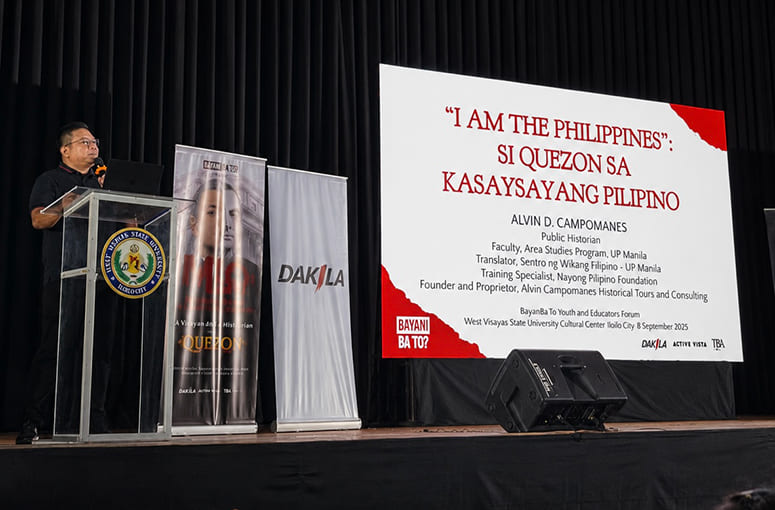
In this age of information disorder, historical literacy is more important than ever. Fake news, historical distortion, AI-generated misinformation, and politically motivated narratives shape public opinion and understandings of the past. Public historians respond by bringing rigorous historical scholarship into museums, heritage sites, communities, classrooms, and digital spaces. As a public historian, I have come to believe that historical knowledge fulfills its purpose most fully when it reaches people beyond the classroom and the archive. My work is guided by the idea of public history as public pedagogy. The task of the public historian is not simply to make history accessible but to teach people how to think historically. In doing so, public history initiatives equip citizens to evaluate evidence, question historical claims, and engage critically with the past.
Historical film literacy is one expression of this broader educational mission. As the author of the official teaching and study guides for historical films and documentaries, I encourage viewers to appreciate film not only as “creative approximations” of the past, in the words of Robert Rosenstone, but also as a starting point for historical inquiry. These teaching guides provide historical context, analyze the films’ narrative and cinematic choices, introduce readers to the historical sources behind them, and include adaptable lesson plans, discussion questions, and learning activities for educators. I have also lectured on these films throughout the Philippines, engaging educators and young people in conversations about history, heroism, and responsible citizenship. By integrating film analysis with the historical method, I seek to cultivate discerning viewers who can assess cinematic representations of the past.
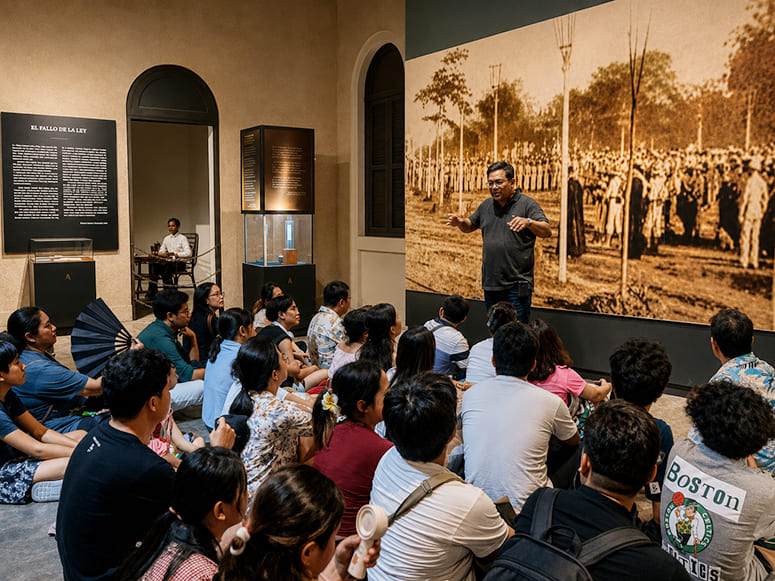
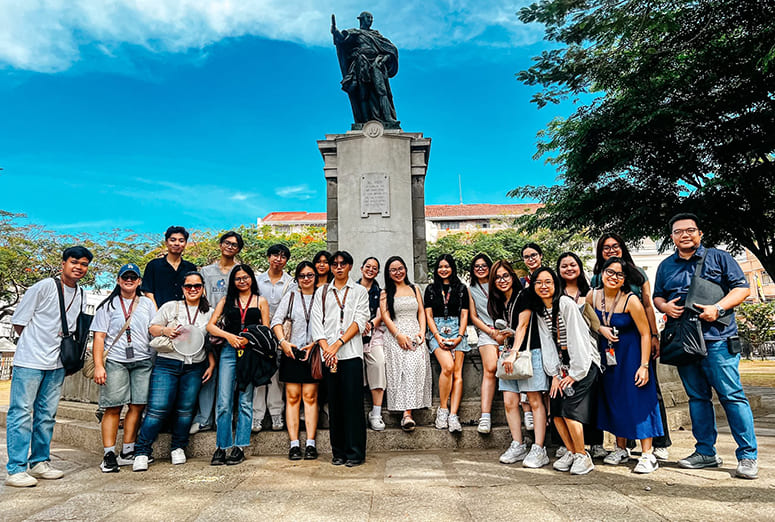
Historical tours and consulting constitute another important dimension of my public history practice. My “mobile history classes” in Manila and Iloilo combine rigorous historical research with engaging storytelling, transforming the city itself into a classroom. Monuments, streets, churches, fortifications, and museums become living classrooms where participants learn to read the historical landscape as evidence of the past. Participants are encouraged to ask historical questions, weigh competing interpretations, and explore how historians construct knowledge about the past. Students and guests alike have attested to the transformative power of learning history in the very places where history unfolded.
I have always held that historical thinking is not only for historians. These habits of mind extend beyond the study of history, fostering more informed participation in public life. When history is falsified, distorted, or erased, societies lose not only an accurate understanding of their past but also the capacity for informed public judgment. We cannot confront historical injustices if our understanding of them rests on falsehoods. A society that celebrates disinformation or forgets the past weakens its historical consciousness and, with it, the foundations of democratic citizenship. Conversely, a society that values truth and remembers its past strengthens both its collective memory and its capacity for self-understanding. Viewed in this way, history is not merely an academic discipline, but a shared public responsibility.
I conclude every historical tour with these words: “We will not love a nation that we do not know, and it is difficult to serve a nation that we do not love. Knowing, loving, and serving the nation are inseparable. Everything begins with knowing.” This conviction echoes José Rizal’s belief, expressed in his annotated edition of Sucesos de las Islas Filipinas, that only by understanding the past can we understand the present and dedicate ourselves to studying the future. In the end, the most enduring contribution of history is not that it tells us what to think about the past, but that it teaches us how to think about the world.

WATCH: Do you still believe in marriage? (Generations Ep. 17)
August 19, 2026
WATCH: Is OPM still as good as it used to be? (Generations Ep. 20)
September 9, 2026