

Discovering Xishuangbanna
I had not heard of this place until I got there. The not (yet) commonly explored Xishuangbanna Dai Autonomous Prefecture is nicknamed “China’s Mini Thailand” due to its tropical climate and dominant Dai culture—something very close to Thai culture. The Dai are several Tai-speaking ethnic groups living there and other prefectures of Yunnan Province. The Dai people form one of the 56 ethnic groups officially recognized by the People’s Republic of China.
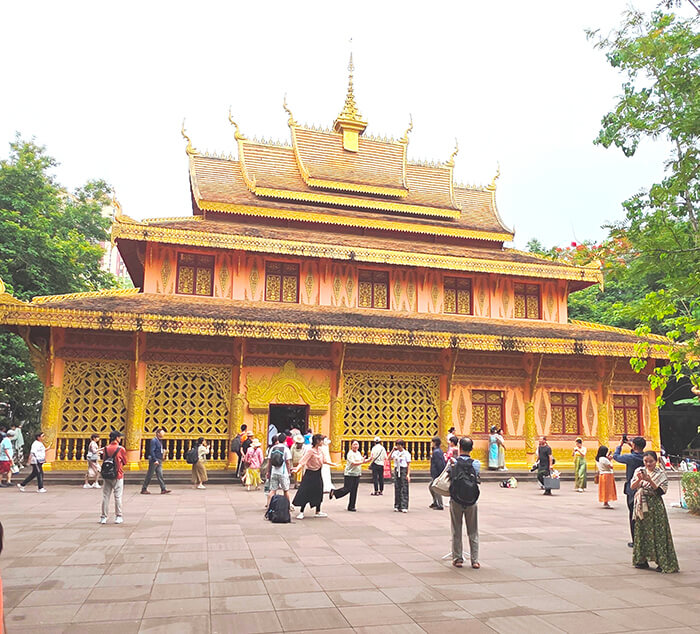
Xishuangbanna is one of the eight autonomous prefectures of Yunnan Province. This region of China is noted for the distinct culture of its ethnic groups. The people, architecture, language and culture closely resemble those of the Sahn, Dai, and Tai people, which include the Thai and Lao. The Shan, Lao, and Thai people form a majority in Laos and Thailand, and a minority in Myanmar. Even architecture and food is similar to Thai food and they even have an annual water festival like Songkran. The Dai people lived in modern Yunnan Province until the end of the Tang and Song dynasty and moved further south into modern Laos, then Thailand. Its name came from Sibsongpanna or Sip Sawng Panna, which means “12,000 rice fields” or “12 administrative regions.”
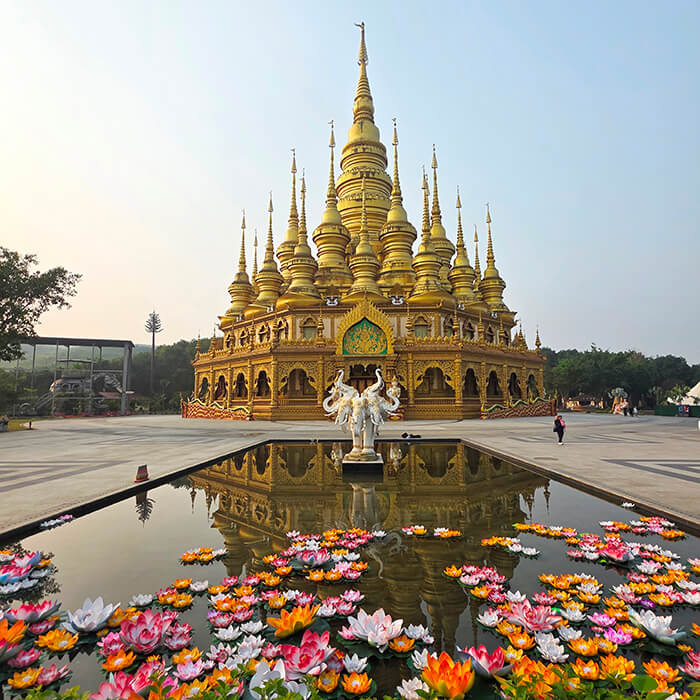
Royalty, just like in Thailand, existed then. Manting Park, also called Chunhuan Park, is the oldest garden in the Xishuangbanna area. This used to be the private imperial gardens of the King of the Dai tribe. The king’s throne is still in the premises. The picturesque gardens are huge and a popular spot for locals to pose for photos for their social media. The White Pagoda is the most popular spot for a photo with the line snaking for hundreds of meters.
Xishuangbanna is also known for its beautiful temples and pagodas. I spent a morning visiting two stunning temples. The first visit was to Mengle Buddhist Temple (Mengle Dafo Temple) in Nanlian Mountain, Jinghong. It is the largest Theravada Buddhist site in the region, rebuilt in 2007 on a 65.8-acre site, formerly a Qing dynasty royal temple. It features a massive 49-meter-tall golden Standing Buddha, traditional Dai architecture, and a golden “plum blossom” stupa layout.
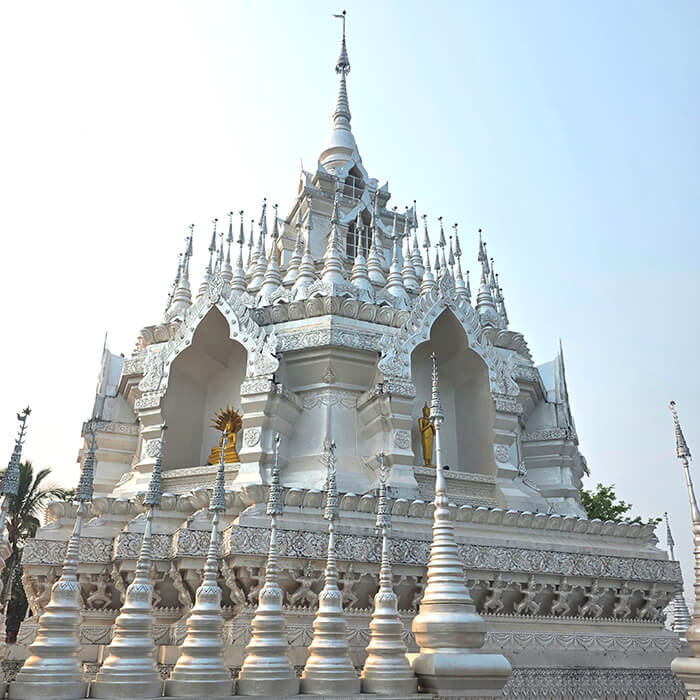
After the golden temple, I went to one of a silver color. The silver-white pagoda at the Banruo Temple or Prajna Temple is located in Jinghong City. The temple features a central towering spire surrounded by a forest of smaller pagodas. A golden Buddha statue is enshrined within the main pagoda structure. Prajna is a key concept in Buddhism and Hinduism, generally translated as “wisdom,” “insight” or “transcendental intelligence”.
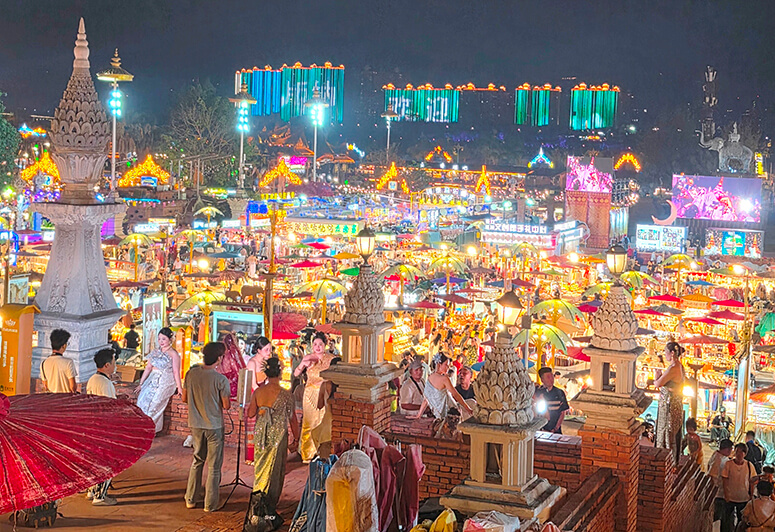
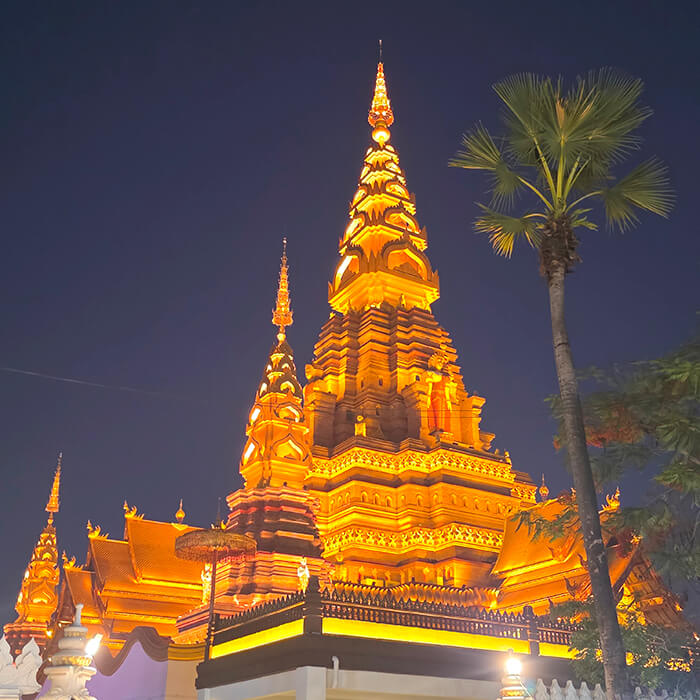
Another beautiful spot is the golden pagoda at Dajinta Temple. This is particularly interesting as it is beautifully lit at night and is the backdrop of the Gaozhuang Night Market or Xingguang Night Market. This huge night market is one of the newer and key attractions in the tourist resort area of Gaozhuang Xishuang. It mainly consists of food stalls offering a variety of snacks and unique handmade crafts. It is cleaner and more organized than the Riverside Night Market. The stalls are run by both local residents and people from across the country, selling crafts, ethnic clothing, jewelry and other items. The market opens in the afternoon and closes a little after midnight.
CONTINUE READING BELOW

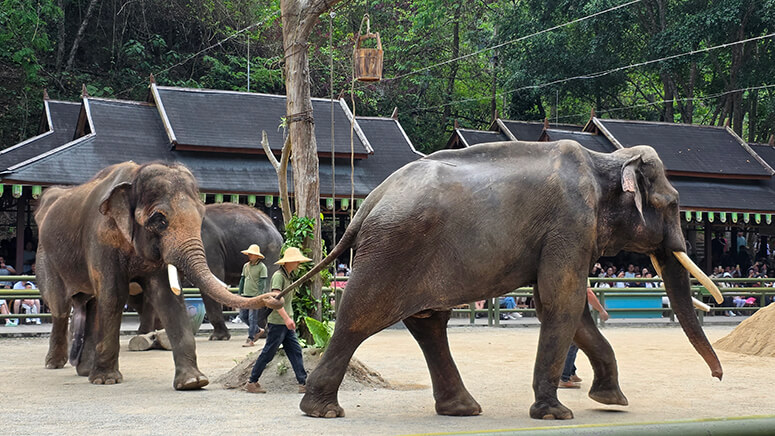
Animals are also an attraction in this city. A visit to the Wild Elephant Valley is an entertaining way to spend the day watching and feeding cute elephants. It is a nature reserve dedicated to protecting China’s 130–150 wild Asian elephants, which are smaller than the African elephant. The male elephants’ tusks are smaller as well.
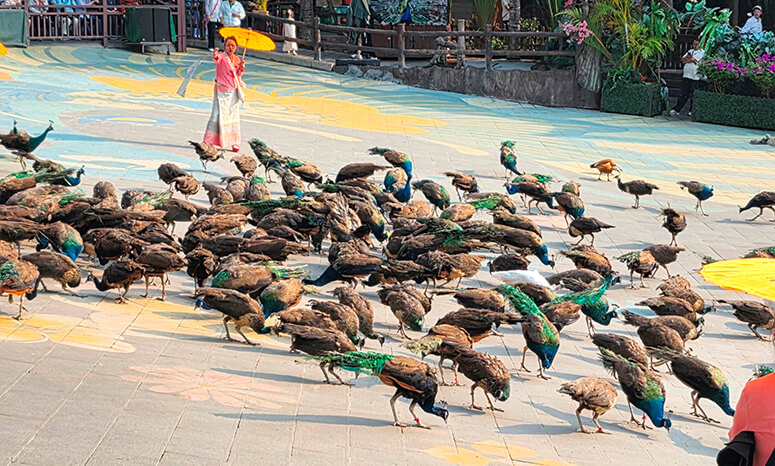
I think peacocks are some of the most beautiful birds in the world and I’ve seen them up close… but never in the hundreds! We got to see an ostentation of peacocks at close range at the Xishuangbanna Virgin Forest Park (Primeval Forest Park). They have a peacock show where literally hundreds of peacocks fly from their nests to the stage for feeding time! Once they fly back after eating, hundreds more walk on stage, so visitors can have photos with them and feed them.
The Forest park has monkeys as well and is a tropical attraction featuring intense biodiversity in the forest, Peacock Park, and a rich Dai ethnic culture.
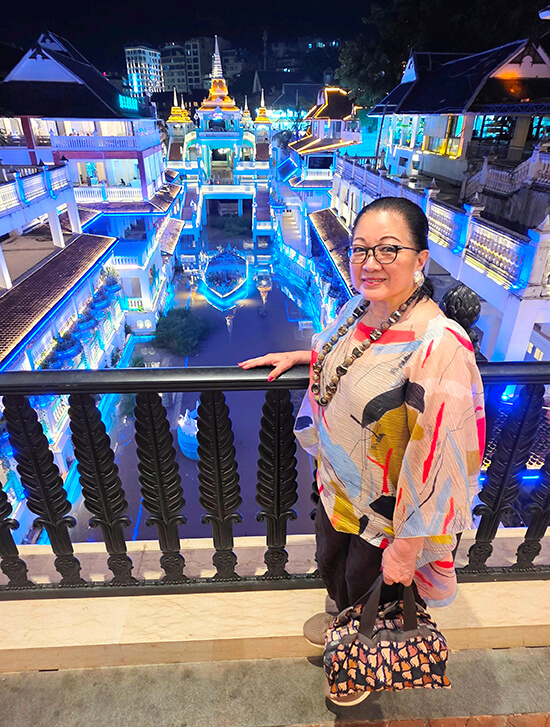
Xishuangbanna felt like a cross between China and Thailand. It was a good experience considering I like to travel to both countries.

WATCH: Discovering Vietnam in three days
June 9, 2026
WATCH: Can you still trust someone who betrayed you? (Generations Ep. 22)
September 23, 2026