

What made the Philippine Booth the most visited in Turin?
The Philippines captured global attention at Terra Madre Salone del Gusto 2026 by showcasing a celebration of the nation’s food biodiversity, rich cultural heritage, indigenous food traditions, and pioneering Slow Food initiatives. Visitors at the Philippine booth experienced the unique flavors and communities that make the archipelago one of the world’s most remarkable food destinations.
Led by Slow Food Philippines—with Slow Food Negros at the forefront and supported by the Department of Tourism—the Philippine delegation presented the country’s diverse culinary landscapes and sustainability efforts.
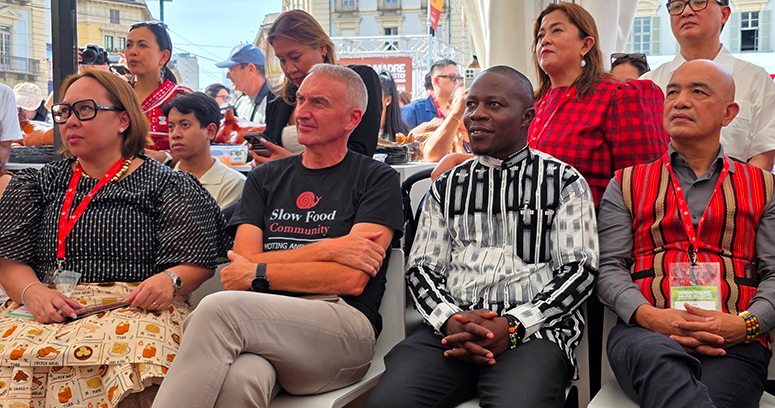
A major highlight at the booth was its promotion of products listed in the Slow Food Ark of Taste, which is the international catalog that identifies and safeguards culturally significant foods at risk of extinction. Visitors learned about the communities working to preserve native crops, traditional ingredients, artisanal production methods, and culinary practices that form an irreplaceable part of the nation’s heritage. They also highlighted the invaluable role of Indigenous Peoples as guardians of biodiversity and custodians of traditional ecological knowledge.
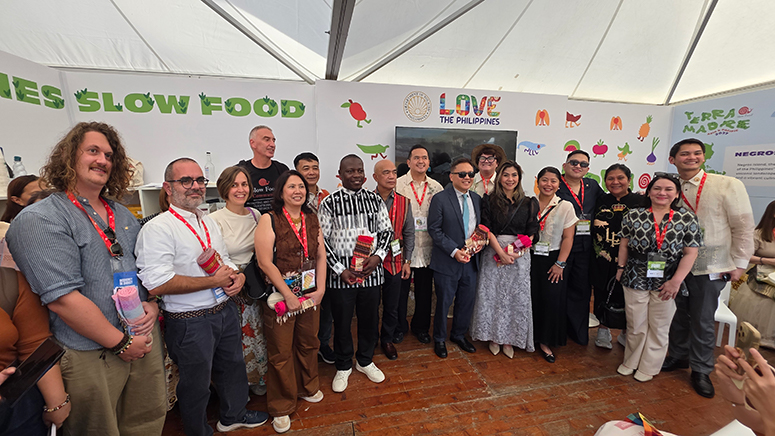
A proud moment for the Philippines came during the Terra Madre gathering when Rowena Gonnay of Slow Food Pasil received the prestigious Byung Hoo Kim Award from Slow Food International. The award recognized her inspiring leadership in protecting heirloom Unoy rice, preserving indigenous food traditions, and safeguarding biodiversity in the Cordillera region. Presented during the first plenary assembly of Slow Food advocates worldwide, the recognition marked a historic milestone for both the Philippines and the global Slow Food movement. Sadly, she was not present at the awarding because she was not granted a visa.
CONTINUE READING BELOW

The Philippine participation in Turin promoted Terra Madre Asia and Pacific 2027 (TMAP 2027), which will take place from July 28 to Aug. 1, 2027 in Bacolod City, Negros Occidental. This was announced during a special program on the opening day of Terra Madre Salone del Gusto 2026. The invitation to TMAP 2027 at the Slow Food International Hub for Asia and the Pacific generated strong interest among delegates eager to experience our country’s rich food heritage and growing leadership in the global Slow Food movement.
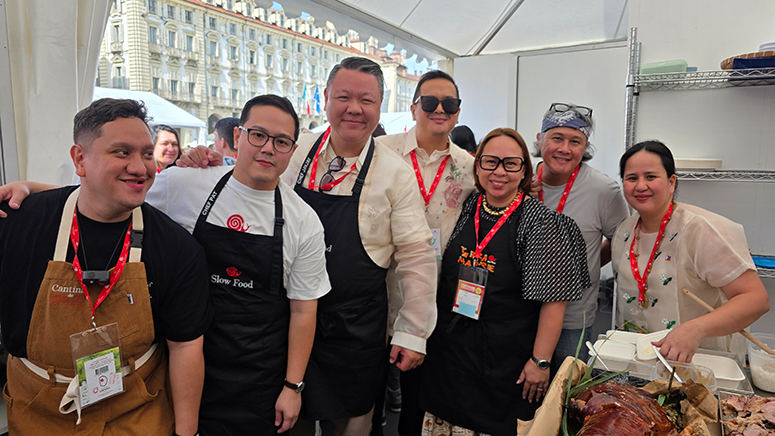
During the Slow Food International Plenary Assembly, delegates from around the world elected Ramon “Chin Chin” Uy, Jr. of the Philippines to the board of directors of Slow Food International, marking a significant achievement for both the country and the wider Asia-Pacific region. Together with the re-election of Slow Food International president Edie Mukiibi and the formation of a new international leadership team, Chin Chin’s appointment strengthens the voice of the Asia-Pacific region in shaping the future direction of the global movement.
Aside from the opening ceremony, day one at the Philippine booth was “Salo Salo.” It was like a fiesta in the center of Turin as the classic lechon made by the Slow Food Philippine Kitchen in Italy was served. This was followed by Dedet dela Fuente’s three types of lechon stuffed with different ingredients to represent Luzon, Visayas, and Mindanao. Rhea Sycip prepared Pansit Pusit and Jay Jay Sycip made Quezon Hardinera, a meatloaf originating from Lucban.
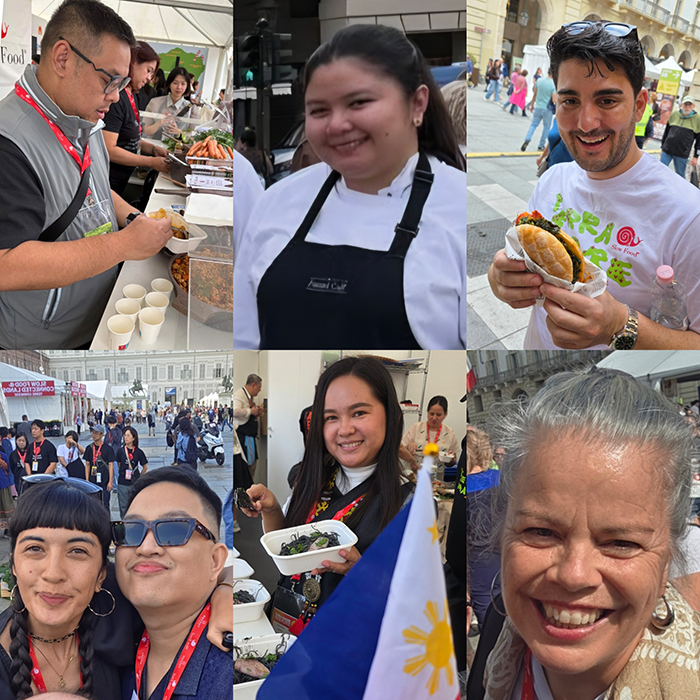
The second day highlighted Luzon. Crowds gathered for breakfast (focused on Cavite) to try Rhea’s Tinapang Salinas, Jay Jay’s Longsilog (Imus longganisa, sinangag, itlog), Cavite Carioca (picadillo or giniling), and Renissa Marfil’s Pan de Sal at Kesilyo (Cavite white cheese).
Lunch centered on Laguna and featured Gel Salonga Datu’s Kinulob na Itik Flakes, and Shy Hernandez’s Kesong Puti (Laguna white cheese) and Jay Jay's Kalderetang Manok sa Gata. Merienda (afternoon snack) featured Rhea’s Palapad, Pansit Hipon, and Ube Halaya, Christ Mark Bergonio’s Stingless Bee Honey, the Kaong Pie of Jun Hernandez (known as Cavite’s “Kaong King”) and Gel’s Minanok (shredded banana heart is used to mimic shredded chicken meat) and Sans Rival Bites. Dinner saw Constantine Poblete prepare Tres Marias and Bacalao while Jay Jay made Adobo and Donatello Montrone made Adobo Pasta (using Jay Jay’s adobo). Dino Datu made kulawo, or charred eggplant in coconut milk.
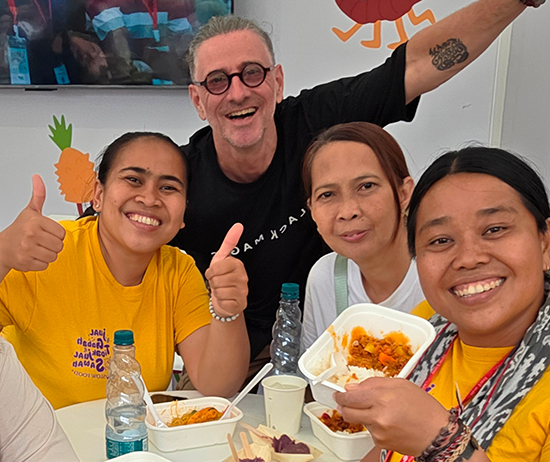
The third day was Visayas Day, where the kitchen was headed by Chef Patrick Go, supported by Sweetie Juezan Cañedo, Maryfe Villanueva, Harold Ortiz Buenvenida, Catherine Taleon, Ben Francia, and Nichole Susvilla. The menu featured a vibrant mix of culinary specialties from Western Visayas, the Negros Island Region, and Cebu which included Budbud Kabog (millet seed rice cake), Puto Maya (sticky rice cooked in coconut milk and ginger), Lukot Kinilaw (ceviche featuring sea hare secretions), Sinuglaw (grilled pork belly and fish ceviche), Balbacua (slow-cooked beef skin and trotter stew), Humba (braised sweet pork belly), Bam-i (Cebuano stir-fried mung bean and egg noodles), Pancit Canton (stir-fried wheat noodles), Lechon Paksiw (stewed leftover roasted pork in liver sauce), Chicken Inasal (Visayan grilled chicken), Tinuguib Arroz Caldo (savory rice porridge made with heirloom corn/rice), Pancit Molo (Iloilo-style pork dumpling soup), and more!
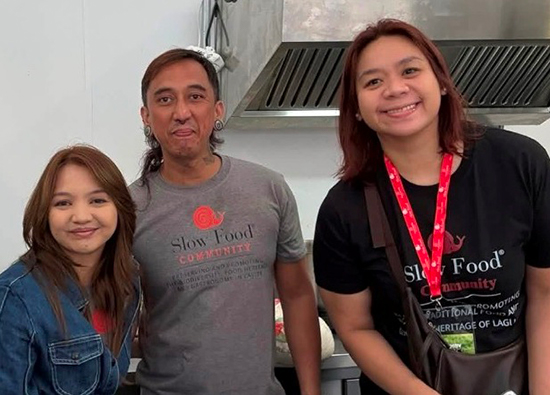
The fourth and last day was Mindanao Day, with the kitchen team consisting of Jay Jay, Rhea, Nichole, and Harold again, plus Rae Macapagal, Cons Poblete, Sweetie Juezan Cañedo, Ben Francia, and Maryfe Villanueva. Binignit / Tabiràk / Dinuldog (a pan-Philippine sweet soup made with sticky rice balls, root crops, bananas, and sago) was on the menu, but the version served at the booth featured Tapol Pilit (purple glutinous rice) and Landang (native buri palm starch) sourced from South Cotabato. Also served was Humba Bisaya, a sweet, savory stew made of pork belly. While it originated in Cebu, it is also widely cooked in Northern Mindanao cities like Butuan. The specific iteration served at the booth was uniquely flavored with the dried leaves of Cinnamomum Mindanaense, an endemic cinnamon species native to Mindanao. A big hit was Piyanggang a Manuk—a rich chicken stew utilizing burnt coconut paste, ginger, onion, turmeric, and lemongrass. This traditional Tausug dish from Southwestern Mindanao stood out to guests because of its distinctively deep, smoky flavor profile.
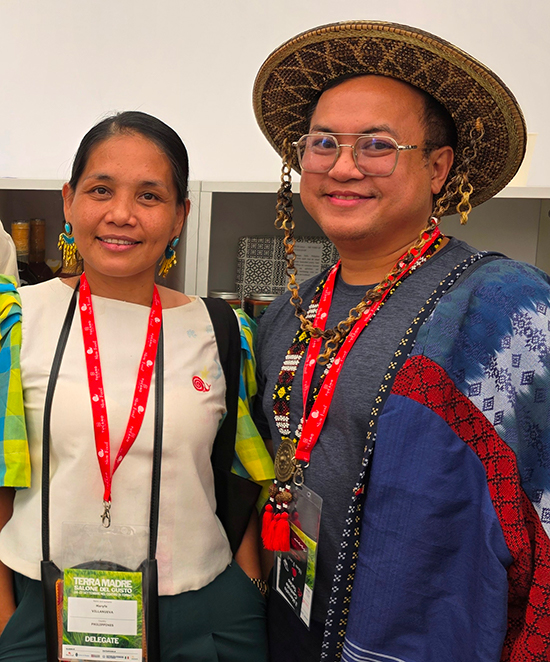
The booth also featured a Slow Drinks Bar serving premium coffee varieties from Negros Occidental and Kalinga. Through the generous sponsorship of Destileria Limtuaco, guests sampled locally flavored craft spirits, such as calamansi liqueur. Destileria Barako also sponsored the bar, showcasing their internationally acclaimed Ube Cream Liqueur. Additionally, craft cocktails utilizing indigenous Tapuy (rice wine) and Lambanog (coconut arrack) were mixed on-site. Every drink was highly appreciated and thoroughly enjoyed by the public visiting the Philippine booth. The bar was one of the last to close at the end of the four-day food event.
See you again, Turin, in 2027! The Slow Food journey continues in the Philippines. See you in Bacolod next year!

WATCH: Discovering Vietnam in three days
June 9, 2026
WATCH: LGBTQIA+ people with unlikely professions
June 28, 2026