

Tasting Hong Kong’s comeback
Hong Kong, it seems, has decided it is done being patient.
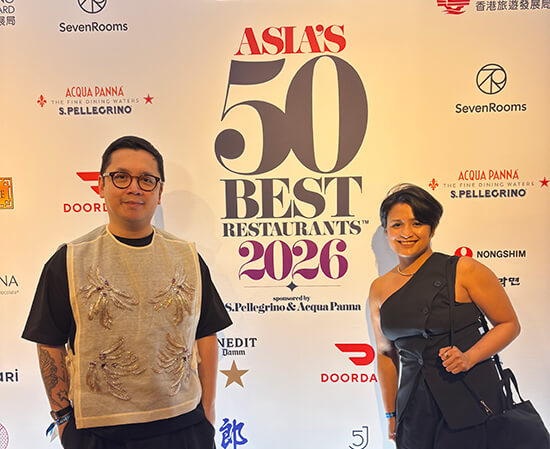
Last week, under the glittering lights and relentless flashbulbs of the Asia’s 50 Best Restaurants 2026 awards—the first time the event has been held in the city since the list began in 2013—the territory reclaimed its swagger as Asia’s culinary capital. More than a thousand chefs, restaurateurs and media flew in, turning the ceremony into something larger than a ranking: a referendum on where Asian dining is now, and where it’s headed. And this year, the message was clear. Asia is no longer cooking for approval. It is cooking for itself.
Asia’s 50 Best has always resisted definition. The list is compiled from the votes of an “academy” of more than 350 anonymous diners, chefs and industry insiders, each choosing their best restaurant experiences over a set period. There are no criteria to tick off, no applications to submit, no inspectors in disguise. That looseness is precisely the point. It captures not just technical excellence, but excitement—what people are talking about, traveling for, returning to. In contrast to the Michelin Guide’s rigor and consistency, Asia’s 50 Best is mood, movement, and momentum—a snapshot of what feels alive.
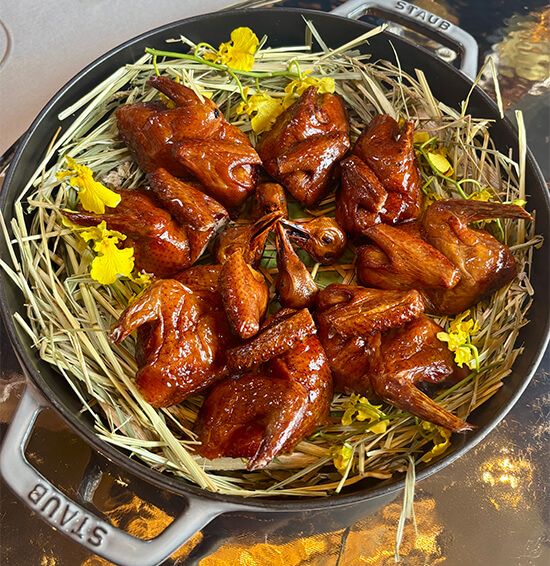
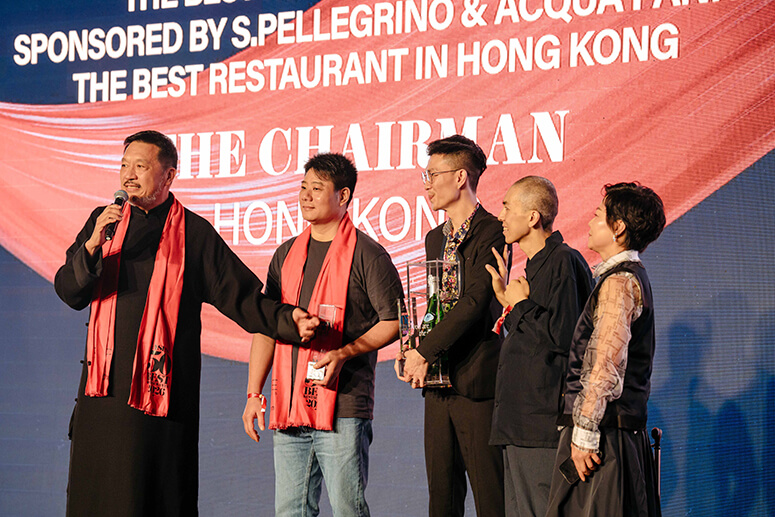
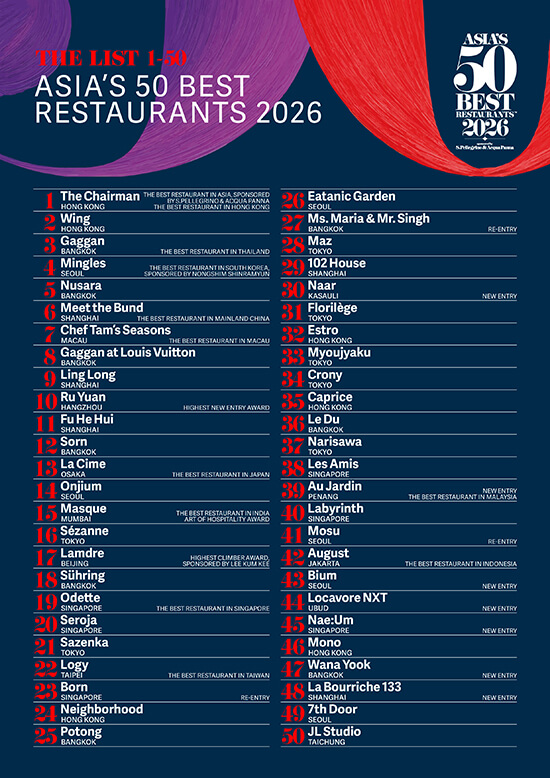
This year, Hong Kong didn’t just host—it dominated. Danny Yip’s The Chairman took the top spot for the second time, with Vicky Cheng’s Wing close behind at No. 2, both located in the same Central building, a detail almost too perfect to script. Six Hong Kong restaurants made the Top 50, and 10 appeared across the extended list, reaffirming the city’s role as a crossroads where Cantonese tradition, global technique and restless ambition meet.
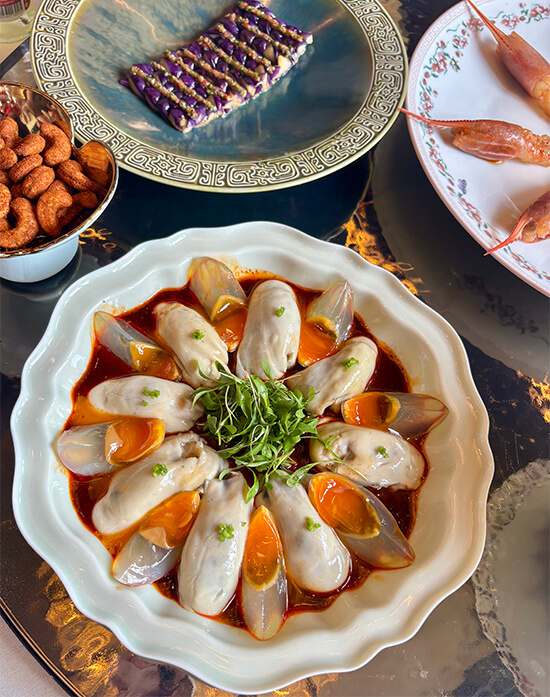
Behind it all is a deliberate push: the Hong Kong Tourism Board has been steadily rebuilding the city’s image as a culinary destination, using events like this as both showcase and invitation. The message, repeated in speeches and in the sheer density of talent in the room, is that Hong Kong is not just back—it never really left.
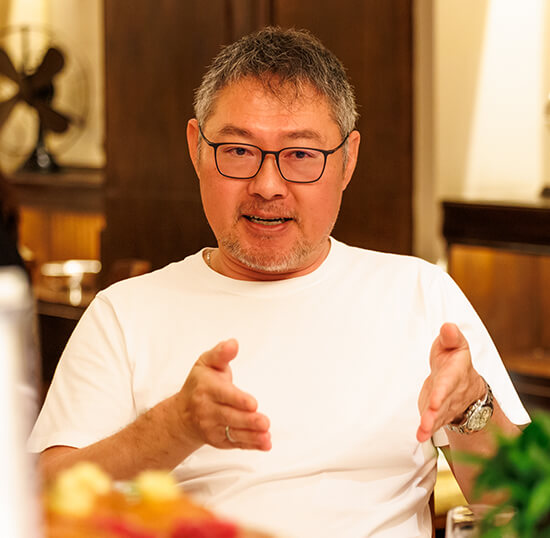
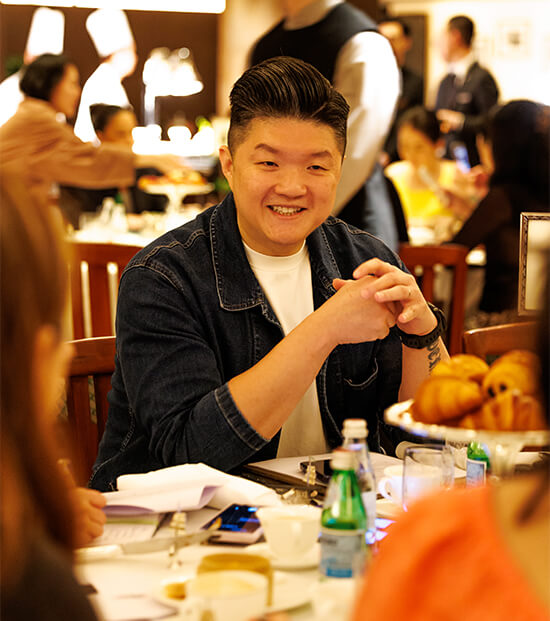
Among those representing the city is David Lai of Neighborhood, ranked No. 24, a chef who has quietly evolved into one of Hong Kong’s most distinct voices precisely because he refuses to be boxed in. Trained in French kitchens and once comfortable calling his food “bistro,” Lai now shrugs off labels altogether.
CONTINUE READING BELOW

At an intimate media roundtable at the Peninsula Hong Kong, Lai spoke about the freedom of no longer having to define what he does, of going to the market, seeing what’s good, and cooking according to mood and instinct. The shift, he explained, allowed him to stop worrying about whether a dish “fit” and instead focus on whether it felt right. Food, for him, has become a language—one that communicates emotion as much as technique. If diners can taste that, if they feel something of the person behind the plate, then the job is done.
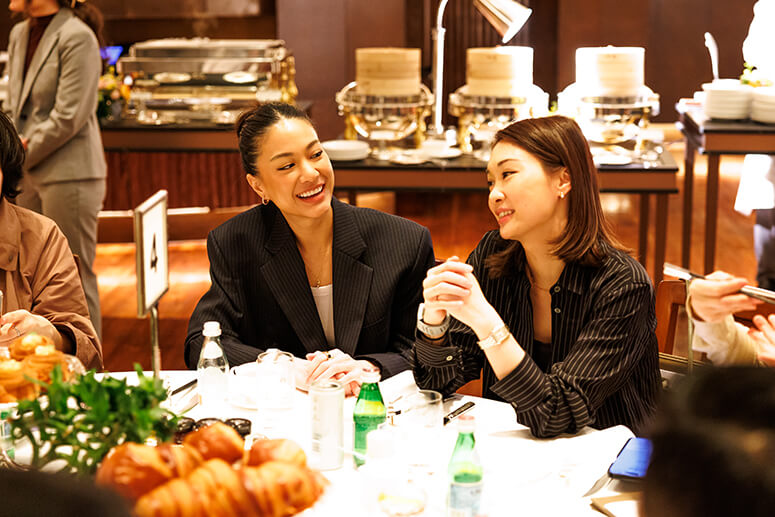
That idea—of cooking as personal expression rather than adherence to a canon—echoed across the region. In Bangkok, sisters Chudaree “Tam” Debhakam and Pantila “Toey” Debhakam of Baan Tepa (No. 53) are building a restaurant that is as much about research as it is about service.

Their work begins with travel: to hill tribes in the north, to fishing villages in the south, to small farming communities whose knowledge rarely makes it into fine dining. What they bring back is not just ingredients but understanding. Tam, Asia’s Best Female Chef 2025, is clear about the line they walk. They are not reproducing traditional dishes; they are translating what they learn. The end result, she admits, may look nothing like its source, but it remains rooted in it.
Running the restaurant as sisters adds another layer. “There is only one boss,” Tam joked, before both broke into laughter. The dynamic, they explained, works because they keep work and personal life separate—even if they live together. One leads the kitchen, the other shapes the broader experience, and between them is a shared sense of purpose that feels less like hierarchy and more like continuity.
Their restaurant, set in their grandmother’s former home, carries that sense of inheritance forward. It is also where they practice what has become one of the most urgent conversations in dining: sustainability not as a slogan, but as a system (their efforts were recognized at this year’s list with the Sustainable Restaurant Award). Their choice to invite the very communities they work with to dine at Baan Tepa—showing them how their knowledge has been interpreted—speaks to a kind of reciprocity that goes beyond sourcing.
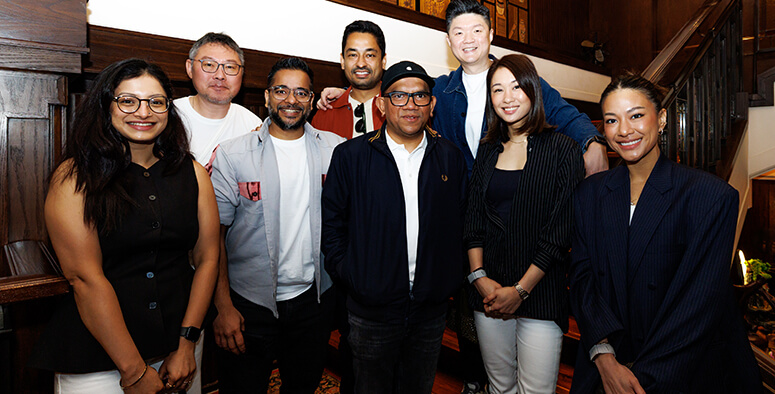
If Baan Tepa looks inward, Papa’s in Mumbai looks both inward and outward at once. Ranked No. 66, it is perhaps one of the most charmingly subversive restaurants on the list: a 12-seat counter hidden in the attic above a sandwich shop. To get there, diners pass through Veronica’s, the bustling downstairs operation that serves hundreds of customers a day. It is, as the team readily admits, a practical arrangement. The sandwich shop keeps the lights on; the intimate tasting menu upstairs is free to be something else entirely. The comparison to “The Bear” is unavoidable—and accurate.
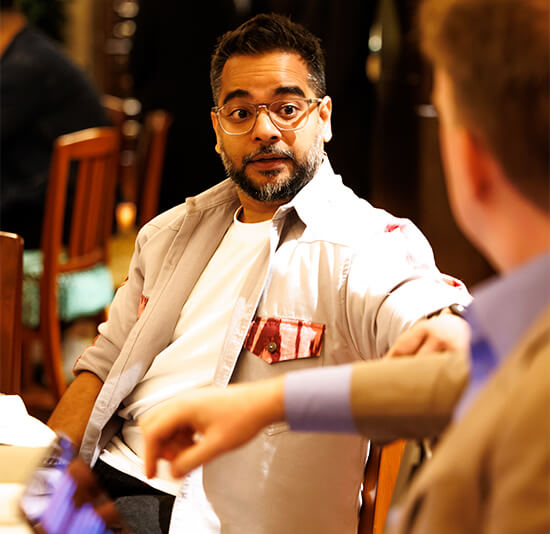
Chef Hussain Shahzad describes Papa’s not as a restaurant but as a dinner party, a format that allows the team to control every detail, from pacing to storytelling. In that small space, Indian cuisine is reinterpreted not through the lens of Western validation but through its own logic.
Shahzad spoke candidly about how, in the past, there was a tendency to “Frenchify” Indian food, to make it legible to an external audience. That impulse, he believes, is fading. What replaces it is confidence—an understanding that the cuisine, in all its regional diversity and depth, does not need translation so much as articulation. The diners, increasingly well-traveled and curious, are ready for it.
Elsewhere, the challenge is not confidence but context. At JL Studio in Taichung (No. 50), Singaporean chef Jimmy Lim is engaged in a different kind of translation: how to express Singaporean flavors to an audience that did not grow up with them. Early on, he pushed for authenticity—full spice, full intensity—but found that the message was getting lost. “If I can’t get the message across,” he said, “it’s bad communication.”
The solution was not to dilute but to recalibrate, to step back in order to move forward. A laksa without coconut, using pine nuts instead, becomes not a compromise but a bridge—an entry point into a flavor profile that might otherwise overwhelm. Over time, as diners become more familiar, he inches the intensity back up. It is a slow negotiation between memory and reception, between staying true and being understood.
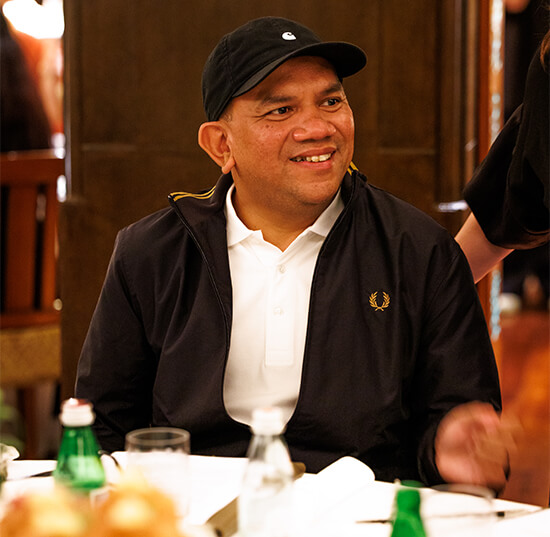
In Bali, at Locavore NXT (No. 44), the negotiation is with something even more fundamental: the cost of doing things differently. Chef Ray Adriansyah and his Dutch chef partner Eelke Plasmeijer have built what is effectively a closed-loop system, where nearly all waste is recycled and ingredients are sourced hyper-locally, often at great logistical expense. A whole lamb brought in from another island can cost twice as much as imported cuts. Proteins are purchased whole, requiring the kitchen to use every part. It is, by any conventional metric, inefficient. And profitability remains an open question. Adriansyah is candid about it. They have not yet found the balance.
But what they have found is purpose. Sustainability, he insists, is no longer a challenge but a baseline—a way of working that shapes not just operations but creativity. Constraints force innovation. Cooking becomes less about assembling luxury ingredients and more about understanding systems, cycles, and responsibility. It is harder, certainly. But it is also, in his words, more interesting.
Threaded through all these conversations is a quieter but equally significant shift: the culture of the kitchen itself. The recent controversies surrounding high-profile restaurants like Noma hovered in the background, prompting reflection rather than defensiveness. Lai spoke of accountability as a natural consequence of visibility, comparing it to broader societal movements. Tam acknowledged the intensity of kitchen environments but emphasized the need to focus on how the industry evolves from here. Across the board, there was an understanding that while pressure is inherent to the craft, violence and humiliation are not.
That shift is particularly important for women in the industry. Both Tam and Toey noted that while kitchens remain male-dominated, the landscape is changing. More young women are entering, more are staying, and the possibility of leadership feels more attainable than it once did. The hours are still long, the demands still high, but the space for self-expression—once limited—is opening up.
For the Philippines, the story this year is one of presence and potential. Toyo Eatery, which previously ranked No. 42, returned on the extended list at No. 71, joined by Celera, debuting at No. 100. It is a quieter showing, but not without significance. Filipino cuisine has been steadily gaining ground, its narratives becoming clearer, its champions more visible. The trajectory suggests not a plateau, but a build.
Taken together, the voices in Hong Kong last week formed a kind of chorus—diverse in tone, but aligned in direction. There is less anxiety now about fitting into a global framework, less need to justify technique or flavor. Instead, there is a focus on clarity: of identity, of intent, of responsibility. Whether it is Lai cooking without labels, the Debhakam sisters tracing flavor back to its roots, Shahzad reclaiming the narrative of Indian cuisine, Lim adjusting his language to be understood, or Adriansyah rethinking the very mechanics of a restaurant, the movement is the same.
Asia is not just participating in the global conversation on food. It is redefining it, one kitchen at a time.

WATCH: Can we talk about death and grief? (Generations Ep. 25)
October 14, 2026
WATCH: Can you still trust someone who betrayed you? (Generations Ep. 22)
September 23, 2026