A K-drama ‘hanok’ experience
After years of binge-watching K-dramas with my wife, I was excited to stay in a hanok during a short family visit to Seoul for BTS events, including the launch of their latest album Arirang on March 20 and their comeback concert the following day. Scenes of quiet courtyards, sliding wooden doors, and characters gazing wistfully into the distance flashed in my head.
Our hanok, called Sihwadang, did not disappoint. In fact, it exceeded every K-drama-fueled expectation I entertained.
But first, what exactly is a hanok?
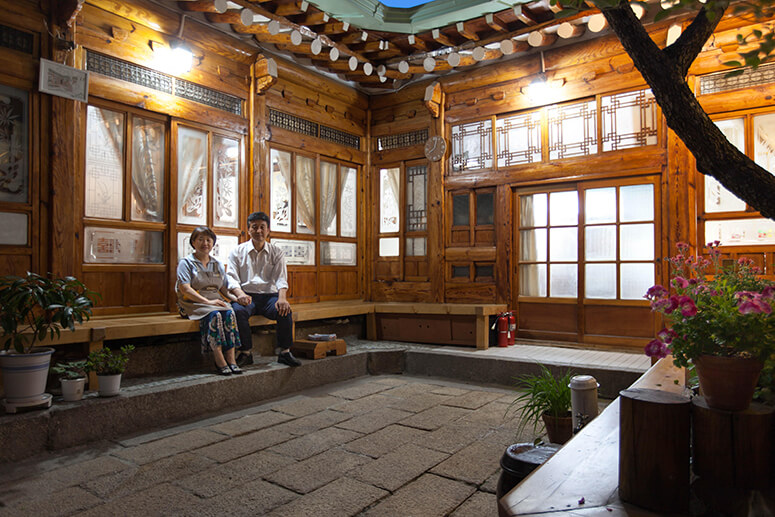
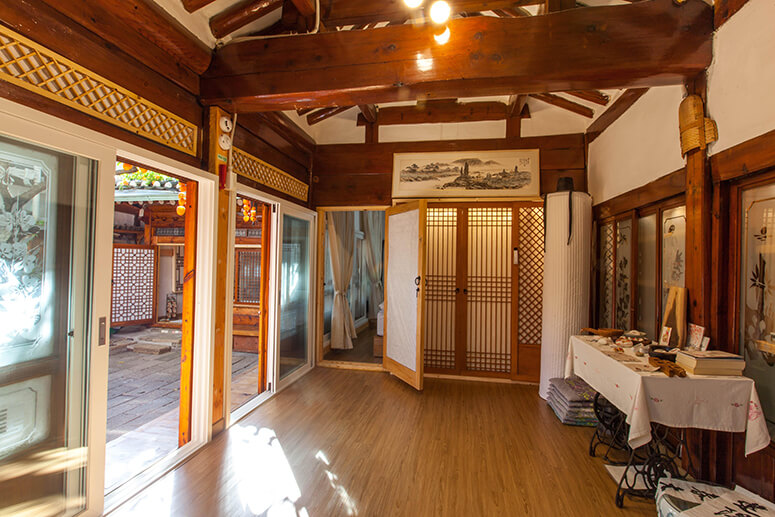
A hanok is a traditional Korean house designed in harmony with nature, using natural materials like wood, stone and paper. Its layout typically centers around an open courtyard, with ondol (underfloor heating) to survive the winter and daecheong (wide wooden floors) to catch summer breezes, as well as wide eaves that respond to Korea’s distinct seasons.
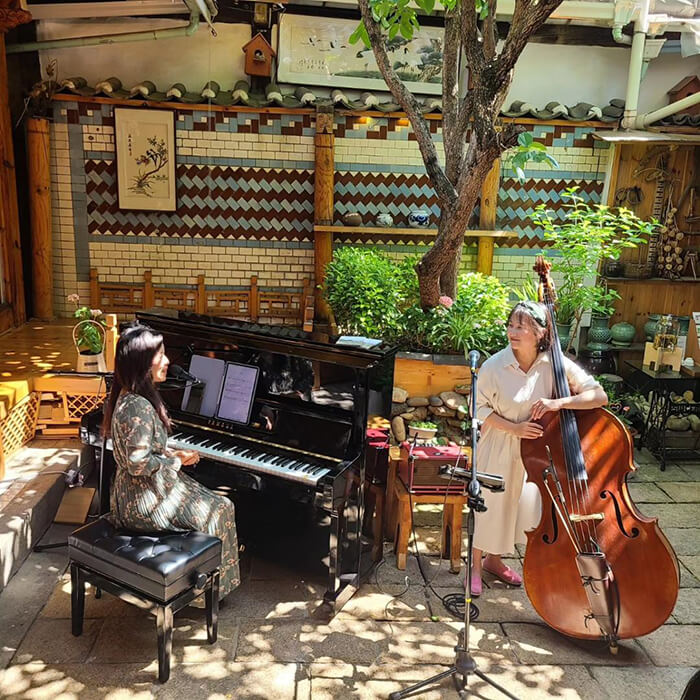
Today, many hanoks have been preserved or thoughtfully restored. Sihwadang is a perfect example of this evolution. Built during the 1960s, when Seoul was rapidly modernizing and people were flocking to the city, it reflects a transitional period in Korean architecture. It captures that sweet spot where traditional elegance meets modern enhancements such as CCTVs, enough lighting to put on a mini show in the garden (which has been done in Sihwadang), and bathrooms with water heaters and—for toilet-paper-averse Pinoys—bidets!
At its heart stands a persimmon tree, quietly anchoring the space with seasonal character. In fact, the name of the place is dedicated to this centerpiece: Sihwadang—Persimmon Flower House.
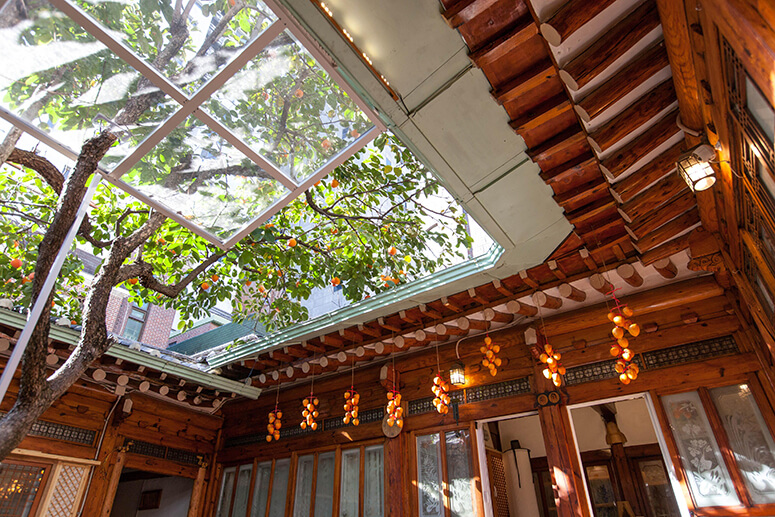
Our host, the affable Shin Jungok, whose English name is Hana and whose English teacher happens to be a Filipina, bought the property seven years ago as an investment. It is, in fact, her second hanok. The first she purchased for her husband; after selling it, she found this one and instantly fell in love with it, primarily because of the persimmon tree, whose blossoms fill the garden in autumn. She now manages Sihwadang herself, earning a well-deserved “superhost” badge on Airbnb.
Running a hanok, she admits, is no simple matter. Strict regulations make registration and preservation a challenge; yet, perhaps that is precisely why staying in one feels so special.
As neither Hana nor her husband stays in the hanok, the entire house is for guests to call their own for the duration of their visit: the yard, the bedrooms (two large ones, one small, and another one in the attic, which conjures images from a horror flick), a kitchen and pantry. It is a self-contained world, private and complete.
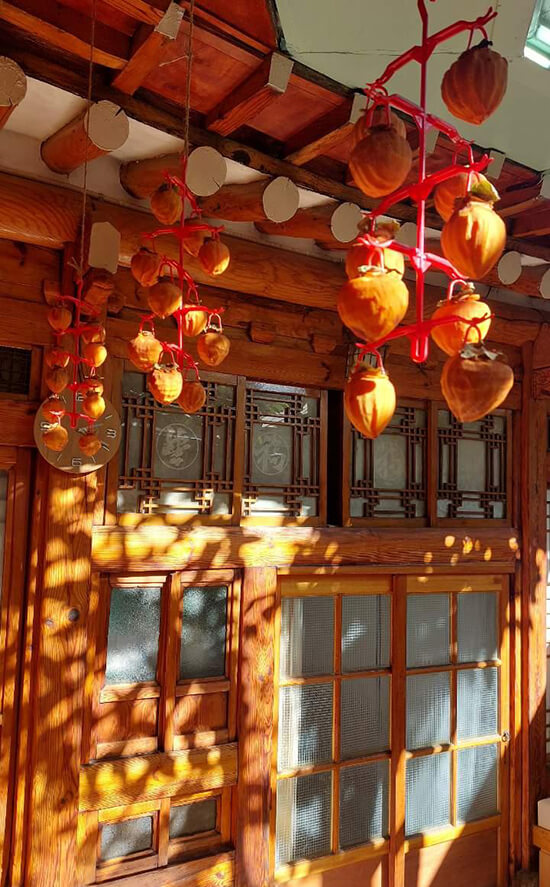
Hana suggests enjoying “a morning coffee on the soft leaf-covered floor, basking in the morning sun and allowing yourself to immerse in thought.” In theory, it’s a lovely idea, but in practice, if you’re there like we were during Seoul’s chilly spring, it felt more like a test of resilience. Still, I can imagine how magical it must be in autumn, when the air turns crisp and the persimmon tree bears fruit. Hana shared that she harvested around 120 persimmons last season, many of which she hanged to dry, offering them to lucky guests.
Step outside the hanok, however, and the mood shifts instantly.
The location is a study in contrasts. The surrounding district feels remarkably like a Korean version of Binondo or Divisoria—I imagine the days when these areas were dominated by guilds. Amid a smattering of quaint restaurants and 24-hour convenience stores like 7-Eleven, Nice to CU and GS25 lies a maze of workshops and stores teeming with leather, textiles, and accessories, mirroring Tabora and Ilaya streets which I used to patronize during my college side-hustling days. There are even shops that offer DIY leather card holders.
On weekends, the area transforms into something even more dynamic. Seoul Pungmul Market (Seoul Folk Flea Market) spills out into the surrounding streets. Immediately outside our hanok doors, you’ll find everything from vintage trinkets to—and I kid you not—the literal kitchen sink. It’s chaotic, colorful, and oddly efficient; somehow, vehicles still manage to squeeze through the narrow lanes as if participating in an unspoken choreography. And if you happen to need to go, there are numerous public toilets in the shopping heaven beside the stream.
I’m talking about Cheonggyecheon, one of the greatest miracles of modern city planning and a striking example of urban renewal. Once buried beneath concrete and an elevated highway, the stream was restored in the early 2000s into a serene, walkable waterway that cuts through the city. Today, it offers a refreshing contrast to Seoul’s density, a place where locals and visitors alike can stroll, unwind, and momentarily forget they are in one of Asia’s busiest capitals. Having been used as a backdrop in K-dramas, it’s also highly Instagrammable.
For foodies, there are treasures lurking in the alleyways that offer baedaengi (herring), makchang (intestines or isaw) and gamjatang (pork back or neck bones stew)—which, lucky for me, are some of my favorite Korean foods.
From there, the city unfolds effortlessly. Within walking distance or a short ride, you can explore Gwangjang Market (formerly Dongdaemun Market), and the futuristic Dongdaemun Design Plaza, often referred to as DDP, and famously known as “UFO” or “Silver Bean.”
Yet for all the activity outside, the true magic of Sihwadang reveals itself the moment you return. Hana describes it best: “It feels like a city outside, but the moment you walk through the gate, it’s like you’re in your mother’s house... you’ll feel quiet and cozy.” Unless, of course, your mother is like one of those notorious antagonists in K-drama you have no intention of seeing for the rest of your life.
But it’s true. Once you enter Sihwadang, you leave the noise of the world behind and enter a quiet, magical place where the only thing on the agenda is peace. And maybe some dried persimmon if you enter at the right time.
***
Hanok Sihwadang is located at (03115) 36-6, Nangye-ro 27-Gil, Jongno-gu, Seoul. For bookings, you may contact shinjo6767@naver.com, tel. no. +82 10 5208 3295.