

Dining table just for 12, with a Japanese chef
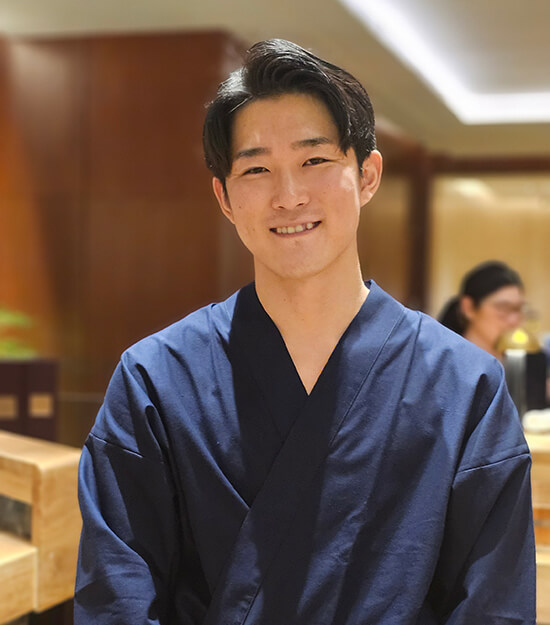
The Omakase features fresh seafood flown in from Tokyo’s Toyosu Market and Edomae sushi, traditional-style hand-pressed nigiri by chef Yuki Anzai.
Edome historically started as fast-food culture served by street vendors. Due to the lack of proper refrigeration in the 1820s, it was common for vendors to use preservation techniques such as simmering, curing, marinating, or pickling. Chef Yuki brings these practices to the table as he gives you front-hand experience of what Edome omakase can offer.
Chef Yuki Anzai, a formally trained Japanese sushi chef, started as an apprentice at Sushi Masa in Higashimurayama, Tokyo, when he was only 15 years old. Later on he settled in Santa Barbara, California for six to seven years as a sushi chef at Edomasa Japanese Restaurant. Only 31 years of age, chef Yuki has refined his skills and the art of sushi across Japan, the United States, and Southeast Asia.
We were able to take a sneak eat of a few of his creations during the media launch. The first course was snow crab, topped with seared scallop and uni. This was served with tosazu or reduced Japanese vinegar, bonito dashi, soy sauce, and mirin and made into a jelly for a sweet, sour, salty flavor combination. We were also able to try two kinds of white fish, amadai or tile fish, which has a subtle sweet flavor enhanced with a brush of soy and shima aji or striped jack, which was light, buttery and had very tender flesh. We then moved on to a more fatty sushi which is the otoro, or the fattiest cut from the underbelly of the tuna. In between the final sushi, we were served a chawan mushi with crab and kinmedai or splendid alfosino and ended with the hotate or scallop nigiri. Though it might look quite ordinary, the scallop was wet-cured then dry aged for two to three days to have a more concentrated taste. It was finished with a few drops of freshly squeezed lemon juice, salt and, of course, wasabi to balance everything.
CONTINUE READING BELOW

To finish the meal, we were served three desserts, fresh melon to cleanse the palate, followed by a miso crème brûlée and ended on a sweet note with a black sesame macaron.
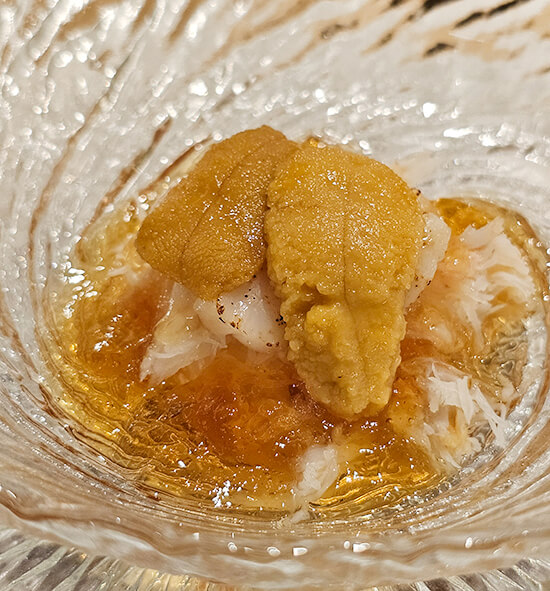
Snow crab, seared scallop, uni and tosazu or a jelly made from reduced Japanese vinegar, bonito dashi, soy sauce and mirin. Photo from Grand Hyatt Manila
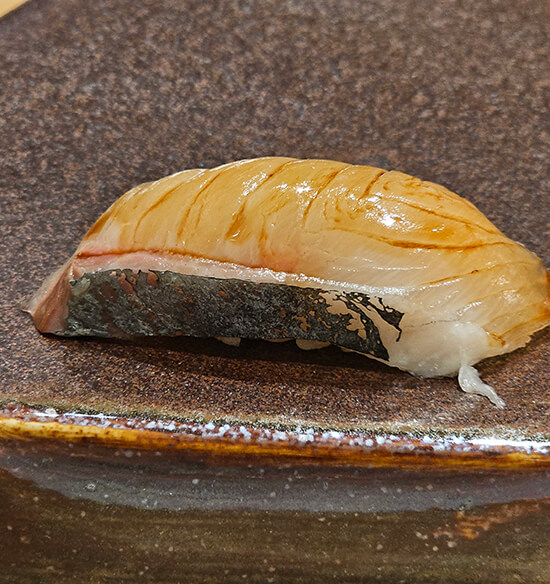
Shima aji or striped jack, which was light, buttery and had very tender flesh. Photo from Grand Hyatt Manila
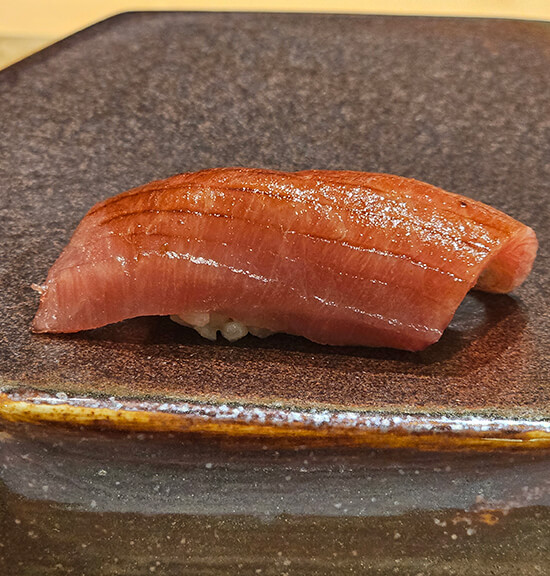
Otoro, the fattiest cut from the underbelly of the tuna. Photo from Grand Hyatt Manila
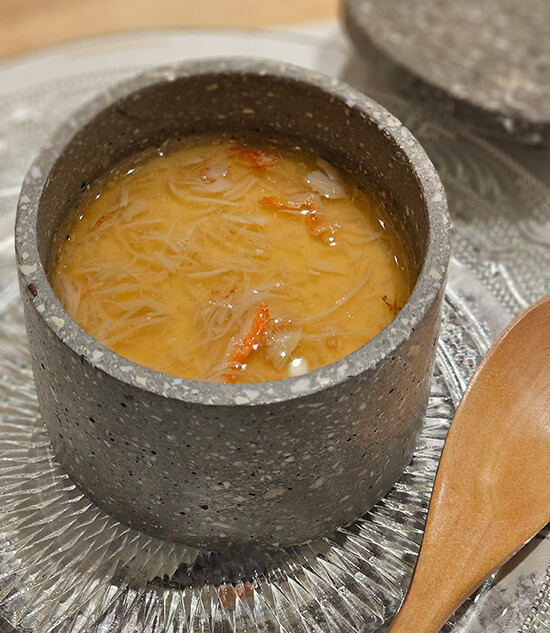
Warm chawan mushi with crab and kinmedai or splendid alfosino. Photo from Grand Hyatt Manila
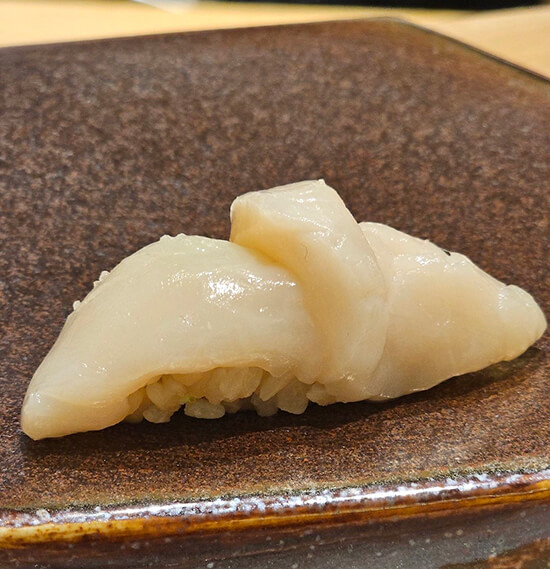
Hotate or scallop nigiri — wet cured then dry aged for two to three days finished with a few drops of freshly squeezed lemon juice, salt and wasabi. Photo from Grand Hyatt Manila
Snow crab, seared scallop, uni and tosazu or a jelly made from reduced Japanese vinegar, bonito dashi, soy sauce and mirin. Photo from Grand Hyatt Manila
Shima aji or striped jack, which was light, buttery and had very tender flesh. Photo from Grand Hyatt Manila
Otoro, the fattiest cut from the underbelly of the tuna. Photo from Grand Hyatt Manila
Warm chawan mushi with crab and kinmedai or splendid alfosino. Photo from Grand Hyatt Manila
Hotate or scallop nigiri — wet cured then dry aged for two to three days finished with a few drops of freshly squeezed lemon juice, salt and wasabi. Photo from Grand Hyatt Manila
CLOSE
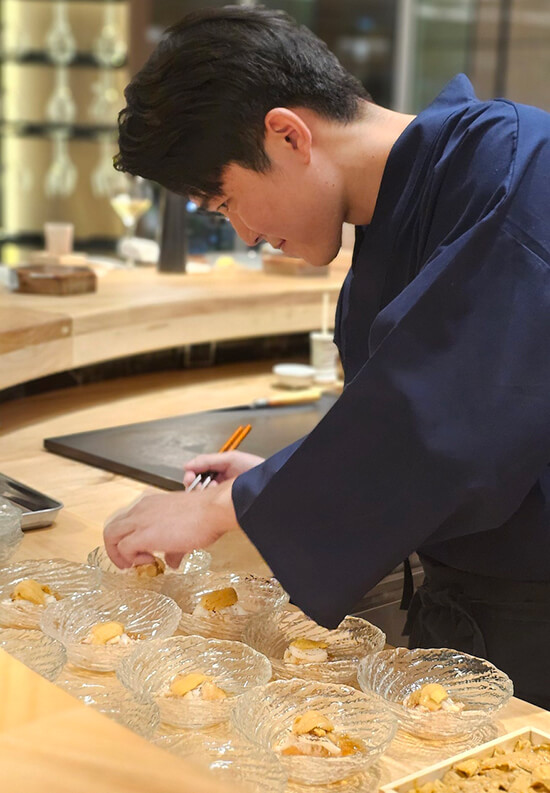
Every course is prepared at the sushi counter, where diners may witness the knife work and technique behind each piece as well as converse and interact with chef Yuki and his team. The menu will depend on the availability of the fresh ingredients and, of course, the chef’s choice being true to an omakase experience. A light seven-course omakase is priced at P5,800 nett and for the full experience, a 10-course omakase at P7,800. This will run from Wednesdays to Saturdays at 6 p.m. and 8:30 p.m., a total of only 24 covers per evening.
***
The Round Bar is located at The Lounge on the second floor of Grand Hyatt Manila, 8th Ave cor 35th St, Bonifacio Global City. For inquiries and reservations you may call 0288381234 or 0279181234 and email manila.grand@hyatt.com.

WATCH: Discovering Vietnam in three days
June 9, 2026
WATCH: Pixar Summer Fest adventure at Hong Kong Disneyland
August 10, 2026
WATCH: Why is it so hard to make friends? (Generations Ep. 26)
October 21, 2026