

The allure of the bitter cold
I remember the flight descending into Harbin like a dream that only turned into reality when the wheels kissed the frozen earth. I flew China Eastern from Manila via Shanghai, but in my mind I was on the Trans-Siberian Express, crossing 9,000 kilometers of terrain that collapses time and geography into one long act of movement. That journey led me to a city where winter is not a season but a language spoken through breath, posture, and endurance. I came to Harbin to feel what it means to exist inside the cold and to understand why people willingly travel to places that bite the skin with frost.
Harbin, the so-called Ice City, recorded more than 90 million tourist visits during the 2024–2025 winter season, generating over 137 billion yuan in revenue. International arrivals surged by nearly 95 percent as Russians, Japanese, Koreans, and travelers from ASEAN countries arrived in search of ice and snow. Harbin Ice and Snow World alone drew a record-breaking 3.56 million visits, numbers that would feel abstract if you were not standing there, eyelashes crusted with frost, surrounded by visitors who had come precisely for that discomfort.
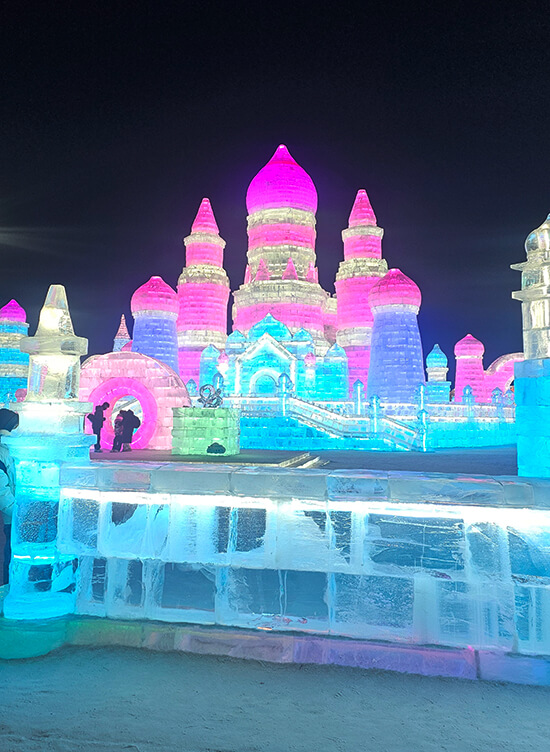
I kept asking myself what it means for a city to thrive in the bitter cold when most of the world gravitates toward warmth. While tourists generally prefer sunny beaches and temperatures above 25 degrees Celsius, here they arrived in droves to frozen rivers, white fields, and mountains buried under snow. Outside the gates of the Ice and Snow World, I felt exhilarated and unsettled at the same time. Snow lay in thick, silent layers, amplifying every sound inside the body. On the day the temperature dipped 30 degrees below zero, I thought of a question I once joked about with former senator Nikki Coseteng, who organized this trip. What if the Philippines were like this instead of a tropical paradise? With more than 17 million Filipinos living in poverty, according to official Philippine Statistics Authority figures, survival would demand a different relationship between citizens and the state. Extreme cold leaves no room for neglect. It forces accountability, infrastructure, and collective responsibility.
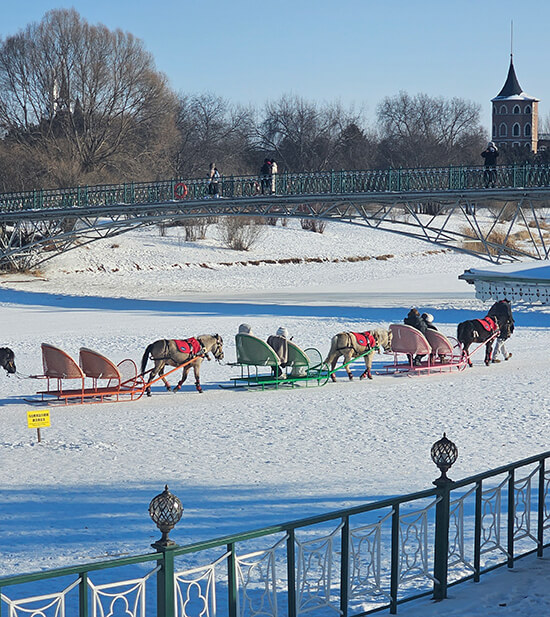
I walked through Harbin’s Russian-influenced boulevards, the onion domes of Saint Sophia Cathedral cutting into the gray sky. The city’s proximity to the Russian border gives it a character unlike any other in China, shaped by overlapping histories and hard climates. Each breath felt sharp, almost abrasive, like swallowing shards of glass. Five hours away, in China Snow Town, nestled between Zhangguangcai Mountain and Laoye Mountain in the city of Hailin, snow erased edges and turned everything it touched into a fairy tale. Roofs bloomed with snow mushrooms. Lakeshores carried delicate balances of white. Yet every step in that winter wonderland whispered a challenge to my tropical soul.
Winter travel is about feeling the cold, not watching it. Younger travelers, particularly Gen Z, are increasingly drawn to seasons they never knew, curious about climates that require preparation rather than ease. Some come for skiing or snowboarding. Others arrive for festivals and ice artistry. I noticed how people in Snow Town paused mid-step to watch snowflakes fall, not to document them, but to witness something fleeting. Each flake felt like nature’s tour de force, shaped by conditions beyond control.
That sense of vulnerability became literal when our bus stalled somewhere between Snow Town and a late lunch in the middle of nowhere. We walked the remaining hundred meters, laughing, swearing, revisiting an old college game. Would you rather be stranded in a desert heatwave or in a frozen landscape like this? I chose the desert without hesitation. Snow infiltrates everything. It presses through fabric and skin until the body no longer feels like its own. We choose our climates the way we choose the kinds of limits we are willing to test.
CONTINUE READING BELOW

It demands layers that constrict you, boots heavy as lead, gloves that make even small movements difficult. Yet people are drawn to places where frost gathers on eyelashes and warmth comes only from shared meals and shared laughter. No one comes to Harbin to be comfortable. They come to feel the cold assert itself, to experience nature as something that does not yield.
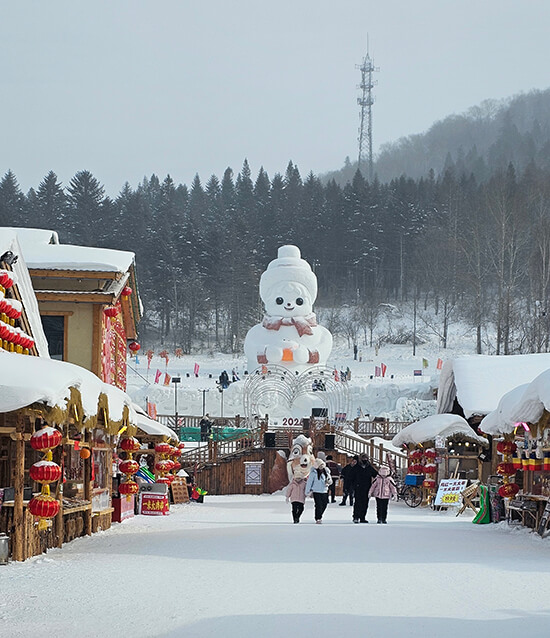
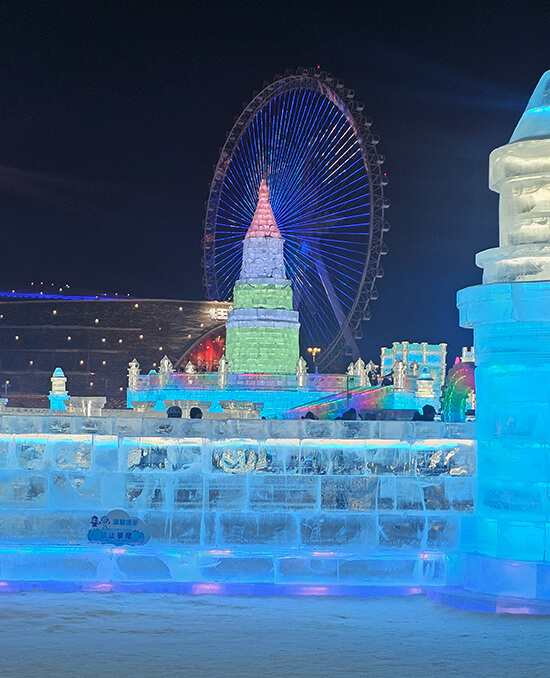
Harbin Ice and Snow World stands as the most elaborate expression of this confrontation. Built in a matter of weeks, a record 22 days, to be precise, by some 10,000 workers using 400,000 cubic meters of ice harvested from the Songhua River, the park rises in towers, corridors, and glowing forms that feel temporarily impossible. These structures, including the 521-meter-long, 24-lane Super Ice Slide, with a 21-meter vertical drop, exist only for winter. When spring returns, they dissolve back into the river, all of them, the main tower, “Inspiring Dreams with Ice Lanterns,” reaching 40 meters into the frozen skies, included. Their impermanence gives them weight. They are meant to be seen, felt, and then lost.
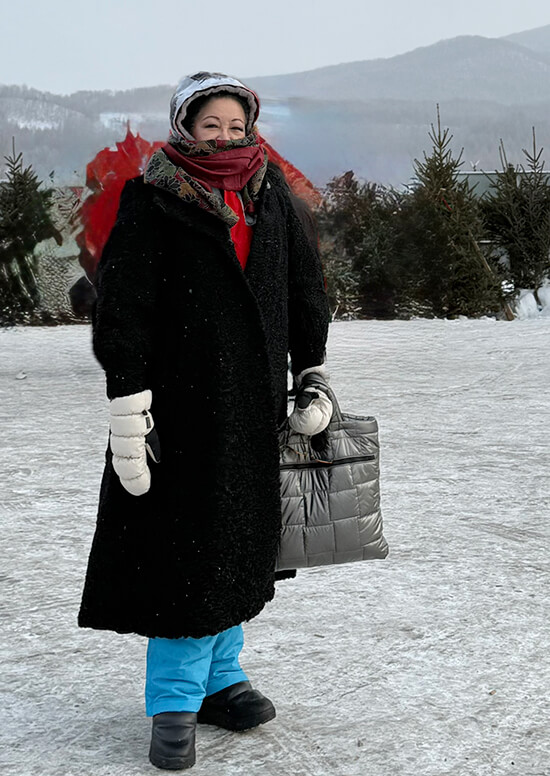
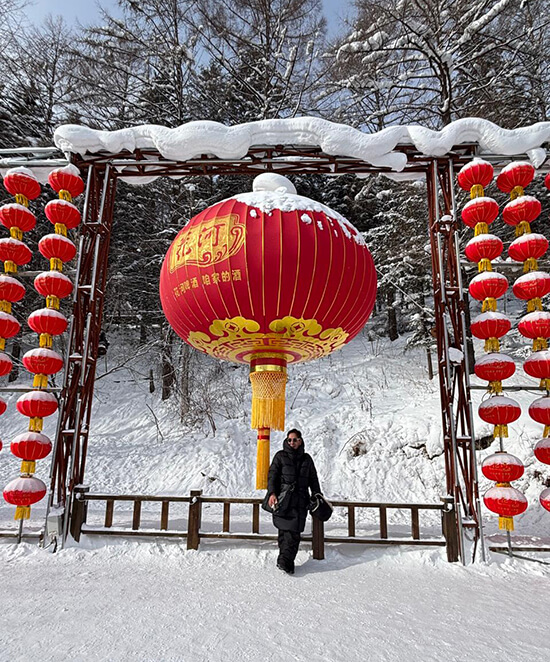
Deep freeze: Former senator Nikki Coseteng stands fully armored against the Heilongjiang chill, her layers of heavy performance gear proof of the necessary preparation required to endure the sub-zero wind of the Northeast.
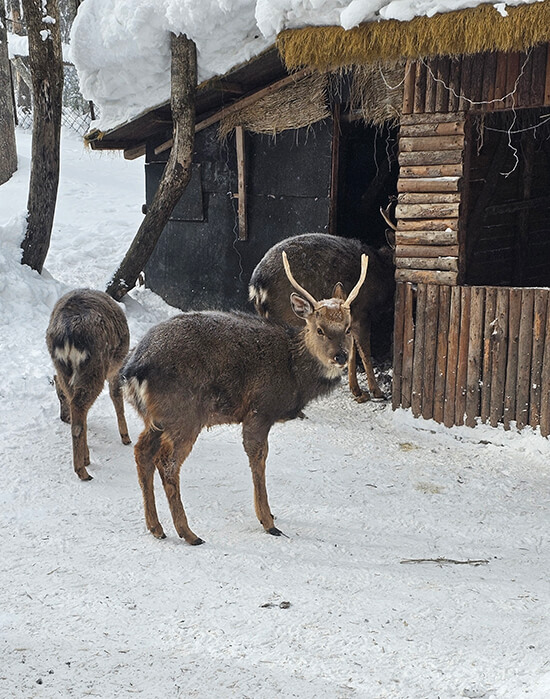
Caught in the camera flash: A reindeer stands motionless against the morning light of the Xuexiang woods, a brief encounter in a sanctuary shared with wild boars and mountain sheep.
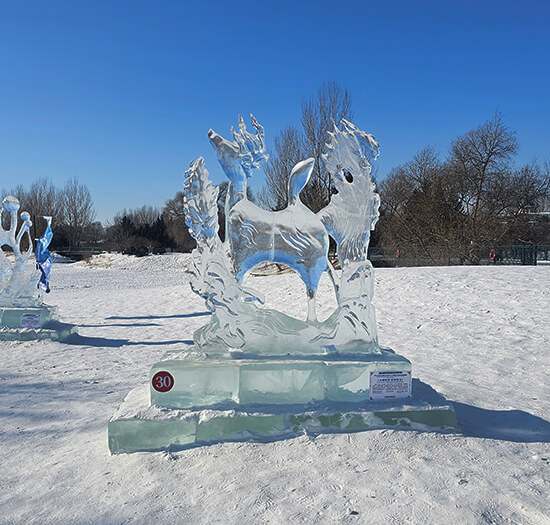
Crystalline form. An intricate ice sculpture of a reindeer stands against the sprawling white grounds of Volga Manor, a transient work of art that captures the delicate intersection of nature and human craftsmanship.
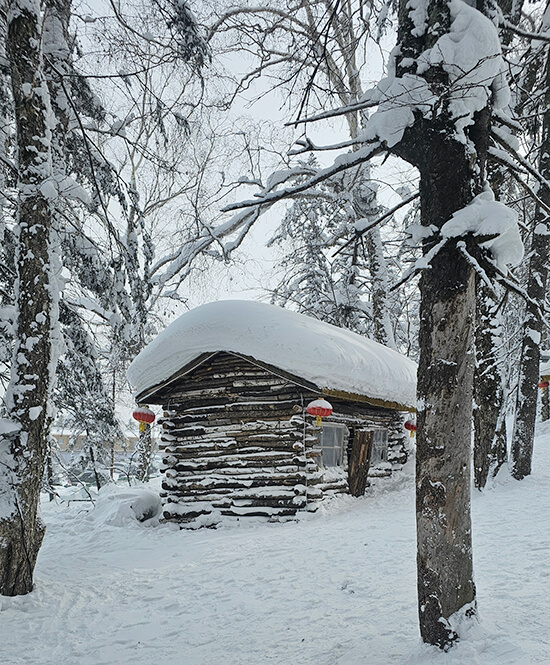
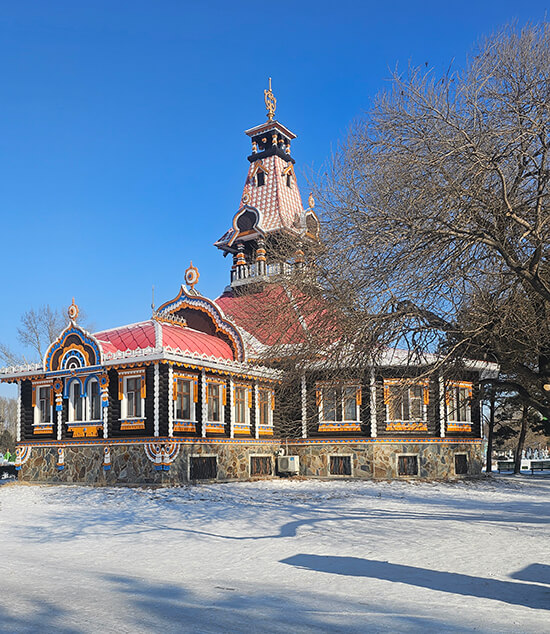
Timber and tide: The interlocking log walls of these former foresters’ quarters stand as a sturdy defense against the two-meter-deep drifts of the Xuexiang winter.
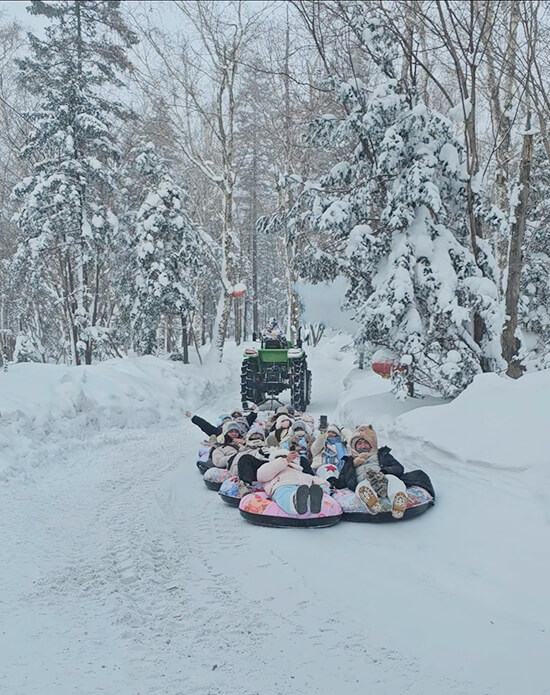
Logistical loop: A mechanical lift hauls a string of heavy rubber tires up the frozen hillside at the Da Tudingzi Mountain outpost.
Deep freeze: Former senator Nikki Coseteng stands fully armored against the Heilongjiang chill, her layers of heavy performance gear proof of the necessary preparation required to endure the sub-zero wind of the Northeast.
Caught in the camera flash: A reindeer stands motionless against the morning light of the Xuexiang woods, a brief encounter in a sanctuary shared with wild boars and mountain sheep.
Crystalline form. An intricate ice sculpture of a reindeer stands against the sprawling white grounds of Volga Manor, a transient work of art that captures the delicate intersection of nature and human craftsmanship.
Timber and tide: The interlocking log walls of these former foresters’ quarters stand as a sturdy defense against the two-meter-deep drifts of the Xuexiang winter.
Logistical loop: A mechanical lift hauls a string of heavy rubber tires up the frozen hillside at the Da Tudingzi Mountain outpost.
CLOSE
I returned to the tropics with an unexpected longing. I missed the sting of cold on my face. I missed watching my phone battery drain in minutes. I missed the heightened awareness that comes from moving through a place that constantly reminds you of your limits. Those memories stayed with me not because they were pleasant, but because they expanded my understanding of travel itself.
Would I return to Harbin? Yes. It is a city that makes no attempt to temper its winter, only to live with it and build around it. In that severity lies the true allure of the bitter cold.

WATCH: Can you still trust someone who betrayed you? (Generations Ep. 22)
September 23, 2026
WATCH: Pixar Summer Fest adventure at Hong Kong Disneyland
August 10, 2026