

How Oishi makes the snack culture cool & relevant
During my first trip to Shanghai in July 2005, a dignified-looking man in gray suit and crisply starched white shirt approached me at the airport and said: “Hi, my name is Carlos Chan. I’m the brother of Ben Chan and I am here to fetch you and welcome you and your media group.”
Such an introduction took me by surprise. I replied: “Mr. Chan, you are so humble. Of course we know you. You and your Oishi brand are so famous in the Philippines and China.”
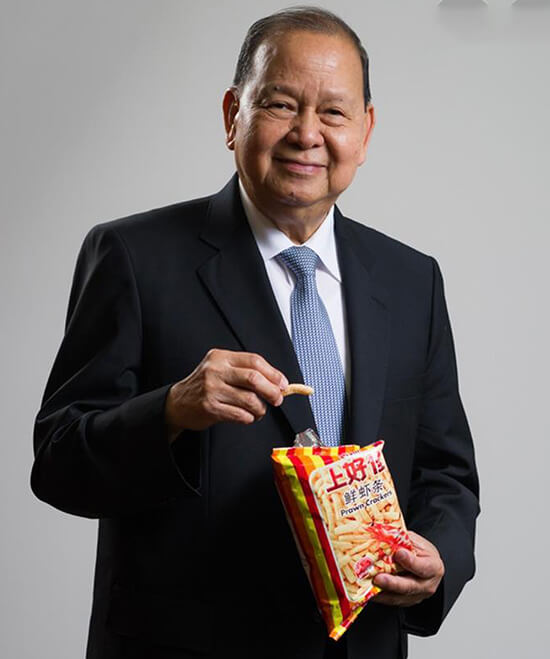
Thus began our journey to Shanghai to watch the Bench fashion show featuring the underwear line of the clothing brand founded by Ben Chan in 1987, as modeled by Chinese and Filipino models. That trip was 21 years ago. And since then, the Chan brothers Carlos and Ben have achieved parallel successes in the food manufacturing and clothing industries.
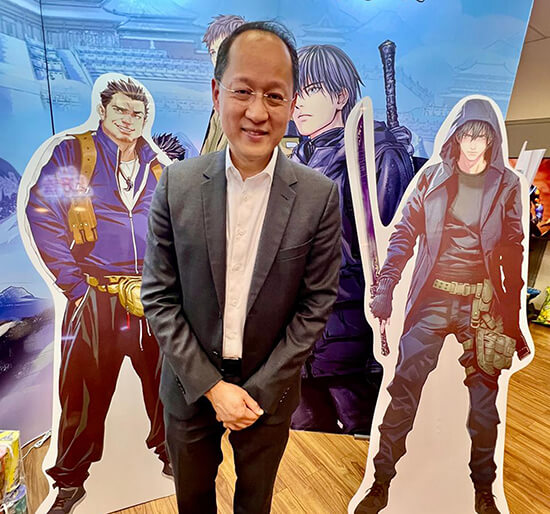
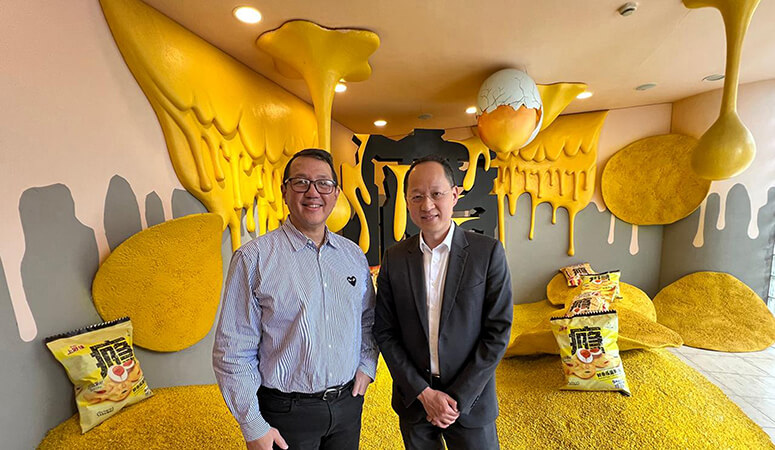
Fast forward to April 2026, when on my next trip to Shanghai—this time with STAR editors and executives led by our president and CEO Miguel Belmonte—we were welcomed by Larry Chan to the Oishi factory in Shanghai.
CONTINUE READING BELOW

Another self-effacing member of the Chan family whose articulate and decisive words impressed us; yet Larry’s resounding mantra was this: “I belong to the third generation of a clan who grew up believing that hard work and perseverance are what make a business succeed.”
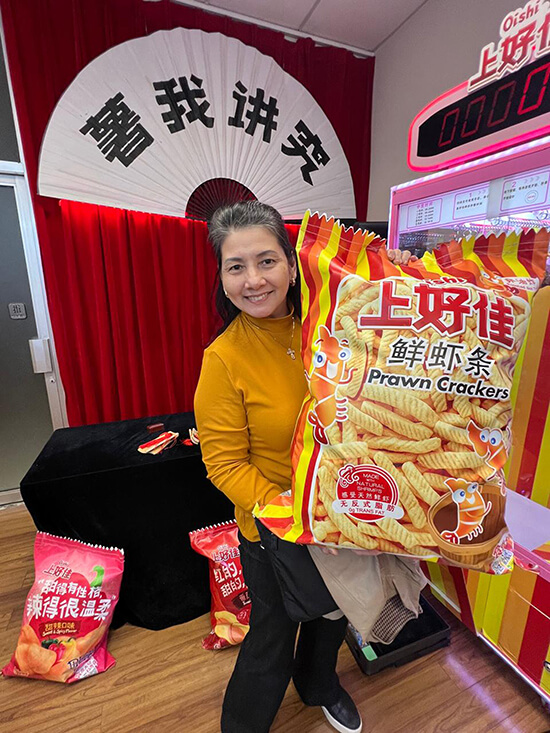
This son of Carlos Chan toured us around the Oishi factory where he showed us the portraits of Carlos’ parents Lib Yan and Ying See, immigrants from a small village in Fujian, who founded Liwayway in Manila in 1946 as a company repacking cornstarch (gawgaw) and coffee.
Liwayway, meaning “dawn” in Tagalog, reflected the couple’s optimism and nationalist sentiment in post-war Philippines. Men were wearing white Americana suits that needed almirol, and so did women’s baro’t saya. The Liwayway gawgaw packaging says: “Sa minsang gamit ay 'di ninyo malilimot ang linis puti na pananagutan namin (With one use, you will remember the clean white pureness that is our commitment).”
It was Carlos Chan who took the first step in the journey of a thousand miles to build Oishi (to paraphrase Chinese philosopher Lao Tzu) in 1974 when he created his snack brand, starting with Oishi Prawn Crackers, in the Philippines.
In the 1900s, China opened its doors to foreign investors. This was part of Deng Xiaoping’s wave of market reforms to lift the economy. Carlos’ Oishi was among the first foreign-owned companies that seized the moment and took the first single step to make snack foods for China’s domestic consumers, building factories and providing employment to locals. His first production center was in Pudong under the name Shanghaojia, meaning “excellent and of high quality.”
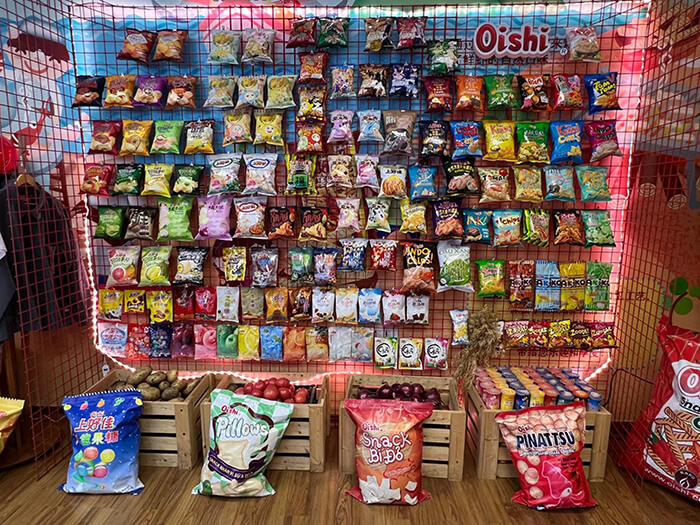
Today, Oishi, with its 112 snack variants and 29 beverage variants, is one of the top snack manufacturers in both the Philippines and China. It has scattered its footprints across Southeast Asia where you see Oishi snacks in almost every store.
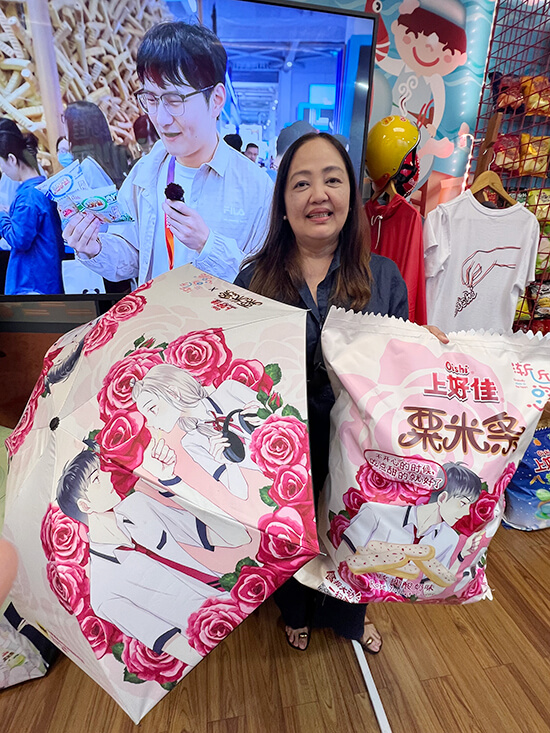
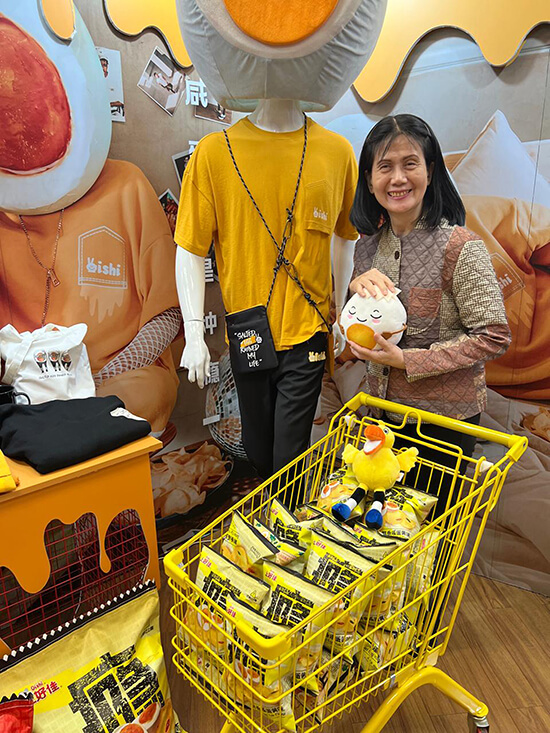
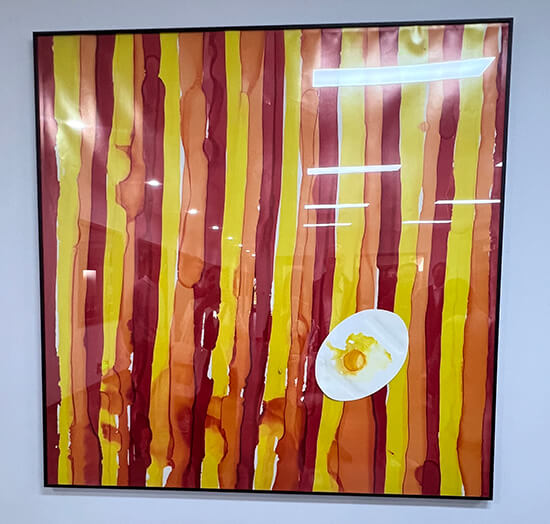
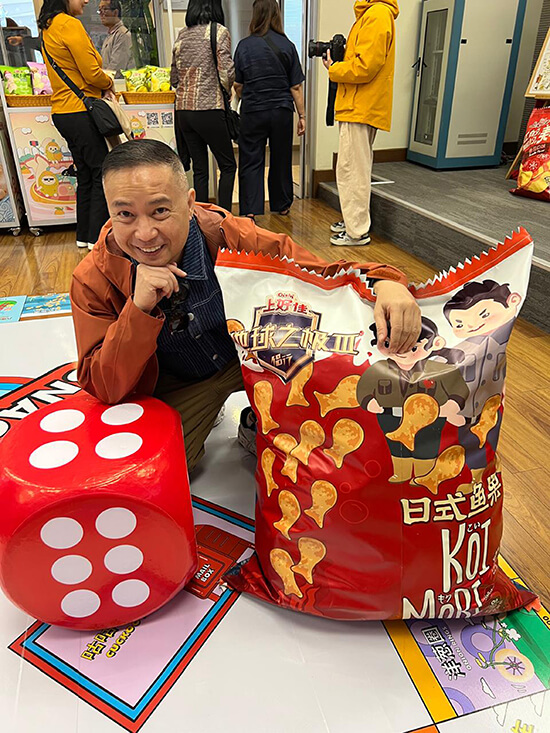
Larry brought us around the Oishi compound where we saw the multitude of Oishi snacks and beverages, standees of famous endorsers, machines including an antique one that still works, and artworks inspired by Oishi’s success.
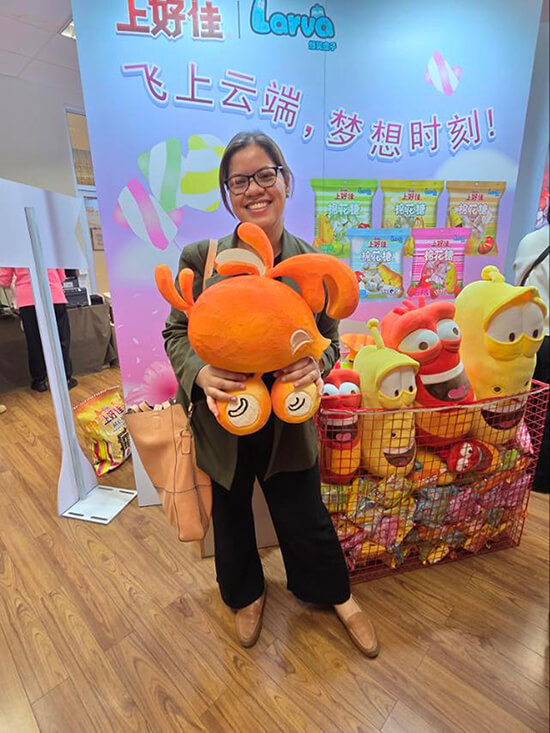
Larry is obviously a hands-on food industry exec. He knows, for instance, which type of potatoes and taro work best in which country. He succeeded older brother Carlson who has been given another assignment by dad Carlos. Take note that the names of Carlos’ children follow the first letters of his name (Carlson, Archie, Rinby, Larry, Oszen, and Shera). There is a culture of perseverance and humility, an admirable work ethic that is embraced by this family. And also a dynamic consciousness to keep up with trends, to connect with the young generations, to make their brand healthy by using natural and nutritious ingredients. Oishi is making the snack culture so cool.
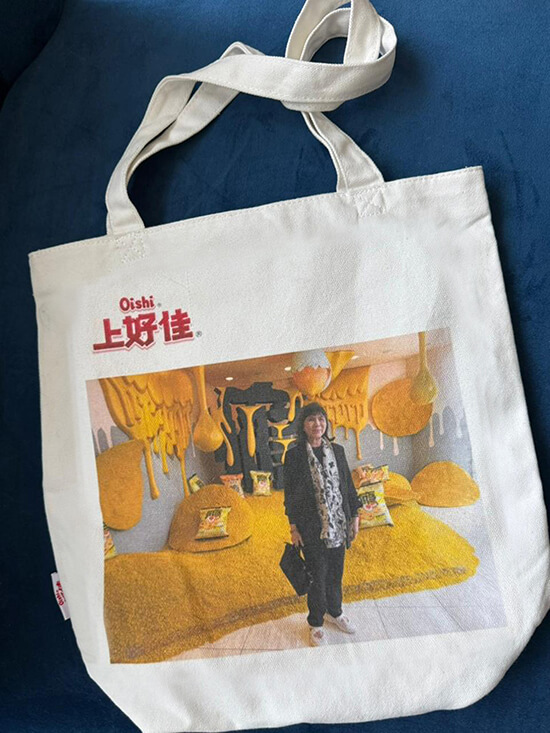
Excerpts from our interview:
THE PHILIPPINE STAR: Since its establishment in 1974, Oishi has had a huge following in Asia. And now you are making it even more connected to the younger generation by doing collabs with young stars in pop culture, and in the music, fashion and film industries in China.
LARRY CHAN: Since 2017, we were one of the earliest brands in China to actively engage in various collaborations, including past collaborations with lifestyle brands such as Fiona Chen and AKOP, food service brands such as TaiEr, Lelecha and L’Aterlier de Joel Robuchon, cultural brands such as Dunhuang and Shanhaijing, artists such as Mr. Pea and food brands such as Tabasco, and various intellectual properties (IPs) such as Tomb Raider, Little Pony, Conan, and Larva, e-sports team FPX that won the world championship in 2021, among others.
For the 2026 Chinese New Year campaign, we launched a series of gift packs with five big IPs including local and international IPs. The intent is to be able to reach out to our consumers through the different cultures that are relevant to them. This need to find alternative media is very crucial in China.
Will you make collabs, too, with Filipino creatives?
This is something we are open to in other markets as we are also very active in exploring ideas in those markets. In the Philippines we have worked with Adarna to create a series of books that teach children on simple finance.
Oishi is a food manufacturer with a mind of its own. How do you stay so relevant with the changing times and whims of the market? You said, for instance that the younger people now don’t look at branded fashion anymore—they prefer things that allow them to express themselves. Do you conduct surveys and do you constantly hire young people in your staff?
While we look at various market data, it is also crucial to stay engaged with our target market through various means such as our various experiential events, such as our Snacktacular; experimenting with different marketing ideas; and closely monitoring our various social media platforms where, in the case of China, we have more than five million followers.
Oishi is taking such big efforts to make its products as healthy as possible, using fruits that are abundant in the area of production. Please share details on how you achieve this.
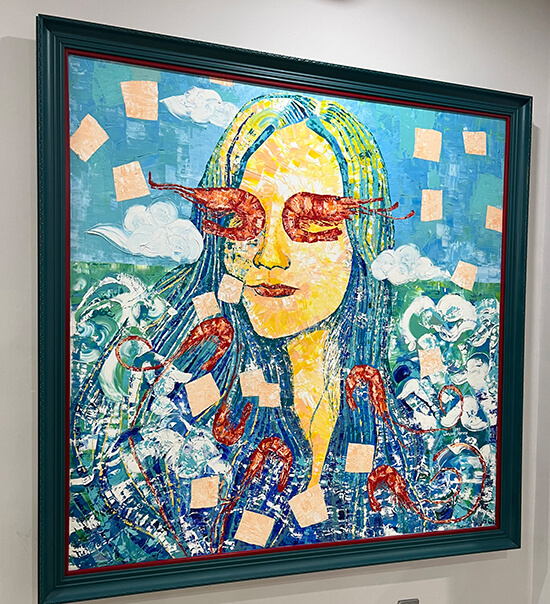
We try to make our products healthy and safe in many ways. We try to use as much natural ingredients (as possible) in our products. The use of natural ingredients actually makes our production processes much more complex but this remains the best way to put more nutrition into our products naturally. This includes the use of real shrimps in our Prawn Crackers and Shrimp Flakes, as well the use of alternative ingredients such as green pea in our Marty’s and Pods Pea Snack that significantly increases the protein content of the product. We have our own internal list of banned ingredients, guided by food safety standards in China, EU and the US, and based on our own reviews and assessments. This has allowed us to begin work on the removal of all trans fats ingredients in all our products very early, in 2004, and completing the whole program in 2009. Continued exploration of new processes that can significantly improve the composition of our products, such as the development of cooking process using hot air for our Baked Porky Pops that significantly reduced the fat content to just 17 percent, compared to the 35 to 50-percent fat content in a typical pork rind snack.
Your potato chips, you mentioned, come in bigger slices in China because the potatoes there are bigger. For the Philippine market, you use potatoes grown in the Philippines? In other words, do snacks vary in each country, depending on the availability of ingredients?
Our snacks offerings vary in each country depending on many factors, including availability of ingredients and local cultural preferences. While in the Philippines, potato chips made from fresh potato raw materials that have to be imported may make it somewhat more expensive than our other snack variants in the Philippine market, in China we use a local potato variety that can produce high-quality potato chip snacks. Because it is harvested locally, the costs are also lower. We innovate further by adopting the most advanced processing technologies, such as, in this case, the continued vacuum-frying process that can produce at a much lower temperature resulting in a much fresher taste and quality. This same process has also allowed us to process different root crops, such as purple sweet potato, red beet root and taro. In our search for interesting ingredients, we have discovered that the use of a less well-known root crop called small taro can produce chips that are of very similar bite and mouthfeel as potato chips, making it a much healthier alternative that is naturally high in vitamin E, protein and minerals.
China supplies 50 to 60 percent of the world’s apples. Do your China factories make a lot of products using apples? Do you have products using our mangoes? Kamotes? Durian?
We have been using China’s apples as well as other fruits available in the country such as peach, pear, kiwi, apricot, strawberries and hawthorn to produce a wide range of juice products for the local Chinese market. We source our fruit juice raw materials from where we feel can provide the best quality. Our grapes are sourced from northeast US while our mangoes are certainly sourced from the Philippines. We also plan to source a variety of dried fruit products from the Philippines for export into China.
What was your dad’s vision when he founded Oishi? And how have you followed this vision and at the same time strengthened it by adapting to the times?
My father is part of the second generation. When he took over, his vision was to build a business that can be relevant to our markets and is socially responsible, which meant ensuring high-quality products through constant innovation, coupled with continuing efforts to support the local communities we are in. He has been very active in various charities, including funding for the building of 600 rural classrooms in the Philippines and the construction of an eye center near our main factory in Cavite. We also continue his legacy of supporting cooperation between the Philippines and the various countries where we are present. Our product innovation continues to be very active with investments into new technologies. Market expansion includes a new plant in Bangladesh that just began operations this year.
During COVID, you mentioned how Oishi also tried to provide assistance where you could?
When the COVID lockdown started in China in late January of 2020, we tried every means to get hold of PPEs from every source we had to support China’s efforts to control the outbreak. We had limited access given the severe shortage of world supply but the experience helped us understand the specification requirements for various PPEs that are needed in such pandemic situation. After China was able to ramp up its
own supply chain of PPEs, we were able to purchase and donate more than 17 tons of high-quality PPEs to the Philippines valued at more than P60 million. These complete sets of PPEs that costed almost P4,000/set included hazmat, isolation gowns, surgical N95 masks, surgical gloves, goggles and shoe covers that we were able to ship to the Philippines in April 2020 with the help of Philippine Airlines, Department of Trade & Industry, Kaisa and the Philippine Army, distributing them to hundreds of hospitals around the country that were unable to get much allocations of PPEs from the national supply. These efforts are apart from the various cash donations we made to support the other efforts to support the Philippines during the difficult COVID period.
Oishi has also been supportive in the promotion of Philippine culture. For instance, the Loboc Choir has been proudly “exported” by Oishi to participate in China’s cultural events.
My father has been supporting the promotion of various cultural groups from different parts of the Philippines, most specially in being able to enhance cultural ties with other countries. We have brought Philippine cultural groups and artists to China and represented our country during the World Expo in Shanghai in 2010 as well as in the major events such as international tourism, cultural and children’s festivals. We have brought the Tawi-Tawi cultural troupe to Dezhou City in Shandong province in China to visit the Sultan of Sulu Mausoleum and perform there. We have supported the Loboc Children’s Choir for over 20 years now through funding support for their various out-of-town and international performances, and the construction of the Loboc Childen’s Palace in Loboc town.
What have been Oishi’s awards? Its proudest moments?
Oishi is one of the top brands in Asia and in the various markets we are in, including Famous Brands certifications in China. My father was also conferred The Presidential Medal of Merit in 2008 and The “Order of Sikatuna,” Rank of Datu (Gold Distinction) in 2010 by President Gloria Arroyo, the International Chamber of Commerce Philippines “Global Excellence Award as Global Entrepreneurs” in 2017 and the Management Association of the Philippines “MAP Management Man of the Year 2021.”
In 2015, the Philippine House of Representatives headed by Speaker Sonny Belmonte adopted House Resolution No. 219 recognizing Mr. Carlos Chan for his contributions to the nation as a successful entrepreneur and diplomat. In China, he was given the “Honorary Citizen of Shanghai” in 2005 and conferred the China Friendship Award in 2024, the highest award given by the Chinese government to foreigners.
How many factories are there worldwide now?
We have 29 factories in 10 countries: The Philippines (Cavite, Cebu, Cagayan de Oro, Tarlac, Iloilo); China (Shanghai, Harbin, Kunming, Huanggang, Jiujiang, Changji, Tianjin, Qinhuangdao, Hengshui, Jinan); Vietnam (Ho Chi Minh, Hanoi, Danang); Myanmar (Yangon); Indonesia (Cikarang near Jakarta, Gresik in Surabaya); Thailand (Samut Sakhon); Cambodia (Phnom Penh); South Africa (Pretoria); Uzbekistan (Tashkent); and Bangladesh (Dhaka).
What are your family’s dreams for Oishi in the future?
Liwayway is now largely managed by the third generation and we commit to continue working hard to further expand our markets as well as to build on the foundations by expanding our offerings to complementary food services.
What is the best lesson you have learned from your father?
Fairness, long-term thinking and the importance of credibility. He has consistently demonstrated these to us and these values have shaped everything that we do.
What is the philosophy of Oishi?
Our philosophy incorporates the values handed-down throughout our 80-year history. Liwayway places utmost concern on quality in its products and processes, integrity in its business dealings, and the importance of long-standing relationships. Liwayway believes in balancing commercial objectives with a genuine, proactive effort to help shape and participate in a positive, cohesive, and sustainable community.

WATCH: Can you still trust someone who betrayed you? (Generations Ep. 22)
September 23, 2026