Mountain high
It started with a slow, twisty drive up the mountain; Our guide said it’s 100 turns, probably an exaggeration, but then again, maybe not. Making the drive in the dark, as we did, is quite an experience—a shoutout to our bus driver. We had to transfer to a minibus for the final narrow and steep stretch to our lodging for the night, billed as a leisure farm.
We barely made it to dinner because the kitchen staff leaves at 7:30 p.m. The herbal soup we brought from our lunch at the iconic Du Xiao Yueh in Tainan (it now has branches in Makati, Pasay and Quezon City) was perfect for the chilly night, thanks to the kitchen helper who heated it up for us.
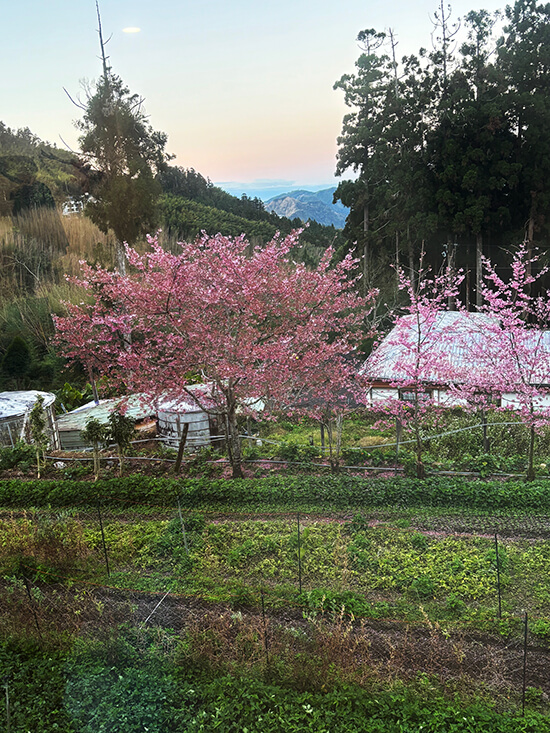
At 1,500 meters, we were halfway up Alishan, or Ali Mountain. When the mists of dawn lifted, we were greeted with cherry trees in full bloom, soft pink among the verdant green of the vegetable gardens, the source of the three delicious vegetable dishes we had the night before, a true farm-to-table treat. Aside from vegetables, the Long Yun farm has a tea garden and a bamboo forest which, unfortunately, we did not have time to explore.
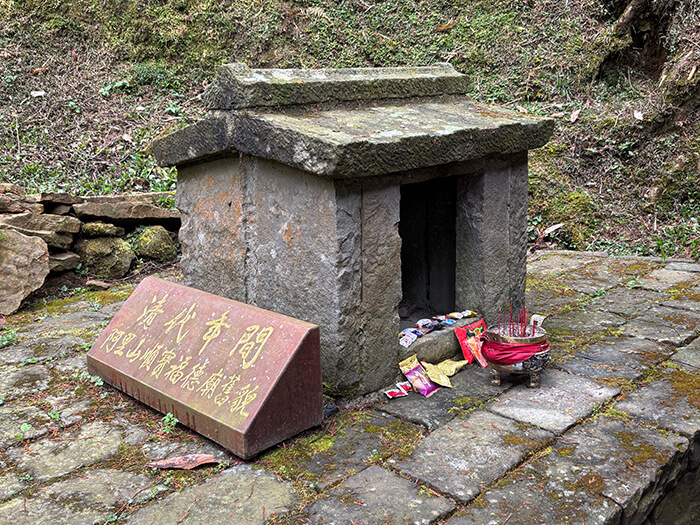
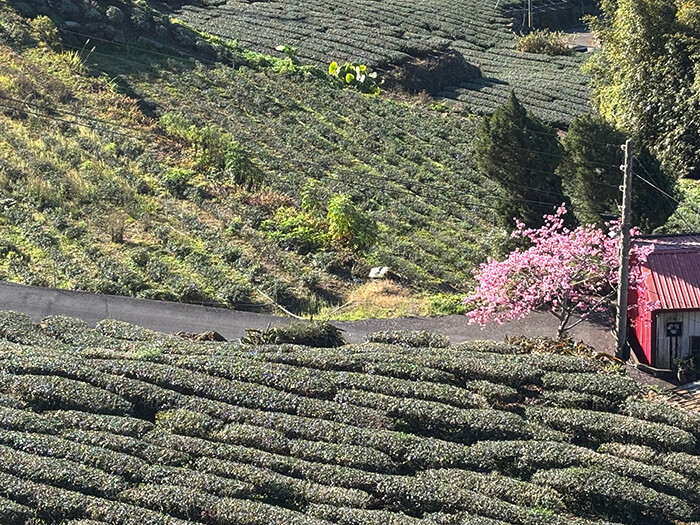
The drive up to the Alishan Recreation Area at 2,200 meters in the crisp, bright morning was so amazing we had to make stops to admire the views and, of course, take photos. The terraced tea plantations on the undulating mountains, most of them dotted with cherry trees a-bloom, was a breathtaking sight. Along the way there were clusters of stone houses, most probably homes of the tea farmers; how I wish we had time to pop in to the ones offering tea for sale! But alas, the tyranny of the tour schedule kept us constantly on the move.
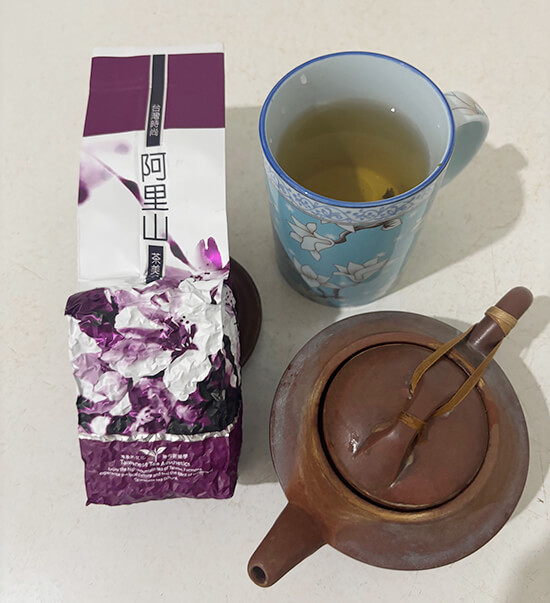
The Alishan Range stretches 90 kilometers along south central Taiwan, with the longer Central Range to the east shielding it from sometimes strong typhoons, as storms weaken upon making landfall. Elevations at Alishan range from 1,000 meters to over 2,600 meters, perfect for growing tea. Taiwan accounts for about 20% of world production of oolong tea; the leaves are hand rolled into dense balls that unfold upon brewing, releasing its flavor and leaving a pleasant taste that lingers.
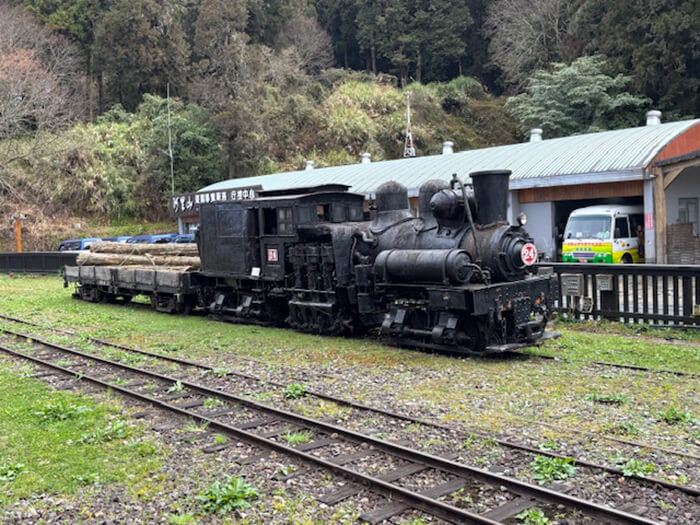
The mountain was once abundant with the valuable Formosan Red Cypress, and under Japanese rule in the early 1900s logging was a very lucrative trade. The Alishan Forest Railway was built specifically to transport these logs (maximum eight meters in length)—used to build houses as well torii gates—down the mountain to Chiayi town before shipment to Japan.
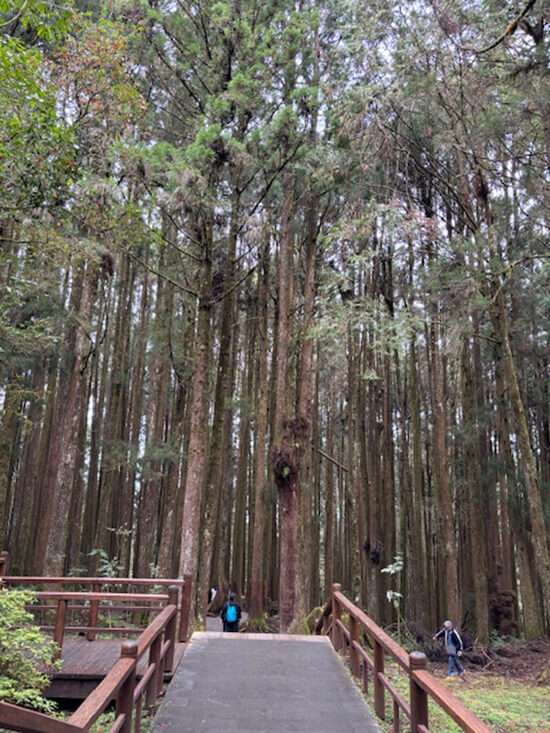
The 86-km railway through steep, rugged forest terrain has 77 wood bridges, 50+ tunnels and Z-shaped switchbacks (where the train changes direction several times to negotiate very steep inclines). As the availability of trees dwindled (in place of the coveted cypress, cedars were planted) by the 1970s, the logging industry was phased out and tourism took over. In 2001, the area was officially designated the Alishan National Forest Recreation Area.
As the Taiwan Tourism Administration is promoting the southern part of the island (rather than just Taipei in the north), Alishan is a must-visit. It was an invigorating 13ºC as we waited for the little red train at the Alishan station. The itinerary did not say anything about a two-hour hike, but, faced with a forced-to-good situation, I just prayed my creaky knees would hold (they did!) and set out on the downhill trek through some truly amazing forest trails.
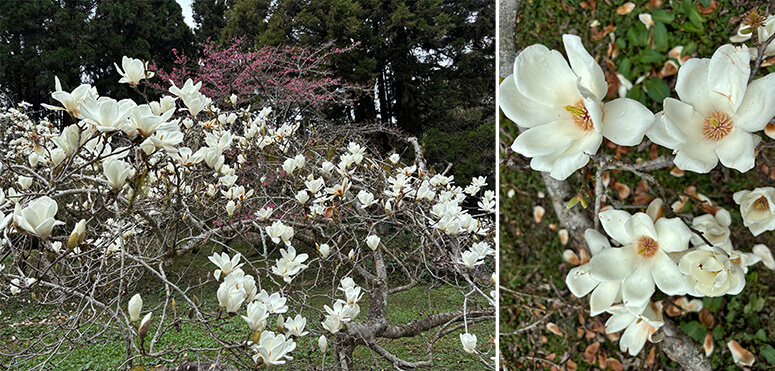
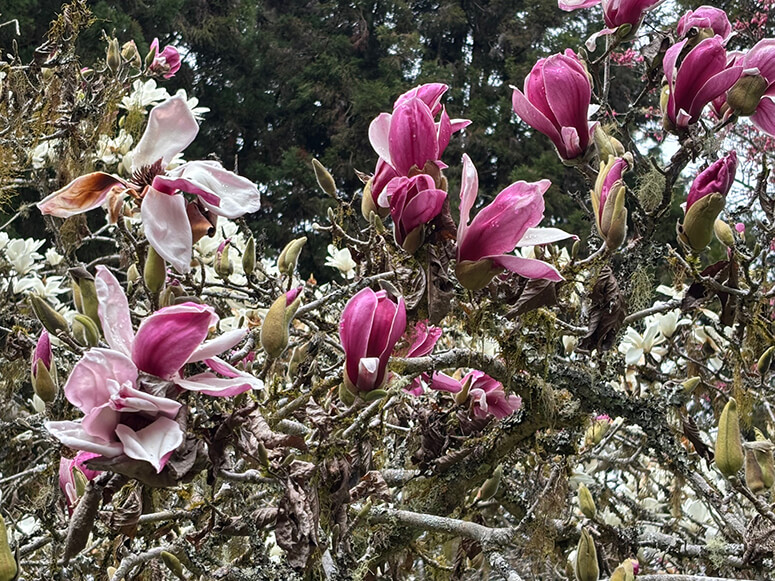
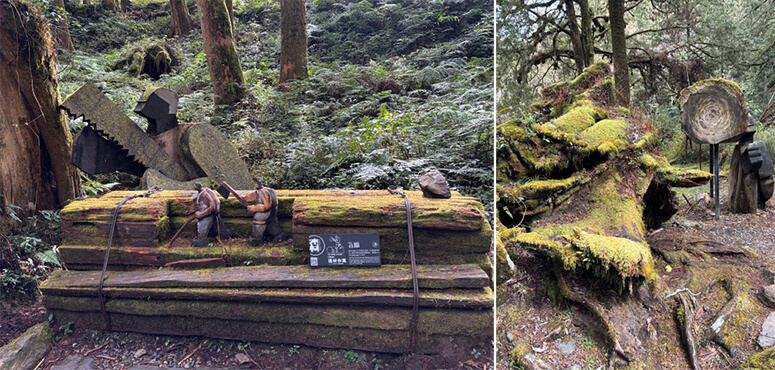
The trees in the upper reaches of the mountain were majestic—here a 100-year-old tree, there a 300-year-old one – with lush undergrowth and, every so often, whimsical anecdotes of forest trivia made from fallen, moss-covered tree stumps (one explained tree pruning). For a forest that had been logged for over 50 years, Alishan is a wonder of nature. Some of the cherry trees—Japanese and local—were in bloom, but our guide said it will be an explosion of color in a couple of weeks. In the lower parts magnolias and other flowering plants were blooming in the early spring.
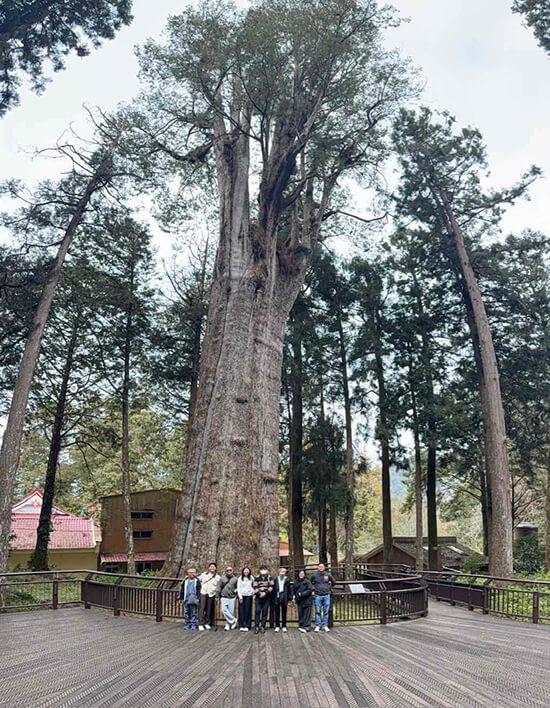
We had the requisite group photo at the towering Xianglin Sacred Tree before completing the 6.5-km trek. After another train ride, we were amply rewarded—our very efficient guide Michelle treated us to the most delicious mochi! The storekeeper’s grandmother, whose recipe it is, must have come from the same village as my adopted aunt who used to make us these delicious rice cakes.
Thus fortified, we climbed up 98 steps (did we miss two?) to take the legendary Alishan Forest Train. Meaning no disrespect, it made us think of a PNR train, chugging slowly down the mountain. The first stop was Fenqihu, my only chance to get some Alishan tea—what I came here for!— so Michelle took me down an alley to a tea shop. The lady at the store, whose family has a tea farm, let me try a few teas; I wish I had time to sample more varieties, but I found one I liked and made my purchase. Alas, it was cash only (sorry, GCash and Visa), and the little Taiwan money I had was only good for three packs. Happy with my stash, I ran out with a big smile and a “Xie! Xie!” to catch the train for the tedious three-hour ride down to Chiayi.
For a tea buff like me, the visit to Alishan was akin to a pilgrimage. I have been drinking tea since I was a baby, sitting on my Ah-ma (grandma)’s lap when she had her morning tea. My father too had morning tea every day. I’m still using his clay teapot, now properly aged; it’s a bit of family history with every sip.