

The Heirloom Rice Project
After the successful presentations of their cacao and coconut-based tasting menus, the one Michelin-starred and green-starred (for sustainability) Gallery by Chele introduces “The Heirloom Rice Project,” a tasting menu on the many facets of indigenous Philippine rice, focusing on Cordillera rice.
Exploration is central to this restaurant’s philosophy and their team usually travels across the Philippines and the region to study the differences and connections among local ingredients with the wider culinary world. These journeys shape the restaurant’s work in the kitchen, where international techniques meet Filipino traditions and ingredients. Developed through years of research and travel in the Cordillera region, The Heirloom Rice Project explores the diversity of heirloom rice varieties and the cultural traditions that sustain them.
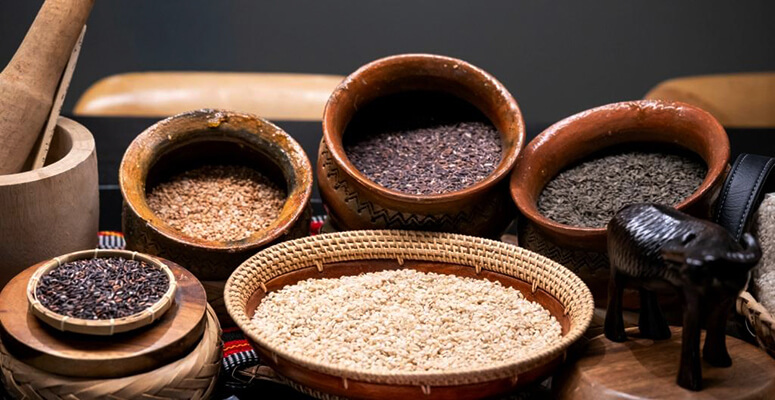
Chef and owner of Gallery by Chele, Chele Gonzalez, points out, “Heirloom rice is one of the Philippines’ most unique products, yet it is still not widely understood. Many people do not realize that these varieties can be pink, purple, green, yellow, glutinous, or aromatic. Each one reflects a different place and a different community.”
Heirloom rice varieties remain among the Philippines’ most enduring cultural traditions, preserved for centuries by indigenous communities in the Cordillera region. Cultivated on the mountain terraces that shape the region’s landscape, these grains are grown using time-honored farming methods and harvested by hand only once a year. Their limited production has also helped them gain attention in specialty markets, frequently commanding higher prices than commercial varieties.
Carlos Villaflor, executive sous chef of Gallery by Chele, adds, “These rice varieties are not just ingredients. They represent generations of knowledge and a living agricultural tradition that still shapes the culture of the Cordillera.”
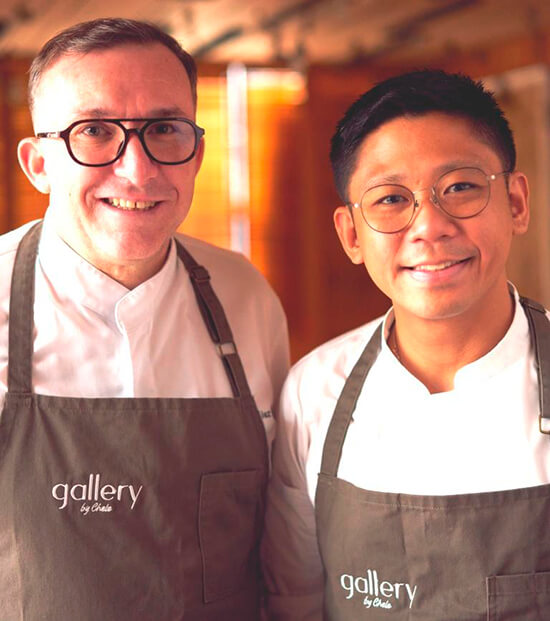
As early as 2016, Gallery by Chele began building relationships with farmers in Kalinga, Banaue, Ifugao, and Benguet. Chele adds, “To understand heirloom rice, you need to go to the mountains and meet the people who grow it. In many of these communities, rice is not only food. It is part of their identity and culture, and it is connected to traditions that have existed for centuries.”
CONTINUE READING BELOW

The Heirloom Rice Project showcases Cordillera varieties like Tinawon Red and White, Deremen, Kalinga Unoy, Pasil Unoy Ginnonaw, Black Lennagang, and Ijampulo. Even with the variety of rice they use, Chele says the focus remains simple.
“At the end of the day, the most important thing is that the food tastes delicious. Our role is to highlight these ingredients and convey the stories behind them. If more chefs begin working with heirloom rice, the impact could be much bigger than what one restaurant alone can achieve.”
The dinner begins with the welcome drink “Pet Nat” (pétillant-naturel), a fermented drink made from flowers, in this case, the Sampaguita. The welcoming bite is a take on a Japanese classic mochi made using heirloom Cordillera red rice called Tinawon Violet. Inside is a jelly made with dalandan (Philippine oranges). At the restaurant’s garden, guests enjoy a tartlet made with a spring roll wrapper filled with a mixture of scallops and mango. There are other stops before the actual 10-course dinner but check it out as I don’t want to give away too much!
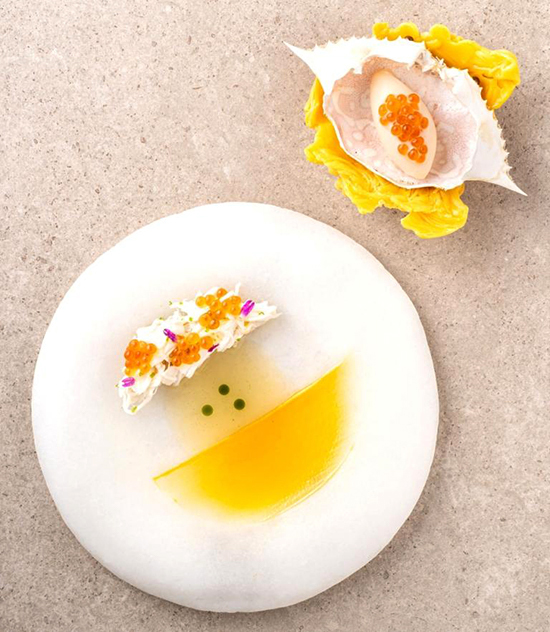
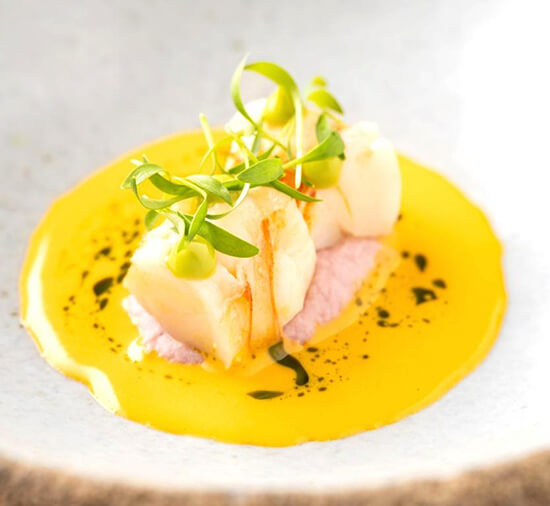
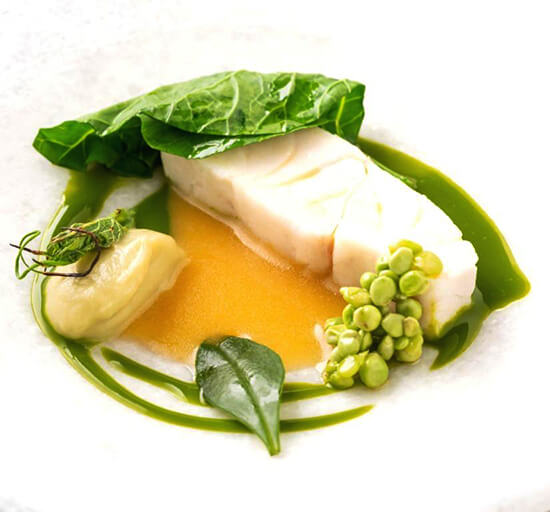
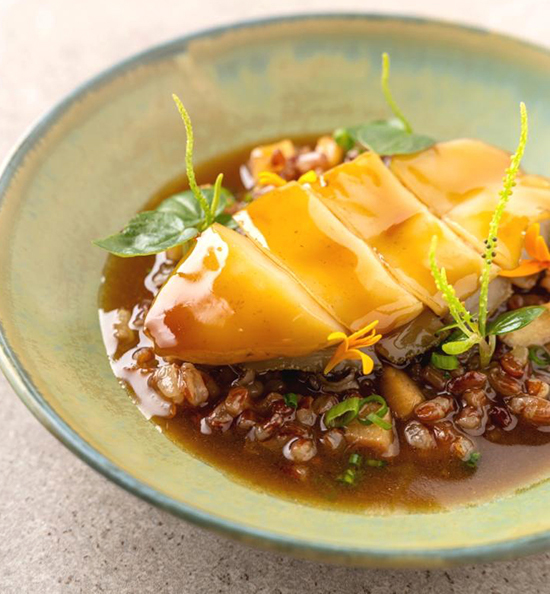
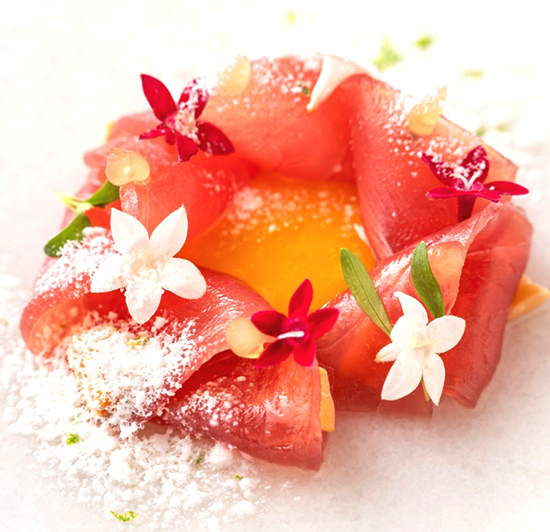
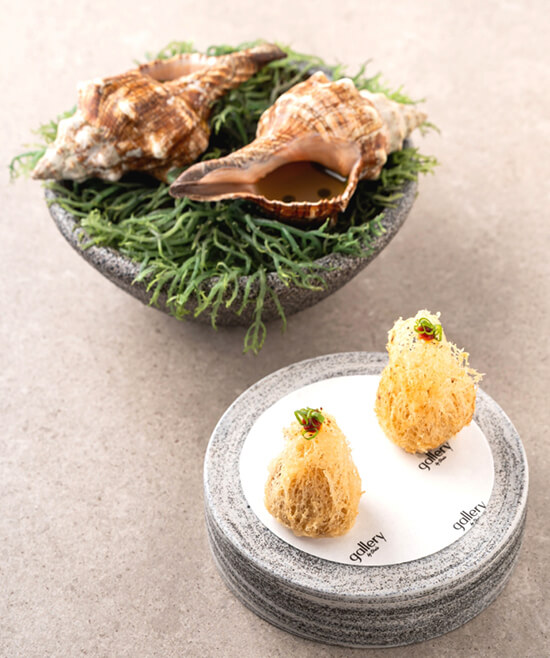
Among my favorites were Coastal Reef, cold clam soup flavored with ginger and lemongrass served with Chili Lobster Puff inspired by the texture of Chinese taro puffs with a filling of lobster and a homemade chili sauce; Mirin Kinilaw, local yellow fin tuna dressed with mango leche de tigre infused with mirin and dayap juice finished with granite made from coconut cream and dayap (Philippine lime) zest; Buro Crab, buro (fermented rice) ice cream finished with salmon roe and blue crab seasoned with aromatics and a broth made from crab shells and a crab fat emulsion; Shio Lobster, yakitori-grilled lobster brushed with garlic shio (salt) above a puree of white and purple ube finished with sea urchin sauce; Grouper Tapuey, tapuey (local sweet rice wine from Ilocos Norte) incorporated into a green sauce made with Chinese broccoli and herbs, paired with beurre blanc, steamed grouper, and green caviar; Abalone Arroz Caldo, which features Unoy Ginnonaw, a red heirloom rice from Pasil, Kalinga, cooked in broth infused with kiniing (cured and smoked pork) paired with slow-cooked abalone; and the Wagyu A5 seasoned with tultul (heritage salt from Guimaras made by cooking sea salt with coconut milk) served with a bistek-inspired jus and Wagyu fat emulsion, black garlic puree, and confit shallots. Everything was great, but these were the dishes that I personally loved.
By sourcing directly from farmers and working these varieties throughout the menu, the restaurant hopes to encourage greater awareness of the value of heirloom rice and the traditions behind it. The project is also part of Gallery by Chele’s broader promise to sustainability, supporting small farming communities while helping preserve the agricultural systems that allow these unique local ingredients to continue being grown.
The Heirloom Rice Project offers a 10-course tasting menu priced at P7,200++ and a six-course tasting menu at P5,800++. Each menu has an accompanying pairing option: a 10-course Signature Pairing at P3,500++ and a six-course Signature Pairing at P2,600++.
Gallery by Chele is located at the 5/F Clipp Center, 11th Avenue corner, 39th Street, Taguig, Metro Manila, Philippines. For reservations, visit gallerybychele.com.

WATCH: Save for retirement or enjoy life now? (Generations Ep. 21)
September 16, 2026
WATCH: LGBTQIA+ people with unlikely professions
June 28, 2026