

The tres chiquititas of modern Philippine dining
Long before their names began to circulate among people who care where to book a table and who is cooking what, Bettina Arguelles of Curio, Tina Legarda of Kumba and Bamba Bistro, and Rhea Rizzo of Mrs. Saldo’s had found one another in that rare way women sometimes do when friendship arrives as instant recognition.
I call them the Tres Chiquititas of modern Philippine dining, though they are just as likely to rename themselves depending on the venue and vibe. On some nights they become The Silly Labuyos, which according to Bettina makes sense because “we’re spicy and we know it.” With these three, there is always some soundtrack playing, whether audible or merely implied.
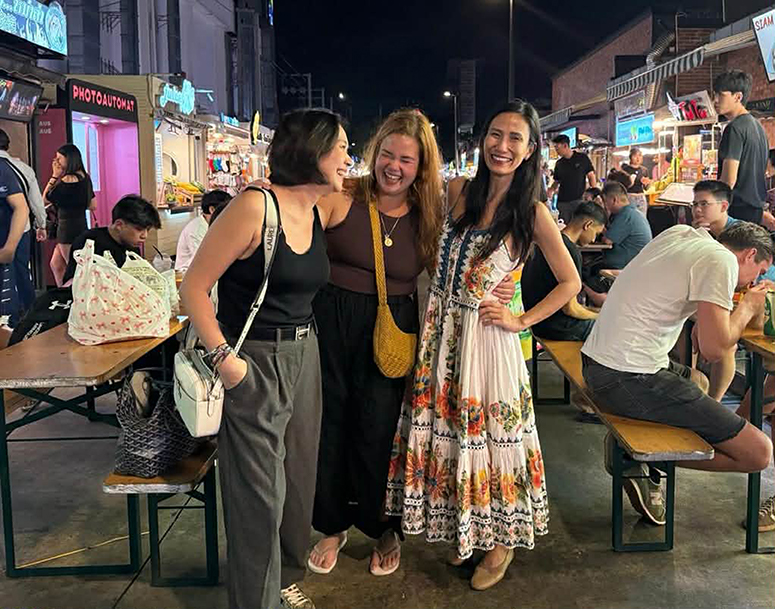
You notice them before you hear what they are saying because they tend to move through industry gatherings as one bright cluster, laughing too hard, dancing too soon, greeting people with the ease of women who have long ago stopped worrying about looking composed in public. Their ease comes from years spent surviving kitchens where vanity has very little use once service begins.
They belong to a moment in Philippine dining where the Filipina is no longer merely adjacent to the kitchen but one of its clearest authors. Before them, Nora Daza had shown that a Filipina could move from cookbook to television to restaurant and remain unmistakably herself. Around Tina, Bettina, and Rhea, the field has grown wider because contemporaries such as Maritel Nievera, through the Cabalen Group, and Ana Lorenzana de Ocampo through Wildflour Hospitality Group have shown what scale and endurance now look like when women build dining empires that multiply without losing identity.
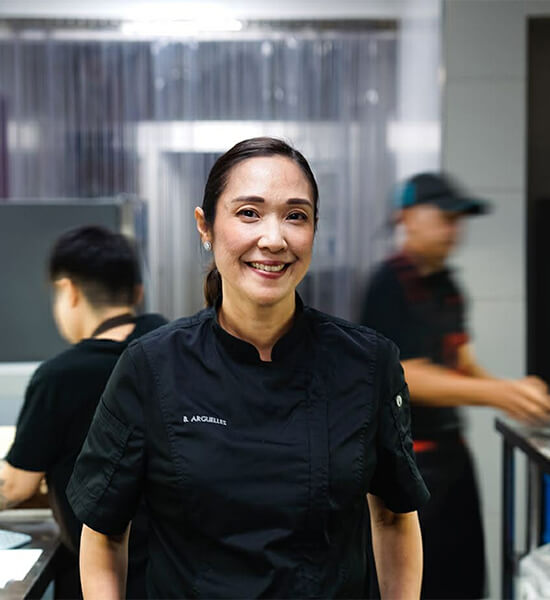
Tina, Bettina, and Rhea work differently. Their signatures are easier to locate plate by plate.
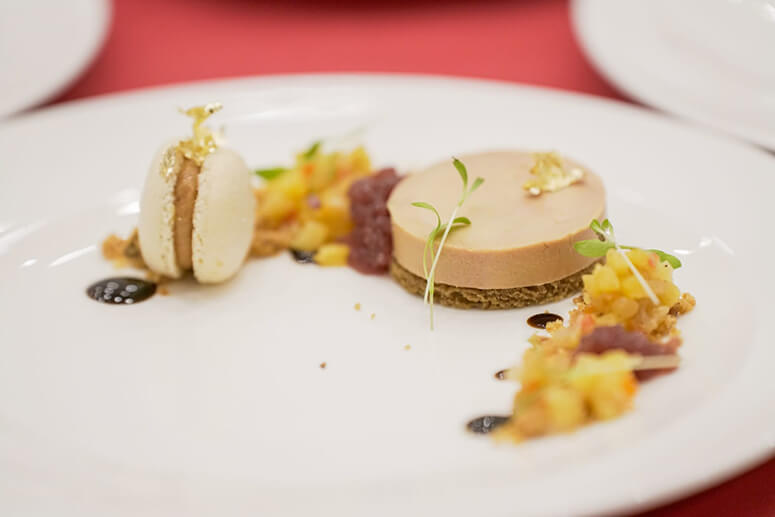
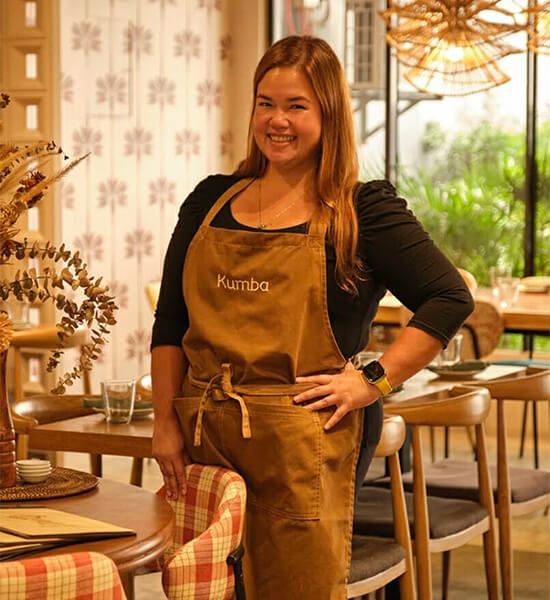
Tina cooks with the kind of instinct that makes pleasure look simple until you realize how much judgment sits behind that simplicity. Bettina carries classical rigor lightly, though nothing accidental ever leaves her kitchen. Rhea has a palate that seems unwilling to stay in one country for too long, which may explain why her dishes often arrive with small turns that keep the mouth alert.
CONTINUE READING BELOW

When I asked what five ingredients they would insist on if stranded together on a deserted island, Tina answered like someone who sees no reason survival should exclude comfort. “Bacon, noodles, cheese, pan de sal, vodka,” she said, all “carefully chosen to bring joy when stuck on an island with friends.” That line explains her almost completely. Bettina assembled a pantry that could rescue almost anything, garlic, fish sauce, vinegar, sugar, soy sauce. Rhea introduced salt, acid, rice, chili flakes, chocolate, then added instant noodles.
None of them answered like people preparing for solitude. All three answered like people assuming company.
The older women they mention reveal where each of them instinctively places admiration.
For Bettina, it is still Nora Daza, not because Nora came first, but because she managed something difficult even now, to occupy several lives at once. Bettina remembers her not only as the woman who opened a restaurant in Paris and became a television presence, but as someone whose cookbook entered homes.
“The first one I still have today, speckled with oil, food debris, and petrified sauce,” she muses. “She was the epitome of a woman achieving her dreams and balancing the multiple hats she had to wear.”
Tina turns to Glenda Barretto, admiring how early she had begun doing things that were, in Tina’s words, “way beyond her time.” She speaks of a profession long dominated by men, then of Glenda’s obsession with craft, which made younger women imagine authorship rather than mere participation.
Rhea widens the frame and names Julia Child and Martha Stewart, drawn to women whose ambition survived scrutiny.
None of these women entered the room timidly. Kitchen memory, however, equalizes everyone.
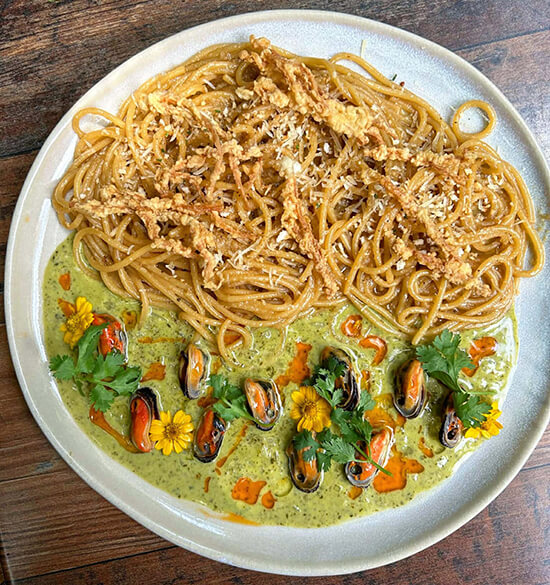
Tina’s story still reads like a scene she would rather not have lived through twice. She was on salad duty in an open kitchen, a French couple seated directly in front of her station, and an endive salad assembled layer by layer while she explained it proudly. The first bite earned approval. The second changed everything. Part of her black glove had gone missing and landed in the salad. Even now I can imagine Tina telling it while laughing, though perhaps not without remembering the heat rising to her face. “I said my apologies, turned red, ran inside the walk-in chiller, and cried,” she recounts.
Bettina’s disaster belongs to her time at DB Bistro & Oyster Bar in Singapore, where she roasted 70 kilograms of duck bones for jus and burnt nearly all of it. She tried scraping away what could be saved before surrendering to the obvious. “The whole kitchen smelled of burnt duck. I thought I was going to get fired or get killed and stored in the freezer,” says Bettina.
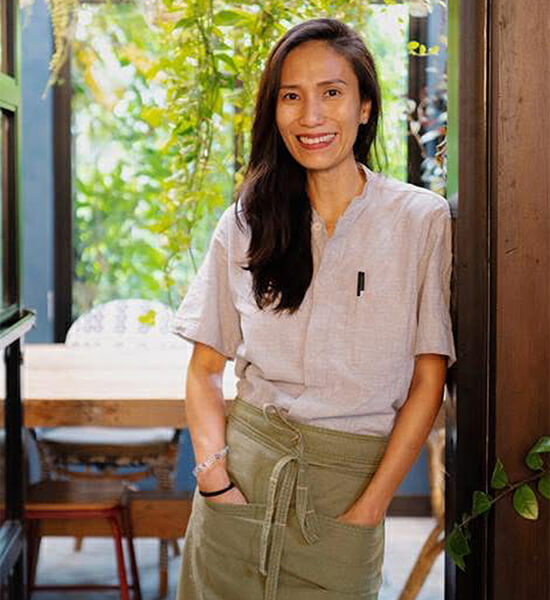
Rhea’s humiliation involved 10 dozen eggs and a public lecture delivered during an important event, with what felt to her like 30 witnesses present, Tina included, with whom she worked before under the same boss.
The three understand one another’s food in language more revealing than formal criticism.
Bettina says Tina’s cooking is “playful and happy,” then reaches for an image no critic would invent, “like coming home to a puppy wagging its cute little tail to greet you.” Of Rhea, she chooses Manny Pacquiao because her food “always packs a mean punch, nimble, and a heavyweight in flavor.”
Tina calls Bettina “The Nurturer,” saying even her French classics seem to know what diners need before they do. Of Rhea she says, “The Adventurer,” because every plate carries twists and turns.
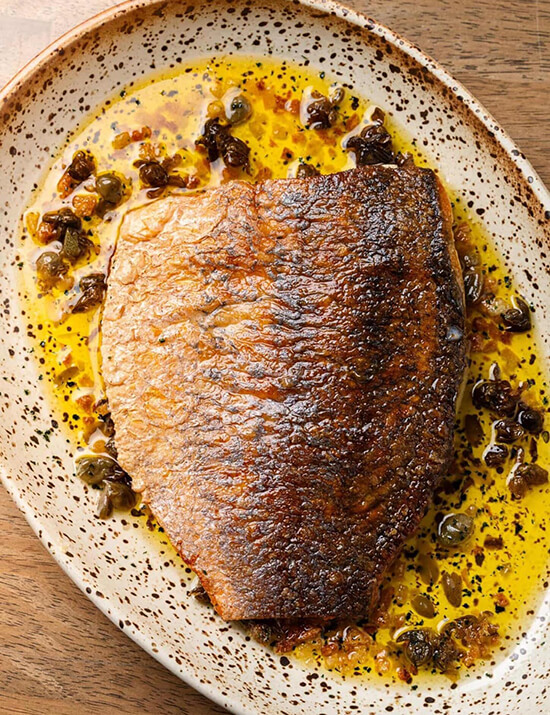
Rhea Rizzo
Rhea answers in the vocabulary of menus. Tina becomes “your favorite cursive font,” familiar and easy to trust. Bettina moves between formal French letters and Open Sans, because she can shift into other flavors without losing herself.
Friendship permits metaphors critics would never dare print.
Their advice to younger women entering kitchens is where play gives way to conviction. Tina says plainly that expensive culinary school is not the only road and that beginning at the bottom still teaches what money can’t. Bettina remembers requesting butchery and midnight baking during her internship at The Fullerton Hotel Singapore, stations no woman before her had requested. “There are no gendered skills,” she says. “If you’re good, you’re good.” Rhea resists the old habit of measuring women against men at all.
Their home pantries reveal what professional kitchens conceal. Tina always has Eden in the refrigerator. Bettina keeps expired ingredients because some experiment may yet justify keeping them. Rhea maintains fermentation projects alarming enough to invite premature disposal.
When asked which of one another’s dishes they would fear recreating, the answers become unexpectedly tender. Tina dreads Bettina’s Chicken Alexander because some recipes gather private history, and Rhea’s curries because she suspects there is always one final move that changes everything. Bettina names Tina’s dan dan dumplings and also Rhea’s curries. Rhea fears Bettina’s foie gras terrine and Tina’s duck ravioli. I suspect admiration among friends becomes clearest when fear enters the sentence, when recreating a dish feels like handling part of the person who made it.
Then came the question that sounded playful until their answers gave it shape. If their friendship were a three-course meal, who would be appetizer, main course, and dessert?
Bettina places herself at the beginning because she usually starts the conversation and, by her own admission, often the drinking, too. Rhea becomes the main because there is always something happening around her. Tina becomes dessert because she is, in Bettina’s words, “truly the sweetest.” Rhea arranges it similarly. She sees herself as the opening note, Bettina as the center, Tina as the warm finish. Tina refuses fixed assignments. “Some days we allow each other to be the main course,” she says. “And then on other days depending how hard life is for one of us, we take the lead and be appetizer so the other warms up. It makes us happy when we succeed or when we get the spotlight and I think that’s the best kind of friendship.”
In a profession where names are attached to openings, reviews, invitations, and all the little hierarchies that circulate long after dinner ends, that ease with one another feels earned.
Bettina still prefers The Silly Labuyos. Tina stands by The Tres Chiquititas. Rhea says Spice Girls, which is exactly the answer one expects from someone unwilling to resist the obvious joke.
They can speak of Nora Daza and Glenda Barretto with gratitude, admire their contemporaries, then return without strain to jokes about vodka, sour cream popcorn, expired ingredients, and processed cheese.
Their friendship is not incidental to their work. It seasons it.

WATCH: Discovering Vietnam in three days
June 9, 2026