

Once upon the Singapore Strait
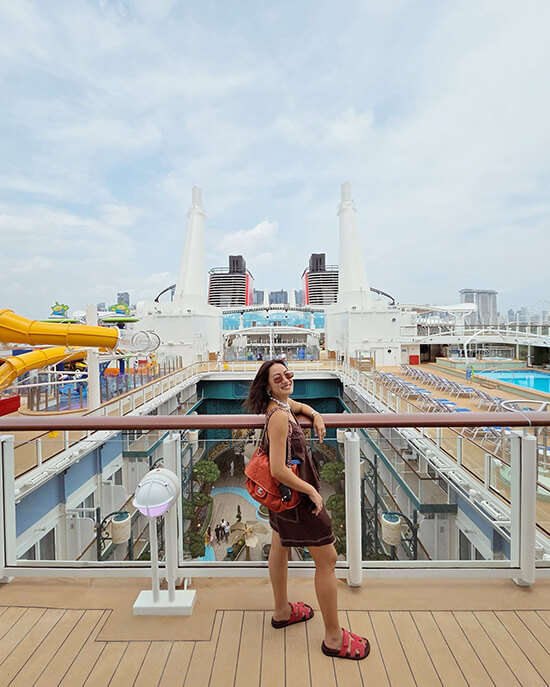
What strikes you first about the Disney Adventure is her scale. At 208,108 gross tons, she is the largest vessel ever to sail under the Disney Cruise Line flag, a floating world spread across 19 decks and designed to carry roughly 6,700 passengers and more than 2,000 crew members. The ship rises from the water like a city with four funnels on the skyline, a visual salute to the great ocean liners of the past.
Yet size alone does not explain what happens once you step aboard.
The Disney Adventure begins her life in Southeast Asia with an unusual premise. The voyage does not revolve around ports of call. The ship itself is the destination. Three to five nights unfold entirely at sea after departing from Singapore. It sounds counterintuitive until you experience it. A cruise without excursions shifts your attention inward. The ship becomes a stage where the story plays out.
The vessel also has an unusual history. She began as a massive project for another cruise line that never reached the water before Disney acquired the unfinished ship and completed it with the German shipbuilder Meyer Werft.
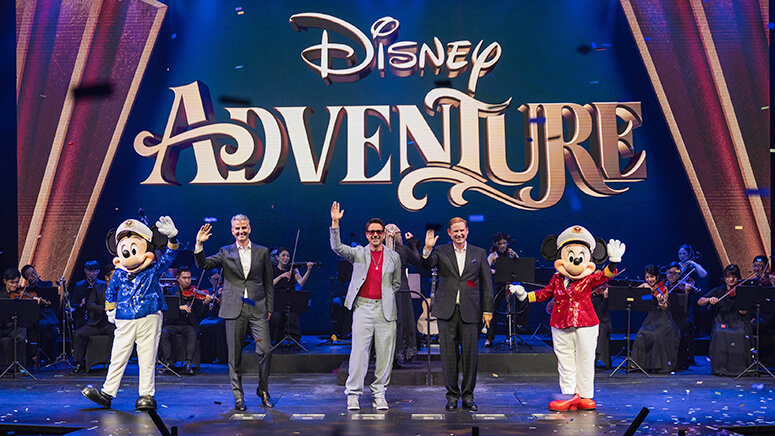
The transition from a construction project to a character happened during the christening in the Walt Disney Theater. Robert Downey Jr. stood onstage as the ship’s official godparent. His image is inseparable from the high-tech mythology of Tony Stark, and his presence gave the massive scale of the ship a sense of personality. “Bring the thunder,” he told the orchestra, effectively giving the vessel permission to be bold.
Disney Cruise Line’s first vessel to homeport in Asia, the finished ship is built around seven themed districts that function like neighborhoods.
CONTINUE READING BELOW

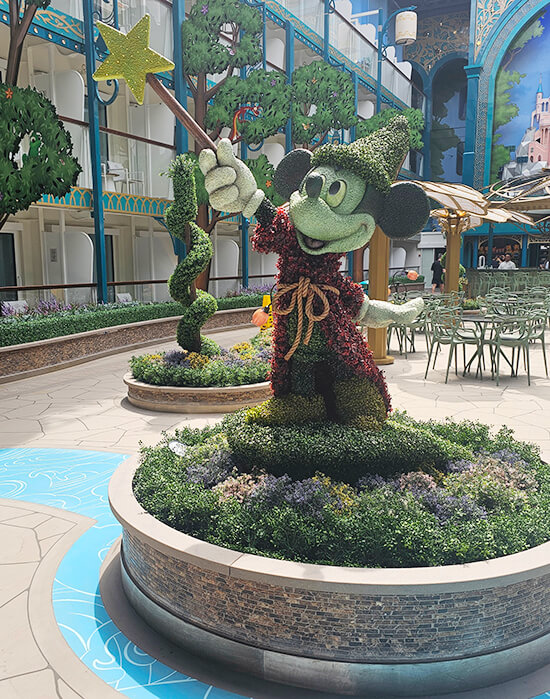
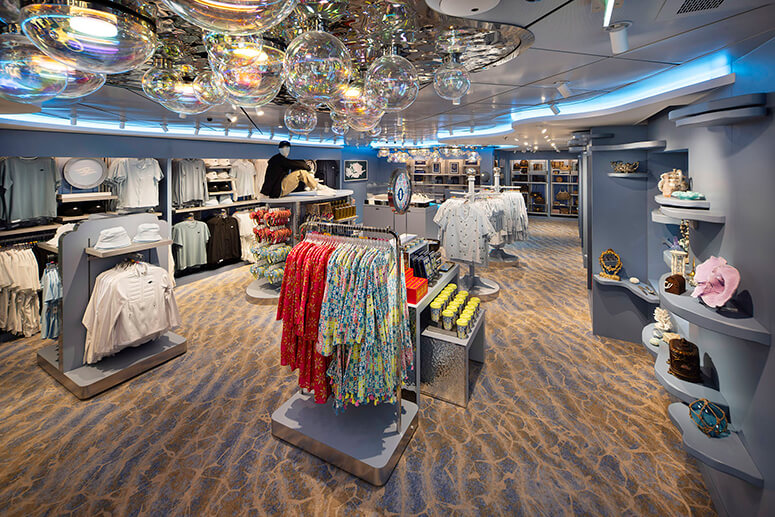
Disney Imagination Garden sits at the center, an open-air valley surrounded by terraces where families gather for shows at the Garden Stage. San Fransokyo Street draws its inspiration from the animated world of Big Hero 6 and unfolds like a lively market district with games, cinemas, and shops. Toy Story Place transforms the upper deck into a playground of slides and splash zones.
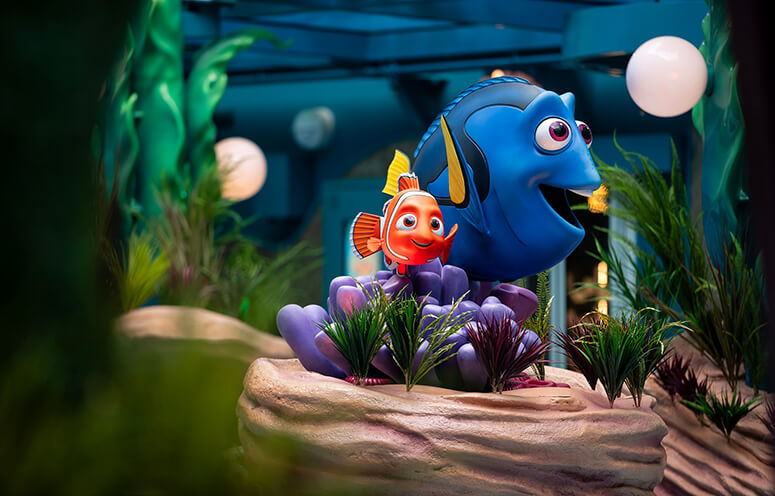
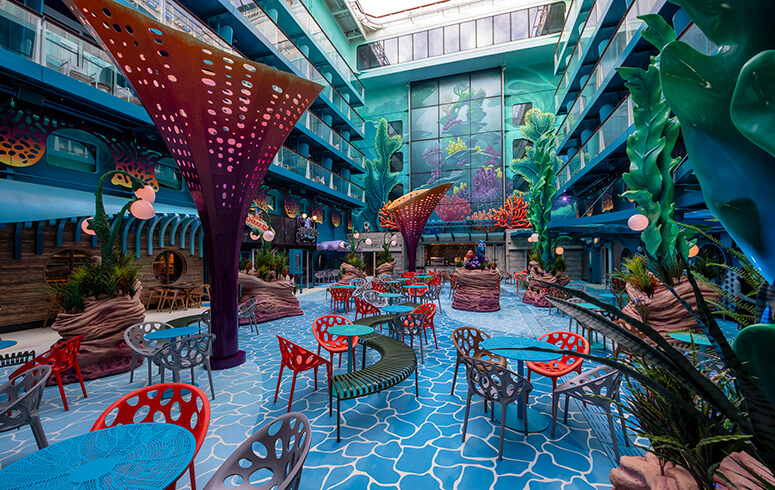
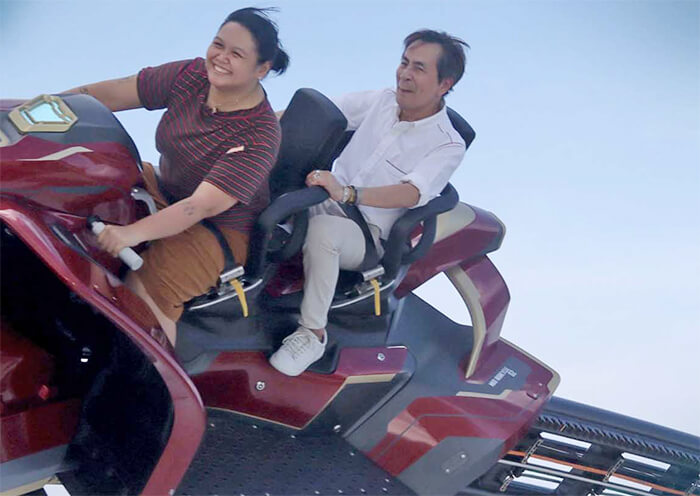
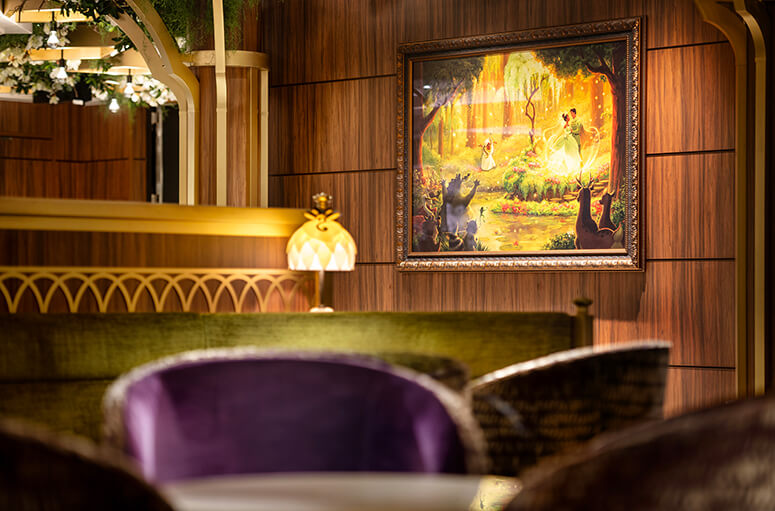
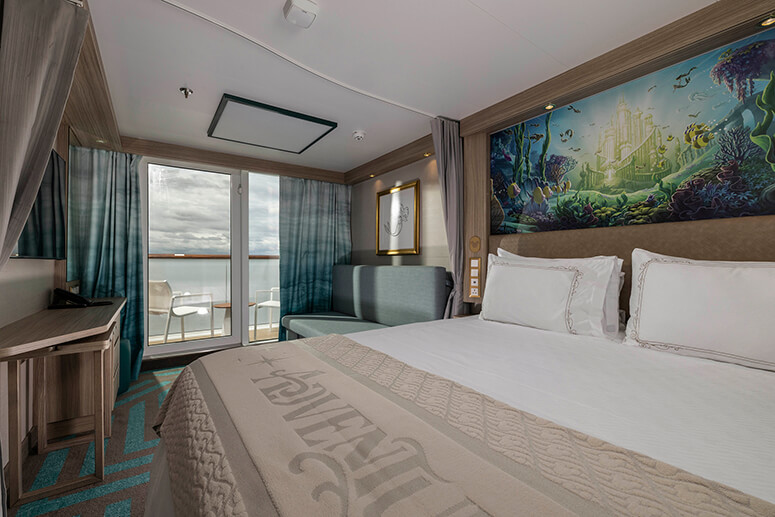
Disney Discovery Reef borrows from underwater stories like The Little Mermaid and Finding Nemo, while Town Square celebrates the royalty of Disney princesses. Then there is Marvel Landing, the loudest corner of the ship, where a roller coaster called the Ironcycle Test Run winds across the upper decks. Finally, Wayfinder Bay at the stern, an open-air retreat inspired by Moana, where the horizon stretches wide enough to remind you that the ship is still crossing real water.
The arrangement is deliberate. Families disperse during the day and reunite at night.
Sarah Fox, vice president and general manager for Disney Cruise Line in the region, described the idea in simple terms when we spoke aboard the ship. “There are spaces and places that everyone can enjoy at their own pace,” she said. “Then the family can come together again for dinner or a show.”
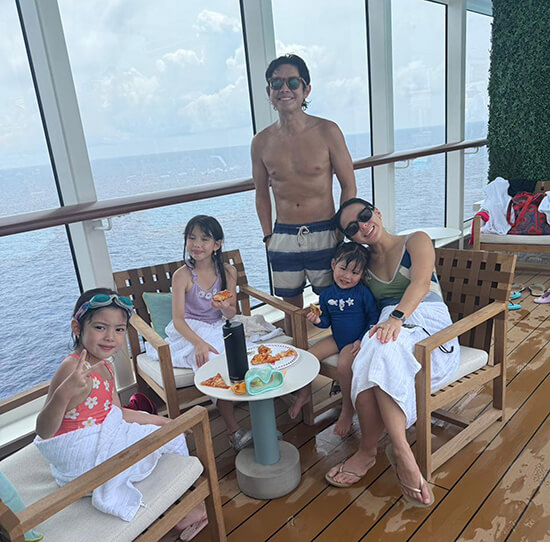
For travelers from the Philippines, the concept makes immediate sense. Our holidays often arrive in clusters, lolo and lola in tow, cousins everywhere, the whole family moving as a single caravan. A ship like this allows each generation to follow its own rhythm. The children disappear into youth clubs that run from nursery age through the teenage years. Parents drift toward spas or lounges or the shop that turns into a secret bar after dark, pouring rare bottles like the Pappy Van Winkle. Grandparents claim a quiet corner with a view of the sea. Everyone meets again at night.
The evenings revolve around a system Disney pioneered years ago and continues to refine. It is called rotational dining.
Each night, guests move to a different themed restaurant. The dining room changes, but the serving team follows you from place to place. It means that by the second evening, someone already remembers how you take your coffee. By the third, they anticipate your habits.
Dinner on my voyage began each evening at 8:15 with the same small group of fellow passengers. We gathered around the table as the settings shifted from Navigator’s Club to Animator’s Table to Pixar Market Restaurant, then back to Navigator’s Club. The rooms changed. The tone changed. The company remained. Our lead server, Eze, understood that dinner on a ship this large is also about recognition. On a ship the size of a city, he greeted us each night like regulars at a neighborhood restaurant.
Food is the center of any Filipino holiday, and the Disney Adventure treats dining almost as an expedition of its own. The ship carries 25 restaurants and lounges that range from casual counters to refined dining rooms.
Fox explained that the menus reflect both Disney traditions and the tastes of the region. “There is a very conscious choice to bring the best of Disney,” she said, mentioning favorites like Mickey waffles and the celebrated chocolate soufflé at Palo Trattoria. “But we also infuse the local tastes and palate of the region.”
Quick service kitchens include Gramma Tala’s Kitchen with Southeast Asian flavors, Mowgli’s Place with Indian dishes, and Cosmic Kebabs with its selection of Middle Eastern fare. The range extends to halal options, vegetarian menus, and accommodations for food allergies.
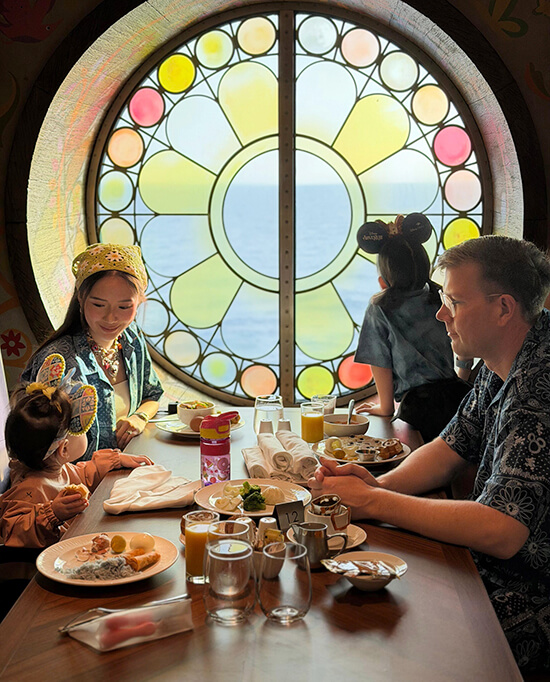
Fox emphasized that Filipino travelers represent an important audience for the ship. “They have a very strong Disney affinity,” she said. “The storytelling and the music of Disney resonate strongly with Filipino guests.”
The entertainment program reflects that affection for music. Broadway-style productions anchor the evenings in the Walt Disney Theater, featuring Disney Seas the Adventure and Remember, two live musicals created specifically for this ship.
Remember follows the robot Wall-E as he tries to restore the memory of Eve through the songs of classic Disney stories. Bubbles floated above the orchestra seats while artificial snow drifted down from the ceiling. It was sentimental, elaborate, and strangely moving. Somewhere in the middle of the show, I realized I was watching with the same attention I once gave cartoons as a child.
That realization arrived slowly during the voyage. My first reaction to the ship had been resistance. Adults learn to approach wonder with caution. We measure it, test it, hold it at arm’s length.
Then the sea air and the music began to work their way in.
By the second day, I found myself racing across the upper decks on the Ironcycle Test Run, a track roughly 250 meters long that sends riders sweeping past the horizon. This is the first roller coaster in the Disney fleet and the longest at sea. It circles the heart of Marvel Landing and turns the top deck into something like a laboratory imagined by Tony Stark.
The wind off the water is sharp at that height. The sea flashes beneath you. For a few seconds, the world shrinks to speed and sky.
Fox views that attraction not as a departure from Disney tradition but as another form of storytelling. “Everything we do starts with our guests,” she told me. The popularity of Marvel across Asia led Disney’s Imagineers to imagine how that world might unfold at sea.
The coaster became one expression of a larger narrative that runs through the district, from rides to stage shows to themed restaurants.
The Disney Adventure may be the largest ship Disney has ever built, yet the experience onboard often feels surprisingly intimate. Fox described it in a way that stayed with me. “You can be walking down a hallway and bump into your Disney friends,” she said.
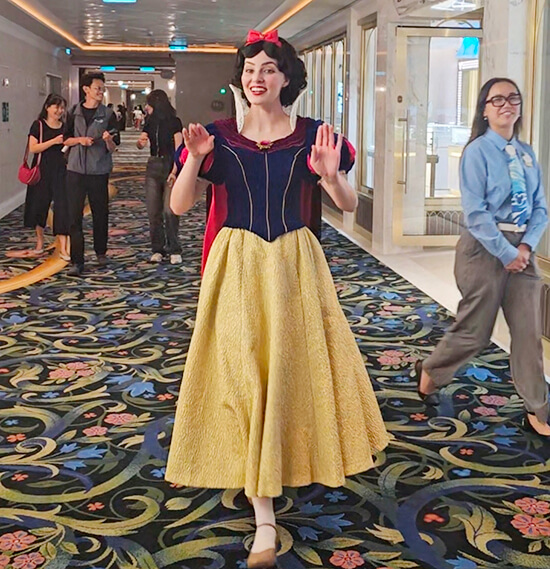
It happens often. Mickey Mouse turns a corner. Goofy wanders through the atrium. Snow White and Rapunzel step out of their stories and into the crowd. Children approach them without hesitation, while adults pause for a photograph they claim is meant for someone else.
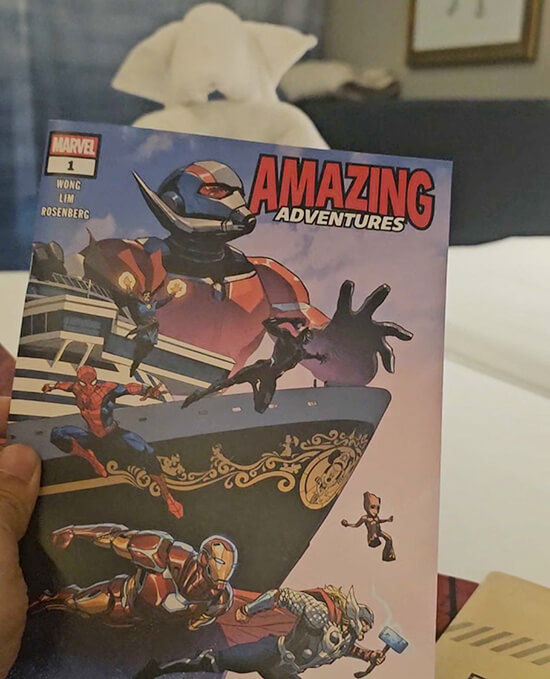
That blend of childhood and adulthood defines the atmosphere on board.
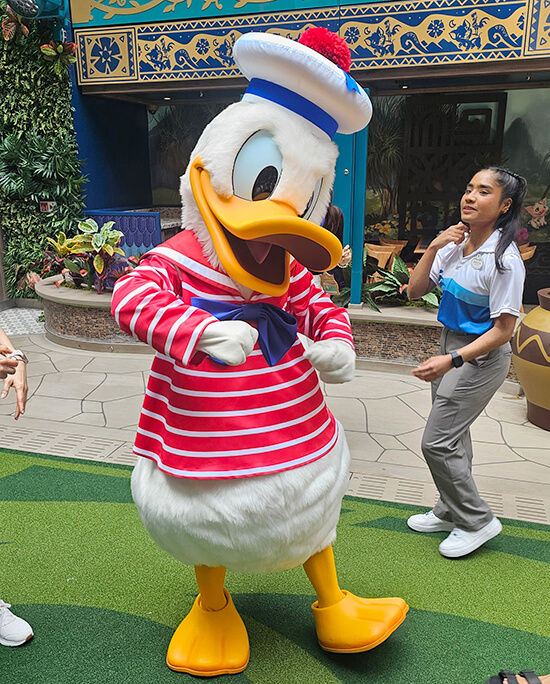
One afternoon, I sat at Bacha Coffee on Deck 7 with a pot of Ethiopian coffee and a croissant while the sea rolled outside the window. It’s the first time the brand has opened a location on a cruise ship. The space is a shift in tempo from the rest of the vessel, with a design that nods to the world of Aladdin. It carries the history of Marrakech and the legendary Dar el Bacha palace into the middle of the ocean. Somewhere on the decks above me, children were chasing Donald Duck through a spray of water jets.
The contrast felt oddly perfect. It invites you to revisit a part of yourself that adult life tends to bury under deadlines and skepticism.
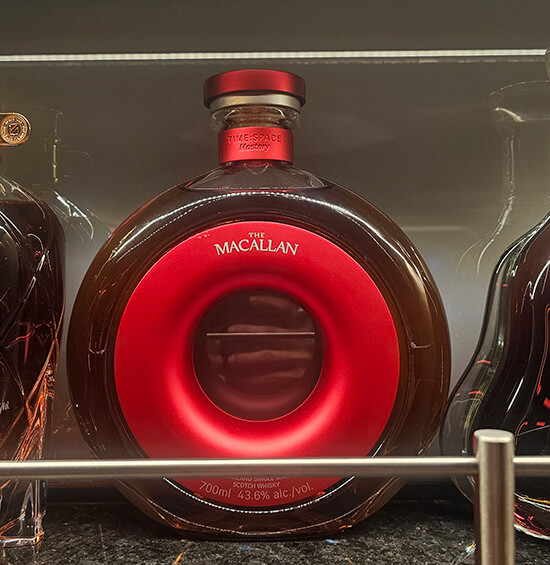
Somewhere between the Singapore Strait, the Strait of Malacca, and the South China Sea, I noticed that the child I used to be had returned. He was running ahead through San Fransokyo Street, sketching cartoons at Animator’s Table, and shouting into the wind on a roller coaster above the water. The adult version followed a few steps behind with a laptop and a glass of Macallan. Both of us fit on the ship.
By the final night, the dinner table at 8:15 felt like a gathering of old friends rather than the strangers who had boarded days earlier. The voyage ended where it began, with the ship sliding back toward Singapore.
For a moment, the illusion held that travel can restore something we believed we had outgrown; not youth exactly, but something closer to curiosity.
A few days at sea had made room for that again.
***
For inquiries, visit disneycruise.disney.go.com.

WATCH: Is Gen Z too soft? (Generations Ep. 23)
September 30, 2026