

Rediscovering ourselves at Museo del Galeon
The Philippines—an archipelago of dreamers, explorers and stargazers. From millennium past to the present, it’s evident that we are a people imbued with curiosity and an eternal wanderlust, coupled with the skills to make that longing to explore faraway places a reality. We love to travel, even settle in foreign lands and it turns out that this is a part of our DNA.
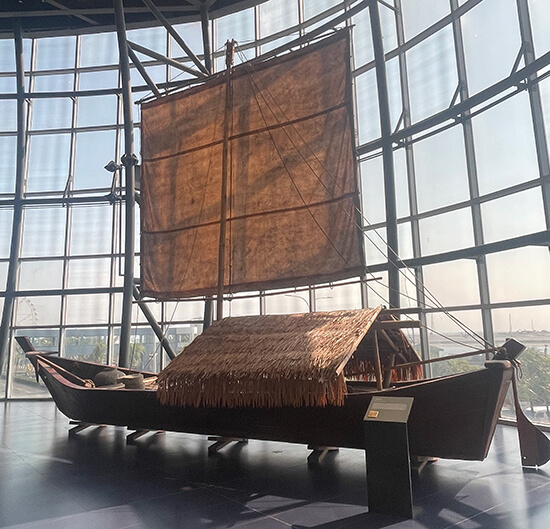
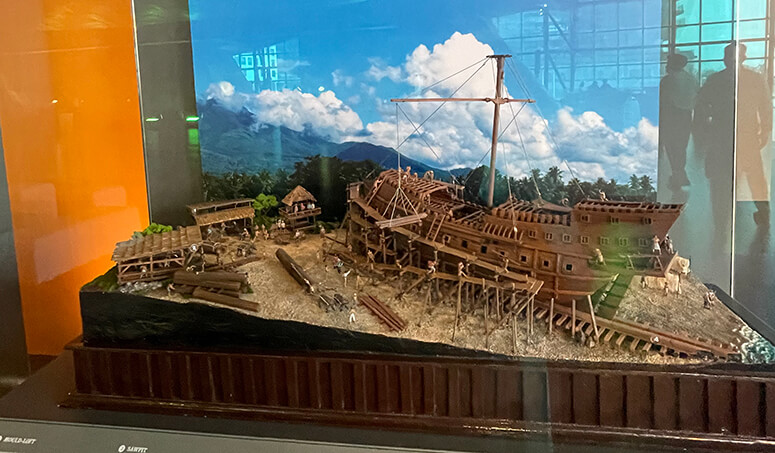
Two thousand years ago, the dense forests that covered our islands made venturing into the hinterlands difficult, hence ancient Filipinos instead pushed out to sea. They became adept at constructing seagoing vessels, from the simple bauto, or Butuan canoe fashioned on the banks of the Agusan marshes, to the more complex balangay in which planks were fastened together, amazingly, without nails. Guided by the tides, the currents and the constellations, Filipinos were early mariners who were experts in traversing the waters that surrounded them. And they continue to be so today, with the Philippines being the number one source of seafarers, constant travelers and restless explorers.
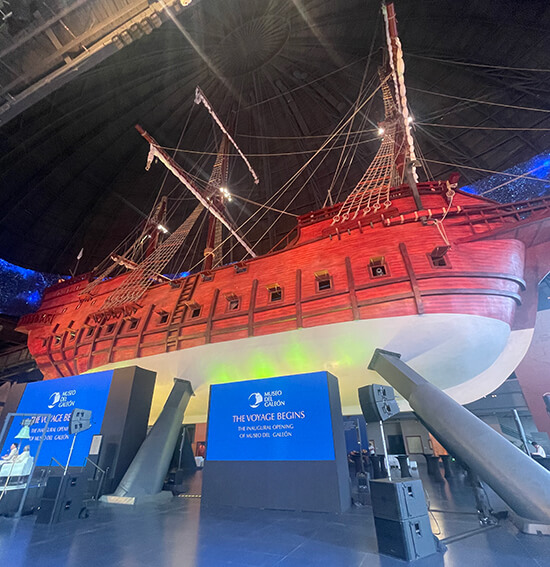
To understand how Filipinos played a pivotal role in the world history of globalization, the Museo del Galeon was established. This is a project spearheaded by the late Sen. Edgardo J. Angara, to tell the story of the all-important galleon trade. The shiny silver dome at the MOA complex that you may have spied for the past several years houses an interactive museum whose focal point is a full-scale representation of the Galeon Espiritu Santo. Now finally opening to the public, the museum fills a gap in our history between those early pre-colonial seafarers and life as a Spanish colony, as can be gleaned from Intramuros.
Executive director Manolo Quezon III explains, “The Museo del Galeon is a means for discovery, rediscovery, celebrating why we are who we are, a most unique people. It’s a little different from all the other museums that you might have gone to, because it is what we call an experiential museum. This is not a place where you’ll hear ‘Don’t touch this,’ ‘Be quiet.’ It is a place where you can explore, learn, touch, engage in a way that will invite that kind of discovery and appreciation, that will launch you on so many other journeys of discovery. That’s what the Museo del Galeon is all about—a 250-year chapter in our story, and after you visit here you will realize how crucial, interesting and important it was.”
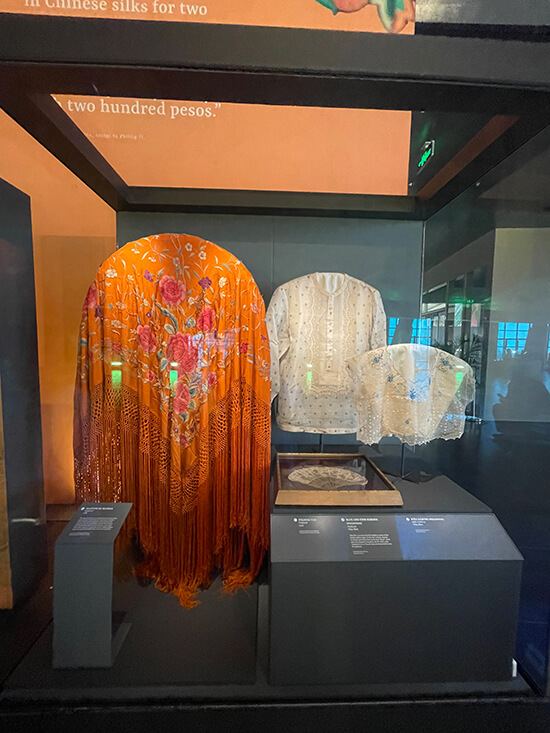
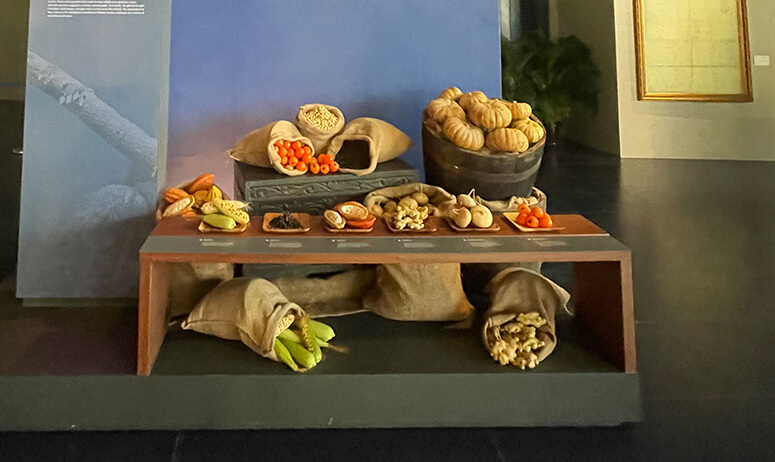
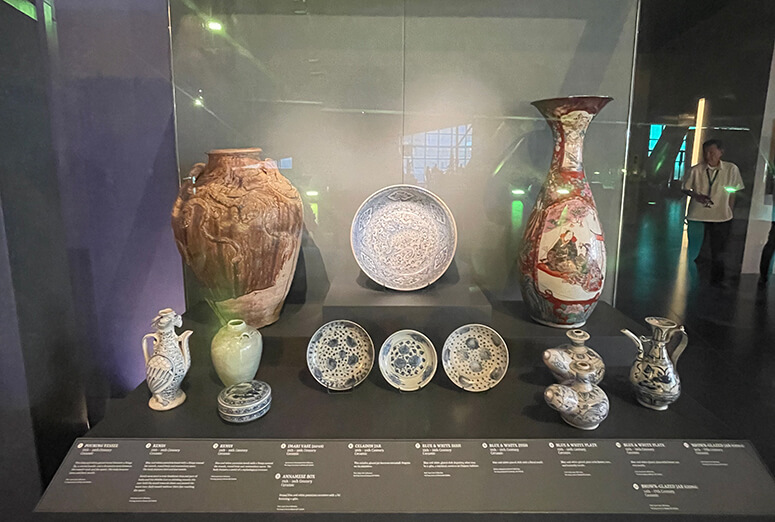
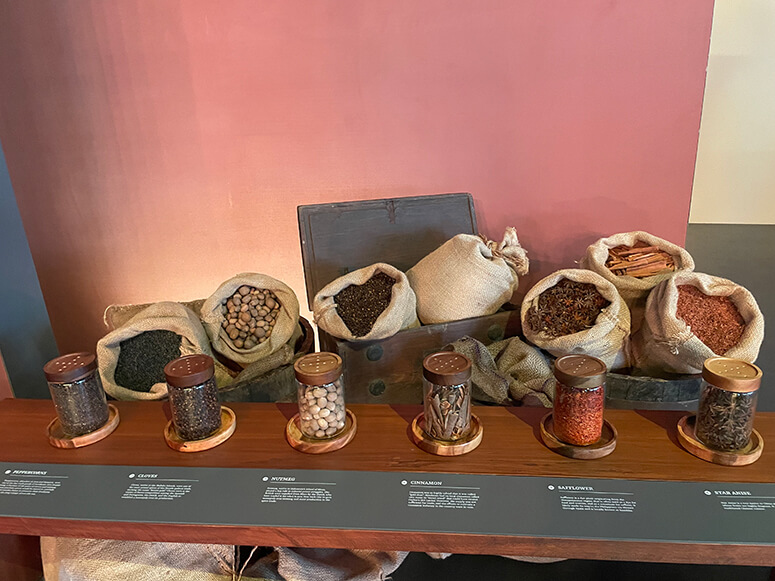
Of the 181 recorded galleons that plied the Manila-Acapulco route, 176 were built in the Philippines, mainly in Cavite and Bagatao. Silks and porcelains from China were traded for silver and in the process, an entire cultural exchange took place. Mexican fruit and vegetables made their way to our shores; indeed, what you think of as Filipino produce as listed in the Bahay Kubo song are actually from the New World. European fashion, such as the manton de Manila, religious artifacts of the Catholic faith, exotic spices, ceramics and porcelain were all brought to our shores. Beyond material goods, even many words in our language, such as nanay, tatay, palengke, and tiangge, which are actually of Mexican Indian origin, have become part of our everyday conversations.
Managing director Victor Gelano adds, “The museum is a bridge, a platform to link our past to the present. Today, the Philippines remains the leading source of seafarers around the world, and we can link that to the historical antecedents of the galleon trade. Today, we build ships for world trade; we were doing that for 500 years already. The museum actually serves as a point in time, when we should feel proud that we contributed back then to the start of what you can consider globalization. Today, we have the opportunity to not only relive the past but to shape the future; that’s the important message that we should take away.”

That past can be explored through galleries that focus on our ancient mariners and their sea routes, how the galleons circled the world and the cultural exchanges that resulted from these voyages. The Welcome Hall provides a glimpse into how these transpacific galleons led to the birth of a globalized world economy that changed the lives of millions around the world. The stunning LED display dubbed the Sea of Lights surrounds the Galeon Espiritu Santo in a living maritime horizon complete with constellations, showers of stars, storms and seascapes. It is the largest indoor LED band installation in a museum.
Victor continues, “This is a museum that is also a place for everyone to come and feel pride in who we are as a people, that’s why we proudly fly the Philippine flag. It’s to remind us that in this country, we have actually done so many good things that we need to celebrate. I hope that as people come and learn and engage, while we have discussions, conferences and displays, all this will bring about an engaging discourse that will help us understand who we are, where we came from and what we need to do to continue to be part of the community of nations.”
Trustee Gerardo A. Borromeo says, “This helps answer a piece of what it means to be Filipino. It’s a very difficult question to answer and many of us will say, ‘Oh, we love food, we love traveling.’ But that is actually part of many cultures, so it’s important to understand that we were part of something great. Sometimes it can be quite a hassle to be Filipino, try applying for a visa or going through an immigration line. This was designed so that young children can go through this museum and understand that they were part, and continue to be part, of something important and that they are special. That’s what we are doing here.”
Sujit Tolat, principal and executive director of Culture Collective (museum designer and planner) says, “This is a must-visit destination because there is nothing like this in Manila or the Philippines. It presents a new benchmark in terms of how museums are experienced. This is not an object-led museum and we purposely stayed away from that in terms of wanting people to come in and interact. In most museums that you visit, you are a passive observer. But here our strategy is that this is your story, you are part of the story, and that’s what makes it different from everything else. We want to convert visitors from bystanders to participants.”
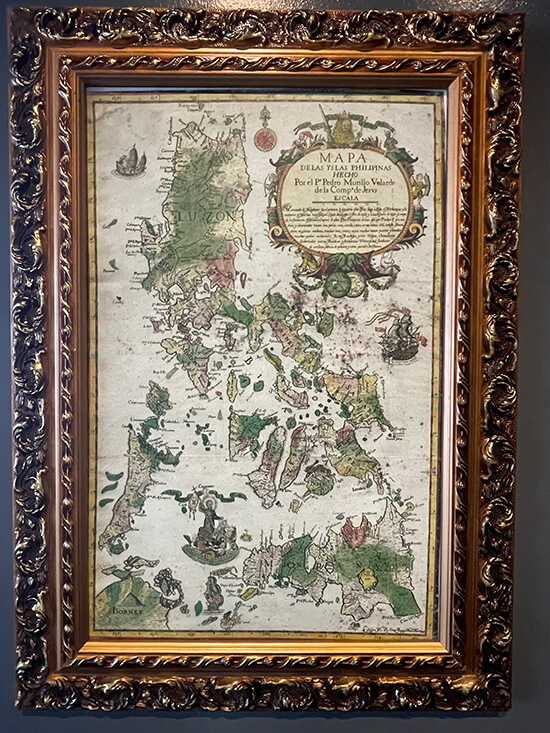
The Museo del Galeon opened on May 1. Regular entry for adults is priced at P675, while children above two feet are priced at P375. There are special rates for public school students, teachers, and senior citizens. The museum is committed to finding ways to make it accessible to all Filipinos, especially students.

WATCH: Is Gen Z too soft? (Generations Ep. 23)
September 30, 2026
WATCH: Pixar Summer Fest adventure at Hong Kong Disneyland
August 10, 2026