

Why do many Filipinos choose international over local films?
What’s the state of Philippine cinema today?
In the 19th episode of PhilSTAR L!fe's Generations podcast, veteran journalist Luchi Cruz-Valdes and millennial content creator Raco Ruiz sat down with filmmakers Carlos Siguion-Reyna, Mark Meily, and Rae Red to talk about what’s happening in the local film industry and what needs to change for the industry to thrive.
Looking at today’s filmmaking scene, Carlos said the distinction between commercial and experimental indie films is becoming increasingly blurred, noting that “people are using lessons from each other,” unlike before, when there was a “high wall” between the two.
“There have been successes, but it’s always been a struggle,” he said.
The filmmakers noted that fewer films are being released each year. Mark noted that vertical microdramas, including AI-generated ones, continue to gain popularity on social media platforms.
“The vertical microdrama, I think, is slowly becoming the next mainstream because it has AI, it has super cheesy story pero nagtataka ako, 'Oh my god, why am I watching for half an hour already?” the Gen X filmmaker said.


Rae noted that the rise of microdramas has also challenged traditional storytelling conventions, as many of these productions do not necessarily follow established rules of continuity.
“Wala nang rules ngayon eh. It’s so weird watching those,” the millennial filmmaker said.
Rae admitted that she feels threatened by AI, while Carlos said he hopes the market will eventually become so saturated with AI-generated content that audiences will be able to recognize when something is not real.
"We keep teaching the machine by uploading our stuff for free, without signing those user agreements that strip us practically of intellectual property on stuff that we put up there," the Hihintayin Kita Sa Langit director said, noting that growing use of AI in the entertainment industry could lead to job losses.
“In doing that, it will get there. It’s not only filmmakers whose jobs will be lost, it’s [also] other jobs, the data systems, the things that can be done by computer, that will also be taken over,” he added.
Local or international films?
With many Filipinos raving about international films like Spider-Man: Brand New Day, Toy Story 5, Michael, and The Odyssey, Luchi asked filmmakers whether Filipino films can keep pace with these releases, move beyond familiar storytelling formulas and dialogue, and evolve with changing audience expectations.
Rae believes that the challenges facing the local movie industry go beyond filmmaking itself, pointing out that the country’s socio-economic conditions are a major factor.
“I feel like when you talk about the film industry, it’s intersectional with the country as a whole, like ano ‘yung economic situation ng country, so I kind of feel that if you’re gonna care about the film industry, you also need to care about the socio-economic status of the country because you can’t just lift one industry eh. Ang hirap how to cure it. Ang hirap makipagsabayan kasi you're obviously competing with first-world nations," she said.
"The way I go about it as a filmmaker is by making something very specific, and I think that's also how I counter AI," she added, noting how hard it is to capture humanity and relationships of people with AI content, with its lack of nuances and subtext.
For Mark, the biggest divide in the Philippine film industry is language. He explained that in Thailand, people across different social and educational backgrounds tend to watch Thai films because they're familiar with the language. In contrast, Filipinos often gravitate toward Hollywood films because they're less accustomed to watching films in Tagalog.

Mark noted that even before the 1986 People Power Revolution, Filipinos had already been heavily exposed to English through television commercials, advertisements, news, and other forms of media.
"Ang laking divide nung language. Parang sophisticated, aspirational, it's always in English. So creating a movie that will appeal across Filipinos, mahirap because of our language," he stressed. "It unites us, but it's also dividing us."
Philippine cinema and its audience
The filmmakers had mixed reactions when asked about Film Development Council of the Philippines Chairman Jose Javier Reyes’ remark on why local cinema continues to struggle: "It's a fallacy to say na buhay na buhay ang Pelikulang Pilipino, buhay na buhay ang Cinemalaya. Ang Pelikulang Pilipino ay naghihikahos. At bakit naghihikahos ang Pelikulang Pilipino? Dahil almost $800 million ang kinita ng Spider-Man at almost $500 million ang kinita ng The Odyssey. Ito ay sa aking pakiwari lang: Hindi presyo ng ticket ang problema. Ang problema ay ang attitude ng Pilipino sa Pelikulang Pilipino."
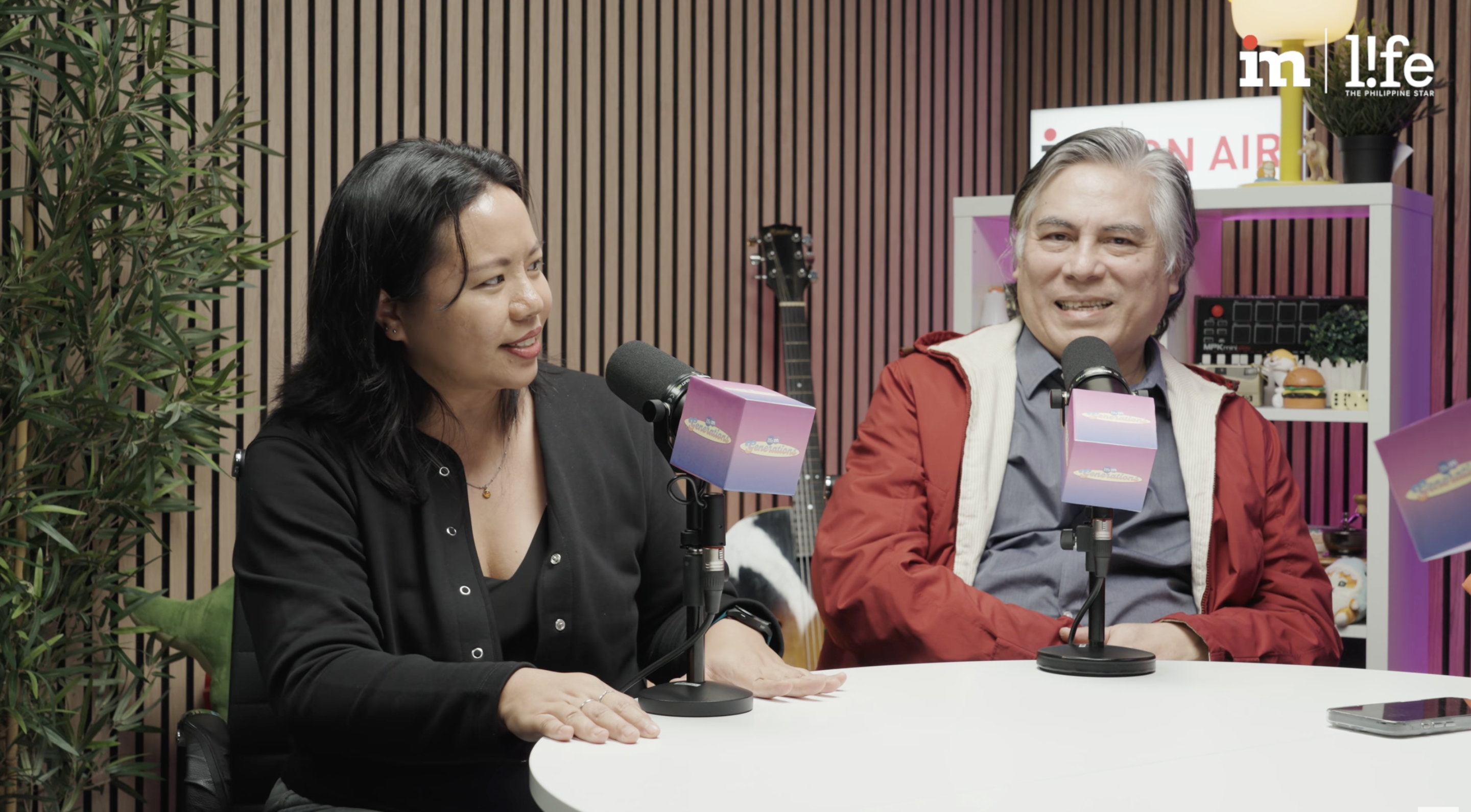
For Rae, it's difficult to say ticket prices have no connection to why the industry is struggling, given how much prices have increased over the years. "We can't disregard the economics of the country. When I was young, 'pag nagpapalipas ako ng oras, I would watch a film; ngayon kung magpapalipas ako ng oras, I would just scroll," she said, adding she'd rather spend her hard-earned money on event films.
Luchi agreed, saying that movie ticket prices can be so high, especially when watching as a group, not to mention the added cost of snacks and transportation going to the cinema.
For his part, Carlos said it boils down to having different audiences—some moviegoers will only watch event films, while others will watch local film festival films. He also pointed out people's tendency to generalize Filipino films as being centered on mistress or third-party romances. "When was the last time you saw a Filipino movie? We just had a great run at Cinemalaya."
"There's a different audience. I respect it; you can't force them to watch Philippine films if they don't want to," he continued. "But if you get interested in having the Philippine voice heard, and if you want to keep on making sure that our stories are told by us, then the films are there."
Mark agreed with the FDCP chair's statement, stressing that a kind of "drought" is happening not just in the Philippines but also in other countries like the US.
Raco noted that FOMO, or the fear of missing out, may be one reason why many people watched The Odyssey and Spider-Man: Brand New Day.
"I think it's the sense of community, and if we want Filipinos to watch Filipino movies, people have to talk about it more," the content creator said.
Hopes for the Filipino film industry
As they strive to tell stories that resonate with people and capture real human experiences, Rae hopes to establish better working practices on set, as well as receive more incentives and support from the national government.
Beyond government support, Carlos hopes to gain greater support from audiences and explore ways to partner with them in film distribution. These may include initiatives such as audience-led screenings and other activities that allow viewers to actively support the films they want to see.
Mark, meanwhile, would like the local film industry to "be more Korea."
"Look at television, the cinema, it's just reframing how to tell stories," he said, noting how their film industry booms alongside K-pop. "What can we learn from their industry right now?"
He also hopes to follow France’s example, noting that the government supports the film industry, with a portion of movie ticket proceeds going to the country’s film agency to help fund local productions.
Watch the full episode below.
Follow PhilSTAR L!fe on YouTube and Spotify to catch new episodes of Generations.

WATCH: Save for retirement or enjoy life now? (Generations Ep. 21)
September 16, 2026
WATCH: Is Gen Z too soft? (Generations Ep. 23)
September 30, 2026