

BCDA turns former bases into national treasures
Amid the flood control scandals tearing the very fiber of the Philippines, with geopolitical factors in the Middle East not helping any, good news from the Bases Conversion and Development Authority is stitching some tattered edges of the economy into place.
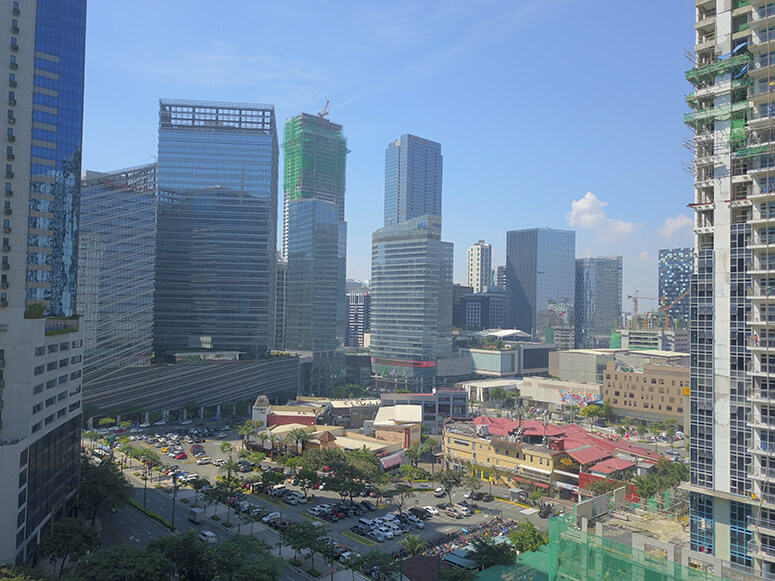
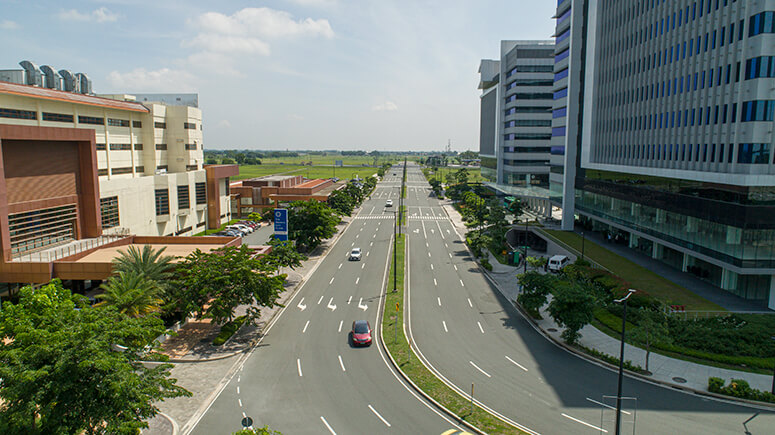
In that sense, BCDA president and CEO Joshua M. Bingcang is leading the continuing journey of former military bases, like the Bonifacio Global City, the New Clark City and John Hay Special Economic Zone, into lands of fulfilled promises—turning them into national treasures, sources of revenue and employment.
Aside from the promising news about the New Clark City being turned into the “next Silicon Valley,” the BCDA has also announced that it has formally turned over P5.7 billion to the Bureau of the Treasury, for funding infrastructure, social services, and military modernization.
“Every peso we remit translates to real improvements in people’s daily lives. This is how we make sure our work creates an impact that people can see and feel,” said Bingcang, an engineer who has been with BCDA for the past 30 years.
The P5.7 billion is equivalent to some 330 kilometers of roads, 2,300 classrooms, or 1,700 hospital beds nationwide. It can also support about 3,800 housing units under the Pambansang Pabahay Para sa Pilipino Program. Once channeled, a portion will be allocated to strengthen the Armed Forces of the Philippines (AFP) modernization program.
The P5.7 billion turned over to the National Treasury “brings BCDA’s total remittances for 2026 to five percent higher than the P 5.45 billion recorded in 2025.”
CONTINUE READING BELOW

Bingcang says this impressive figure was “driven by solid performance across its economic zones and strategic partnerships.”
This “Joshua,” a leader like his biblical namesake, also declares confidently, “Clark will be the next Silicon Valley.”
The BCDA has allocated a 4,000-acre (1618.743-hectare) lot in New Clark City, Tarlac to serve as a “Pax Silica” Coordination Office where technology firms, research institutions, and government agencies can converge to build a robust AI ecosystem and attract high-value investments.

The Pax Silica Declaration, according to online sources, is a US-led initiative that seeks to build a secure and resilient silicon supply chain covering critical minerals, semiconductors, AI and advanced manufacturing, with members including Japan, South Korea, the Philippines, and the UK.
The good news from BCDA doesn’t end there. The BCDA is in final talks with Lufthansa to build an MRO (maintenance repair operations or organization) hub in Clark that is big enough to house two Airbus A380s!
“And we’re working with an American company for a big data center. They need 600 megawatts of power — that’s one power plant in itself! It’s a $2-billion investment. A hyper scaler,” Bingcang said in a lunch with PeopleAsia editors and myself recently. “Pag natuloy, ito, makababalik ang Pilipinas sa mapa as an investment destination.” (“The Philippines will be back on the map as an investment destination.”)
For his part, Finance Secretary Frederick D. Go said, “BCDA is the GOCC (government-owned and -controlled corporation) that goes beyond generating dividends. It is a true developer of progress, creating the platforms and jobs that uplift millions of Filipinos across the country.”
How the BCDA does it
I asked Bingcang, a fitness buff who also runs on five cups of coffee a day (and still sleeps like a log at night), how the BCDA manages to smell like a rose amid the rot consuming many sectors, not just the public sector. By being professional, he says, because the BCDA’s track record speaks for itself and attracts a lot of strategic partners.
“I think of the experience that we have and the happy partners that we have,” he shares. So much so that when there is a foreign investor wanting to locate in the Philippines, the local partner says, “Dalhin natin sa BCDA.” (“Let’s bring them to BCDA.”)
“The assets that we manage are in a good location. Napili na ng mga Americans (chosen by the Americans). Second is the BCDA organization itself. The charter and the mandate. We are very flexible we need not go to NEDA or to other agencies to seek approval. We can approve it on our own. We work very fast,” Bingcang adds.
He is also grateful for the national government’s trust in BCDA.
According to the BCDA, of the total P5.7 billion remitted to the National Treasury, P2.6 billion came from dividends, the highest in BCDA’s history and 18.18 percent higher than the P 2.2 billion recorded in 2025. This represents 61 percent of BCDA’s net earnings, exceeding the 50 percent minimum required under the Dividend Law.
The remaining P3.09 billion came from asset disposition proceeds, which will be distributed to beneficiary agencies, including a significant share for the AFP modernization program.
What is ‘Pax Silica’?
“Pax” is a Latin term meaning “peace,” often referring to “a period of stability.”
The country’s participation in the Pax Silica Declaration signals its intent to play a more active role in the rapidly evolving AI and semiconductor landscape. This is in sync with the Marcos administration’s target of establishing the Philippines as a regional AI powerhouse.
As part of the country’s commitment, the BCDA has allocated the lot in New Clark City to serve as a Pax Silica Coordination Office. Strategically located within the Luzon Economic Corridor, the Coordination Office is the first of its kind to be established under Pax Silica. It is being designated as a “Golden Node,” a new model for AI-native investment acceleration hubs.
“By establishing this Golden Node, we stand to position New Clark City as a vital link in the global supply chain for advanced technologies and next-generation manufacturing. On the ground, this will translate into more quality job opportunities for Filipinos,” Bingcang said.
“I’m happy to see a lot of cranes in Clark,” Bingcang concludes.
“And all these projects really happened this year. Tuloy-tuloy na. (The momentum is there.) It’s just a matter of waiting for the harvest.”

WATCH: Pixar Summer Fest adventure at Hong Kong Disneyland
August 10, 2026
WATCH: Is OPM still as good as it used to be? (Generations Ep. 20)
September 9, 2026
WATCH: Is Philippine cinema still thriving? (Generations Ep. 19)
September 2, 2026