

‘Florante at Laura’: A story of love and heartbreak, of trials and triumphs
Florante at Laura, a classic narrative poem written by Francisco Balagtas in 1838, is a staple of Philippine high school education. But sadly, it’s lost on today’s generation fed on a steady diet of TikTok, Instagram, WhatsApp, and whatnots.
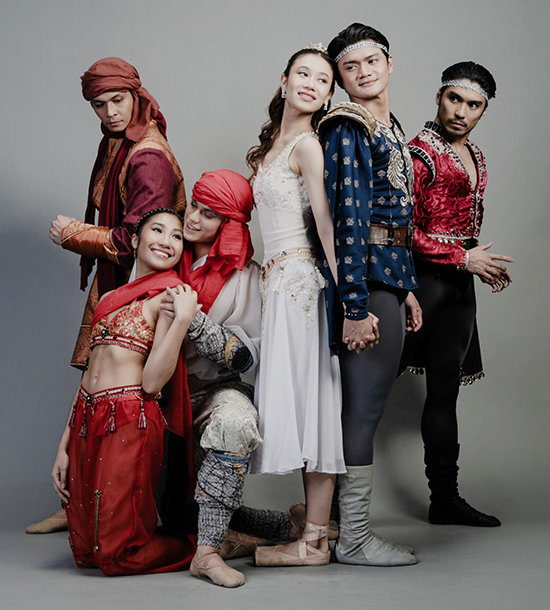
With high school now just a memory, you may want to review what you learned about this timeless epic because Ballet Manila is bringing Florante at Laura back to the stage with performances on Oct. 3-5 at the Aliw Theater.
“It feels like coming full circle,” says the visibly excited prima ballerina Lisa Macuja-Elizalde, who has long championed Filipino storytelling through classical ballet. “The first run was a dream realized; the second at Arete affirmed that Filipino stories, when told with care and conviction, truly resonate.
Now, with this third staging, it feels less like a return and more like a reckoning. I’m proud, but more than that, I’m moved. This ballet continues to teach us how timeless our heritage can be.”
Once more with Ryan Cayabyab
Once more, with much more feeling, be captivated by the play’s original score composed by National Artist for Music Ryan Cayabyab. From growing up in a home filled with music to teaching himself piano at a young age, the well-loved maestro shaped OPM to what it is today.
“Ryan is doing it again, and he’s not changing anything,” Lisa discloses. “He’s that kind of composer who will not change anything—once he finishes something, that’s it!”


“Most important before I start creating music is the mutual understanding among the other creatives and the producer regarding style and medium of music,” Ryan explains. “We decided it would be in the classical-romantic genre and that I’d work with an orchestra as our medium. And then the most important element prior to writing the music is the structure of the ballet presentation—how do we present the story? I need the description of the scenes, the different characters, and how their story unfolds. This is the work of the writer-librettist who breaks down each scene in smaller portions, etc.”
He adds, “I make the music decisions as the scenes come chronologically. I do not have any preconceived melodies prior to writing the score. I depend very much on ‘the moment’ and what it yields. About 99 percent of what I write in my music drafts eventually becomes the final music.”
What is Ryan most excited about in working on Florante at Laura?
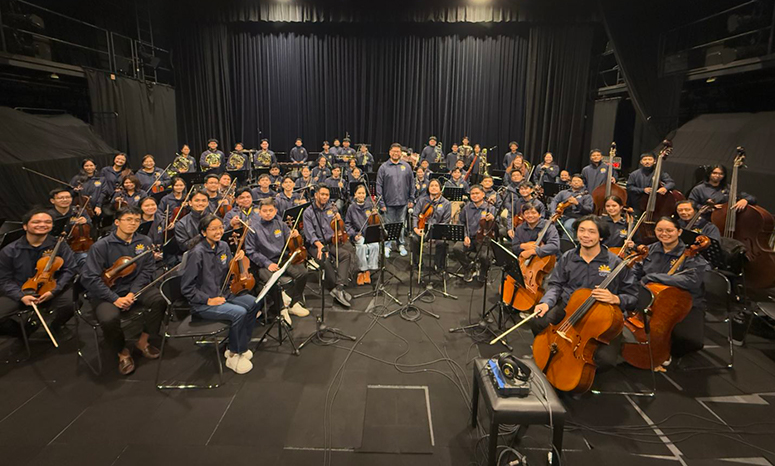
Ryan replies, “Everything is a surprise and wonder for me. I’m completely thrilled hearing my music played live by the OFY (Orchestra of the Filipino Youth, which Ryan specifically wanted). I would like to be surprised and thrilled when I see the entire production on opening night. Today, I heard the entire ballet score and I was beaming all throughout the rehearsals.”
But why did Ryan accept the invitation to create the music for Florante at Laura?
“For many important and obvious reasons,” he stresses. “The literary work stands at the top of the totem pole of Philippine literature. I’m completely enthralled with turning Filipino works into media that involves music.”
It’s been quite some time since Ryan wrote a large musical work, the last being Spoliarium in 2003.
At 71, Ryan declares, “I challenged myself into accepting this landmark ballet production and hope that it becomes an important legacy for all of us involved in it.”
Heart and sole
Macuja-Elizalde, the indefatigable spirit behind Ballet Manila, has her heart and soul (and, if we may add, her sole) in this production. “It’s my birthday budget,” she says with a big smile. “It opens on the day of my birthday.”
Florante at Laura is a very high-budget ballet. “Not something you can restage every year because of the live orchestra, the installation of the sets and taking them down which costs like almost a million,” says Lisa.

Lisa particularly loves the first scene showing Florante all tied up to a tree, exhausted to near death, while hungry lions hovered around him. “It’s jolting, already so nakakasindak in the first scene. It’s just the overture, and a lot of things have already happened. The ballet really starts with a bang,” Lisa can’t stop gushing.
Even as the country is inundated with neck-deep corruption and other issues, how is Florante at Laura still relevant today?
“Although it’s set in Albania, Persia, and Athens, the values it shares are timeless,” Lisa muses. “It’s a story of love and heartbreak (Florante and Laura), of friendship and loyalty (Florante and his former enemy-turned-bestie, Persian Moorish Prince Aladin), of trials and triumphs, of victors and victims. What Balagtas (whose muse we know as Selya) wanted to say is whether you’re Christian or Muslim, you can have your conflicts, but at the end of the day, all of you are humans who have feelings and who share values.”
Truly, Florante at Laura is a love story for all time that gets more inspiring with each retelling.
* * *
Florante at Laura will be staged on Oct. 3 at 8 p.m. and on Oct. 4 and 5 at 5 p.m. at Aliw Theater, Pasay City. Live music will be performed by the Orchestra of the Filipino Youth under the baton of Toma Cayabyab, interpreting the original score composed by National Artist for Music Ryan Cayabyab. Choreography is by Gerardo Francisco Jr. and Martin Lawrence, with set design by Mio Infante and costume design by Therese Arroyo. The libretto, adapted by Dr. Michael Coroza, anchors the production in language that bridges tradition and movement.

WATCH: Is OPM still as good as it used to be? (Generations Ep. 20)
September 9, 2026
WATCH: LGBTQIA+ people with unlikely professions
June 28, 2026
WATCH: Is Philippine cinema still thriving? (Generations Ep. 19)
September 2, 2026