

Can dance depict socio-political realities?
Dance can be a religious experience—that moment of going beyond mere physical movement to a state of surrender, an expression of profound emotion, a connection to the divine. There were many moments like this at the recent International Dance Day Festival at Samsung Performing Arts Theater, when dancers transformed the stage into a most sacred space.
At the Opening Gala, the American Ballet Theatre Studio Company under the artistic direction of Sascha Radetsky, brought us to different worlds of feeling and imagination as they performed with technical rigor and artistry belying their youth.
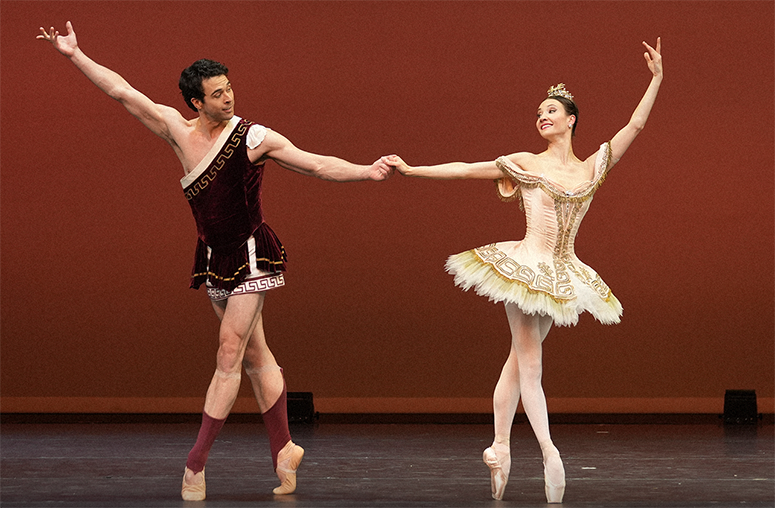
In Marius Petipa’s La Bayadere, Pas d’Action, Kiera Sun’s Gamzatti has the requisite hauteur and royal command of the Rajah’s daughter, pirouetting her way with clean footwork and secure balances while Younjae Park’s Solor has the noble épaulement and pure classical line befitting a warrior.
Kayla Mak and Elijah Geolina’s speed and musical intelligence animate the joyful, rustic Americana of Cornbread by Twyla Tharp who melds ballet with the energy of the square dance for some unexpected rhythms that this duo slips into naturally, playing with the earthy, percussive vibe while keeping clear lines, centered turns and articulated feet.
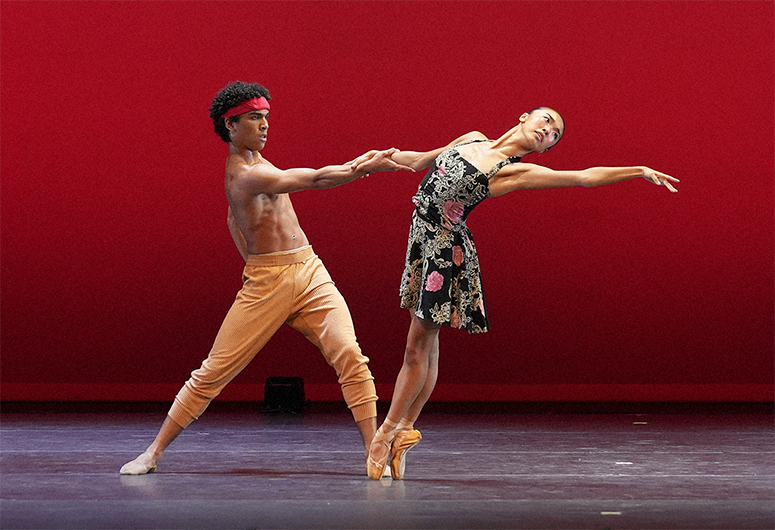
Mak indulged yet again in Human by Yannick Lebrun, whose sinuous choreography with hints of his Alvin Ailey training seemed tailor-made for the dancer who balances technical clarity and athleticism with expressions of vulnerability, struggle and resilience.
Alexei Ratmansky’s spin on the Nutcracker Pas de Deux was a showcase for the ABT principals Christine Shevchenko and Thomas Forster who impeccably render the spectacular lifts and turns while having an easy “conversational” exchange that conveys tenderness, breathing through transitions but still hitting the accents, transporting us to another world as they inhabit the glorious music of Tchaikovsky.

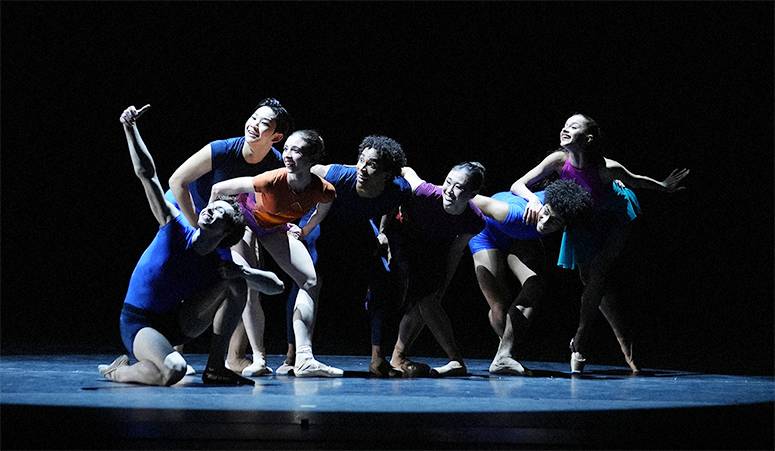
Cerulean Skies, on the other hand, brings us to an expansive celestial realm conjured by Brady Farrar through deceptively ethereal movement that is actually quite demanding for the ensemble of six who executed the intricate floorwork and fluid transitions beautifully, maintaining classical lines while navigating complex, fast-paced partnering.
The Ballet Gala proved once again how top Philippine professional dance companies and dance schools continue to evolve while tackling a range of styles. Holberg Suite by Adam Sage, performed by Alice Reyes Dance Philippines, was pure neoclassical elegance as its dancers showed confidence in their pristine technique and grace in a dialogue with the music of Grieg, mimicking Baroque dance forms but keeping a Romantic heart.
Another rare treat was the work of Gerald Arpino, co-founder of Joffrey Ballet, whose Fil-Am rehearsal director and former principal dancer, Christine Rocas, restaged two of his works: Kettentanz had the easy charm of a Viennese waltz belying the required elite-level classical technique which the dancers of STEPS Dance Studio executed effortlessly thanks to their high-quality training. Viva Vivaldi was just as delightful for its high-spirited neo-classical artistry performed by the Association of Ballet Academies, Philippines.
La Femme by Ronilo Jaynario of Philippine Ballet Theatre had a ’90s touch of modernity as its three female dancers showcased acrobatic partnering with captivating lifts and slides although the angularity in the form was sometimes softened.
A highlight of the evening was guest appearances from renowned global dance companies. K-Ballet Tokyo presented the Grand Pas de Deux from both Flames of Paris and Don Quixote, featuring Mine Nagao and Hirotaka Yamada who danced with technical virtuosity and great showmanship, exemplifying the artistic excellence their company is known for. Australian Ballet’s Katherine Sonnekus and West Australian Ballet’s Charles Dashwood also thrilled the audience in their Black Swan Pas de Deux, commanding the stage with both their towering heights and dramatic intensity.
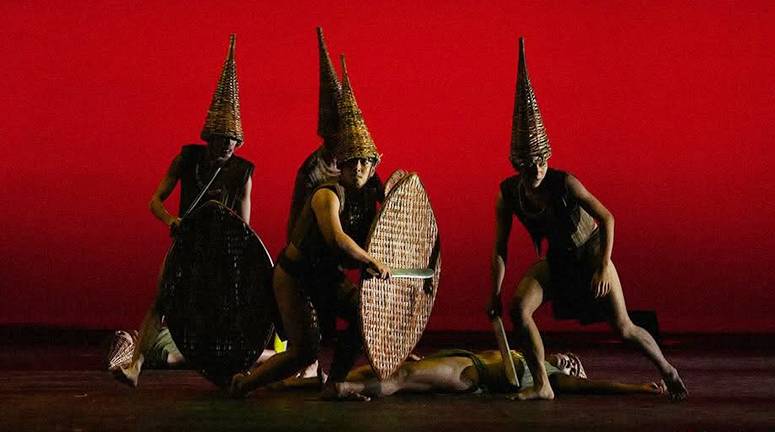
Folk dance can be something we take for granted but the Folk Dance Gala showed how there is still a lot to discover. Who could imagine that the Ivatan Suite by the UP Filipiniana Dance Group would take us to northernmost Batanes, capturing the sturdy, grounded quality of their movement in the Palo-Palo stick dance and the grace of the Spanish-influenced Fundanggo while integrating laji folk songs, their vakul headgear and kanayi vest?
From Western Mindanao, the Subanons have a thanksgiving dance for a bountiful harvest that the Sindaw Philippines Performing Arts Guild presented in a dazzling clash of bamboo poles and rhythmic agung gong music. Dance as ritual reaches spiritual heights in Talumpok Subli: Panata at Panalangin from Batangas’ Likhang Sining Dance Co. through intense shuffling movements accompanied by the beating of tugtugan drums and wooden sticks as devotees pray to the Sto. Niño, betraying animist origins. Back in Manila, the UST Salinggawi Dance Troupe perform Kwaresma and its Lenten rituals, befitting the status of their school as the oldest Catholic University in Asia.
The high energy generated by dance was most evident at the Street Dance Gala where an inclusive and diverse selection of crews showcased some inventive and bold choreography: Girl power exemplified by the dynamic Eleven11 and their P-pop vibe; Mixed Nuts’ “unfiltered” street dance moves; Femme Manila’s engaging gay flamboyance and fierce artistic expression; and the nostalgic ’90s boy band wholesomeness of Maneuvers Ignite.
The festival concluded on a high note with the Contemporary Gala where experimentation, freedom of expression and heightened storytelling reigned. In FEU Dance Company’s In G Minor, choreographer Ronieth Dayao explores tension and emotional depth as dancers “move like instruments,” displaying moments of harmony and dissonance, introspection and struggle.
Choreographer Razel Mitchao of Project DP uses her painting background for Pull R, creating intriguing forms and movement inspired by Henri Matisse’s painting “Dance,” incorporating the gravity-driven swings of the pulling technique that she is known for. Dancers of BenEx are geared up for partying to explore the condition of living in a world of constant wanting, responding to the overwhelming landscape of desire in Desire and Voler by Ernest Mandap. For Hiraya Contemporary Dance Co.’s Animal: Anihan ng Malay, Richard Galang frames corruption as a cycle of planting, harvesting and regrowth, exposing how power is built, normalized and passed on, giving the audience some food for thought about the socio-political realities we live in today.

WATCH: Can you still trust someone who betrayed you? (Generations Ep. 22)
September 23, 2026
WATCH: Is Philippine cinema still thriving? (Generations Ep. 19)
September 2, 2026
WATCH: Discovering Vietnam in three days
June 9, 2026