

‘Avatar' opens pandora's box once again
Director James Cameron has a complicated relationship with militarism. He doesn’t glorify it exactly, though he does revel in its technological trappings. He’s a geek at heart who likes the way machines work, even deadly machines, and just accepts them as part of human life.
There was Aliens, with its first half fetishizing military might (until that might is ruthlessly rebuffed by nasty nature), then True Lies, the Terminator movies, and, arguably, Titanic, through which Cameron has investigated worship of technology—and how it overwhelms us.
Maybe the Avatar movies—a continuing fusion of eco-messaging and animism mixed with blast-‘em-up video game warfare porn—are the ultimate example.
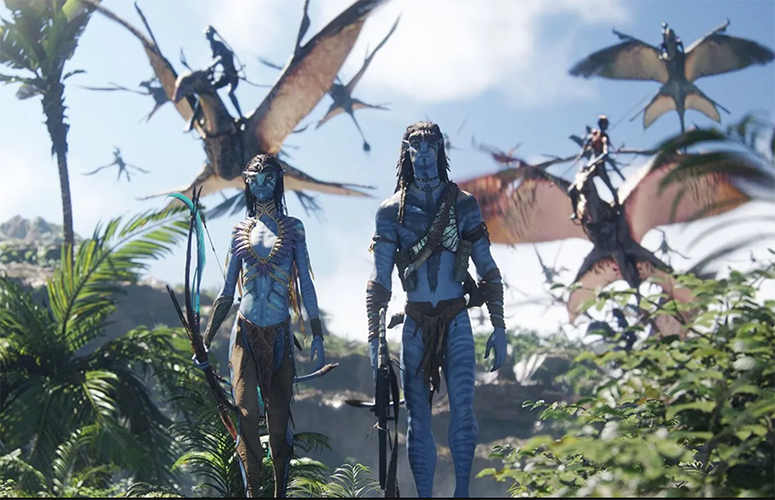
The third installment of a planned five-part series, Avatar: Fire and Ash takes us back to Pandora and the islander Metkayina people, where former human Sully (Sam Worthington) raises a family with Na’vi Neytiri (Zoe Saldaña). The first sequence shows the Metkayina kids raising up sunken automatic weapons from the seabed from a battle in the previous film. Defense is suddenly a big concern for these once-peaceful people.
Understandable, because the military, steered by a seemingly unkillable Colonel Miles Quaritch (Stephen Long), is once again about to rip open Pandora’s box, this time to extract Sully for “crimes against the human race.”
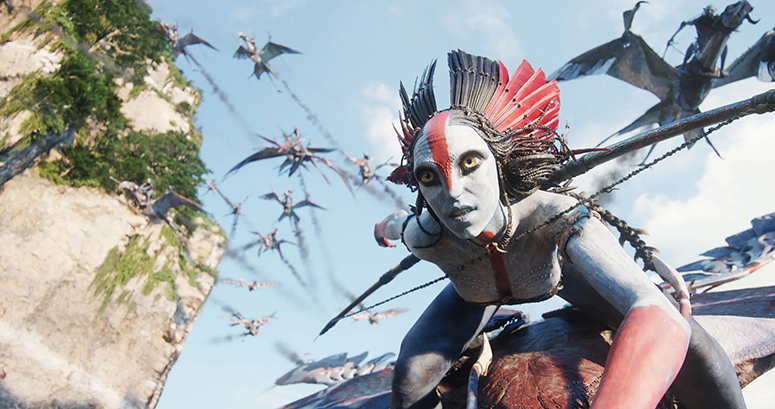
Quaritch is now a tall blue “recombinant,” and he finds an ally-in-hate in the fiery Varang (Oona Chaplin), warmongering leader of the volcano-dwelling Mangkwan clan, also known as the Ash People. Ruling Pandora seems to be their jam, and Quaritch and Varang have a crypto-psychedelic bonding episode over how to go about it.
CONTINUE READING BELOW

Cameron has said he’s interested in showing us more and more peoples of Pandora, even the ones with evil intentions, and the Ash People seem to qualify. Scalping is big in their clan.
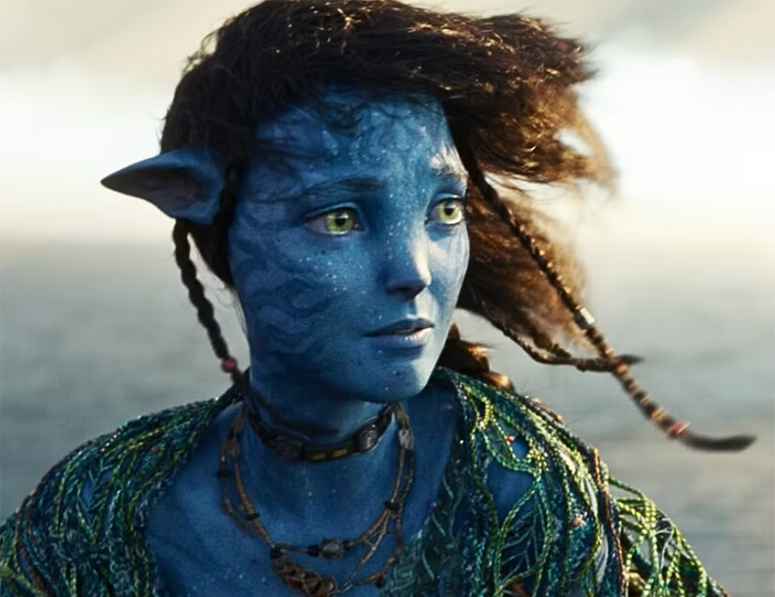
At, once again, three-plus hours, this Avatar installment takes some settling in. The new lay of the land is established, character conflicts are revealed. Kiri, the daughter of Dr. Grace Augustine’s avatar (both played by Sigourney Weaver) who’s been adopted by Sully and Neytiri, is starting a relationship with “Spider” (Jake Champion), the human son of Colonel Quaritch whose presence in the Metkayina tribe is under debate by the elders. For one thing, he can’t breathe underwater.
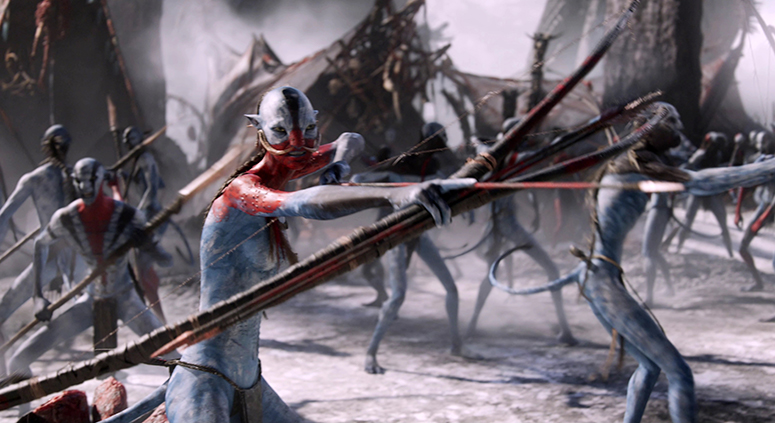
All these through lines play out as the movie settles into its inevitable showdown between Quaritch and Sully, but this time, adding the war-freak Ash People into the mix. It’s kind of odd to see the combination of Na’vi peoples, who eschew anything steel, happily blasting away their enemies from the sky and the sea with very human M4 and M16 rifles. It reminds me of the last of the original “Planet of the Apes” series, where the apes under Caesar are all about peace, until an attacking mutant army from the Forbidden Zone forces them to pick up the “banned” assault rifles and then all hell breaks loose.
I guess it’s Cameron acknowledging a broader reality of Earth species in general: anything worth keeping is worth fighting for. Preferably with the most advanced firepower available.
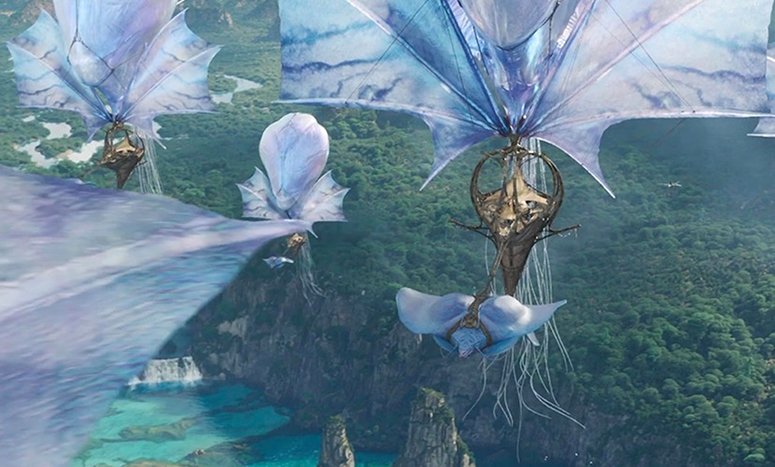
There’s some blowback from critics that Avatar: Fire and Ash doesn’t reach any new heights or stake new ground, but it does, actually: it’s there not only in the refinement of the already stunning underwater sequences from Avatar 2: Way of Water; also in the expansion of warfare to not only sea battles, but aerial attacks upon the gunboating merchant soldiers, even attacks from sea creatures that drew applause. It’s there in the billowing, manta ray-like aerial armada. It’s there in the images of Metkayina people clambering up vine structures into the clouds, or the marshaling of dragonfly-like creatures to use as an airborne army. There’s even a brief Apocalypse Now-like shot of the Mangkwans mounting their own air assault (riding some kind of colorful pterodactyls) against a blazing sun. The only thing missing is Wagner’s Ride of the Valkyries playing in the background.
Since family is such a strong thematic element in the Avatar series, I couldn’t help being reminded of another big-earning franchise—the Fast and Furious movies—which have settled into a family-saga storyline led by Vin Diesel’s clan who’ve lately grown fond of backyard barbeques which are rudely interrupted by technological-wielding baddies, such as Jason Momoa’s pink-clad villain in Fast X. The movies whiplash from tender family moments to sprawling, over-the-top action. A similar sort of energy here.
It’s a sign of Cameron’s ability to push a story that, even at 3:20, one doesn’t grow too restless (though a quick power nap took hold at the 40-minute mark), and butts in seats are not too benumbed. The story pulled us in eventually, highlighting James Cameron’s continuing, curious blend of woo-woo new age spiritualism and guns-a-blazing action. Somehow, mostly, it works, and the director has earned (not only with literal box office) the right to explore Pandora and its characters any which way he wants.

WATCH: Save for retirement or enjoy life now? (Generations Ep. 21)
September 16, 2026
WATCH: Can you still trust someone who betrayed you? (Generations Ep. 22)
September 23, 2026