

Comics and revolution
There’s comics and there’s comics, and revolution has a way of coming about on its own accord, and never the twain shall meet. Except perhaps in the rare intersection of political cartoons, sorely missed lately in the opinion pages of the broadsheet dailies due to streamlining, general reluctance of artists, or complete overhaul of layout to give the page a more text-heavy look.
Whatever’s the case, there’s no forgetting the Charlie Hebdo massacres in Paris 2015, where Muslim extremists went on a rampage on the weekly satirical magazine’s offices for recurring caricatures of the prophet Mohammad. It’s something the religious don’t take too well, the lampooning of prophets. Thus any aspiring satirist may find himself six feet under before he picks up pen under, say, Taliban rule.
Ongoing until third week of March at the VMeme Gallery in Estancia, Pasig is “Afterglow: EDSA 40 Years After,” with drawings and paintings commemorating the 40th anniversary of the EDSA People Power Revolution, by four distinct editorial cartoonists at that time of reckoning: Jose Tence Ruiz of Who magazine and Manila Chronicle, Dengcoy Miel of Jingle magazine and Philippine STAR, Elno Rosales of Mindanao and later Straits Times, and Pinggot Zulueta whose forte includes photography being on the staff of Manila Bulletin for years before migrating south of the equator.
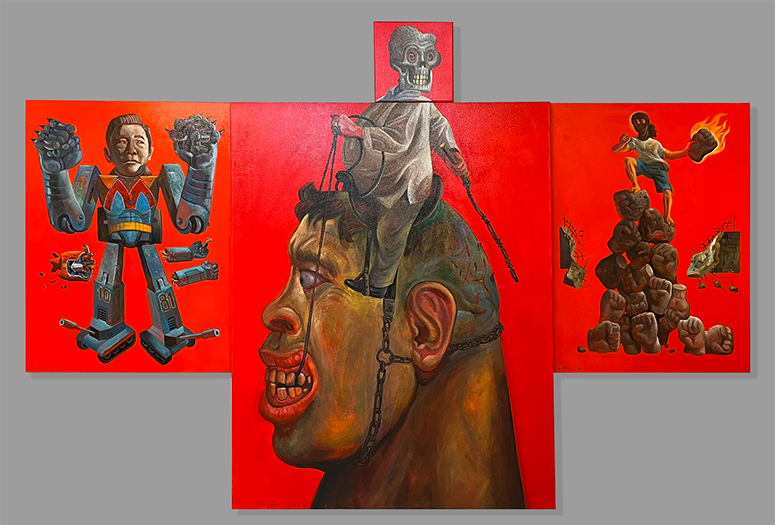
What rich tapestry “Afterglow” weaves, from straight political cartooning in the twilight of a dictator to the first heady days after the regime’s toppling, to large-scale paintings surely to astound the common viewer or mall-goer, colors leaping from canvas that started as lowkey pen and ink, to installations and assemblage struggling for self-expression that by themselves strike the gallery dumb.
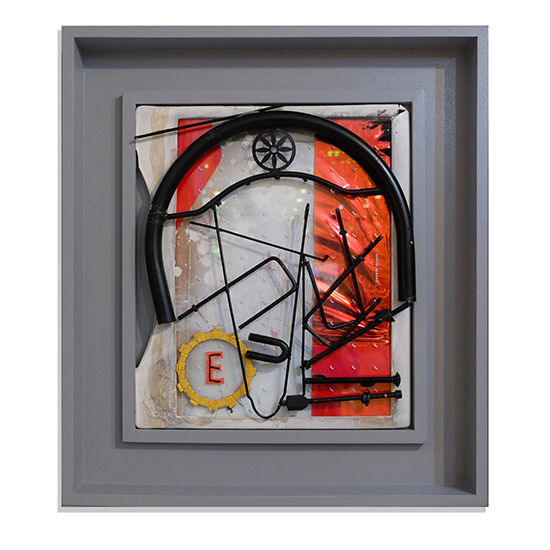
Being at a loss for words is not new for these four horsemen, so illustrations are what carry the day for them. Most minimalist is Rosales in not-so-distant south, whose canvas assembly reeks of bahalina drowning in random thoughts of exile.
CONTINUE READING BELOW

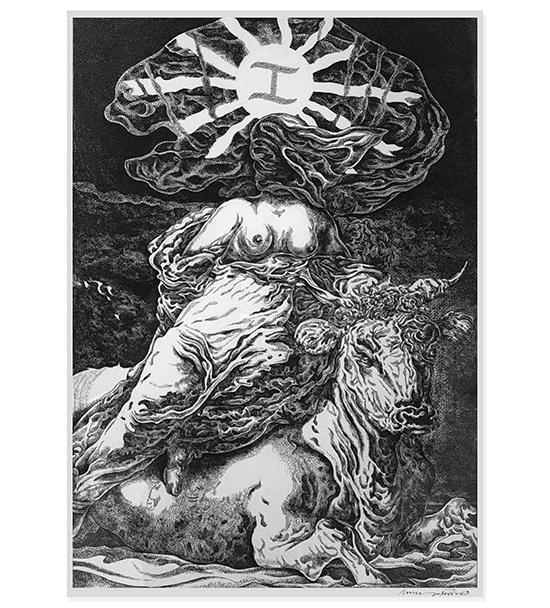
Zulueta too is quite diverse, exploring varied mediums with his photographic acumen put to good use, easily the darkest of the lot.
No secret either that the kumpares Tence Ruiz and Miel spent their most productive years in the art department of the Straits Times along with Rosales, arguably providing the most compelling issues visually of the Singapore broadsheet that has slowly crossed over to the digital divide. A whole coterie of Filipino artists ruled the Straits art department, including now-retired Ludwig Ilio in Davao and the late painter Dante Perez.
The paintings of Tence Ruiz never fail to impress, keywords being breadth and depth and use of color, with no shortage of political asides or direct commentary. He has come a long way from Who magazine, but the foundation is well built, and generously documented in his coffee table book Litanya, 1972-2022.
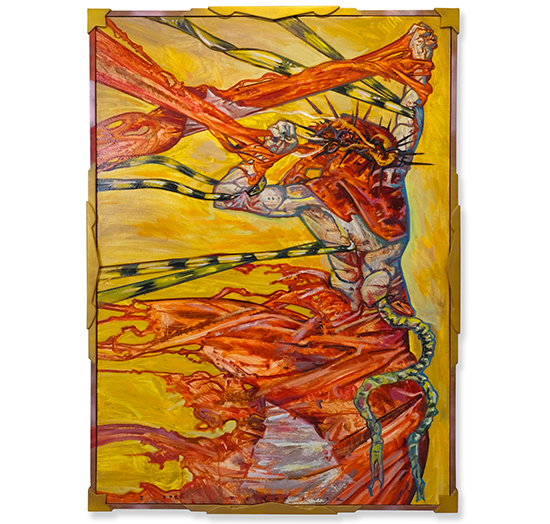
Tence’s regular shows—either solo or in collaboration with fellow artists—are part of the heartbeat of the local art scene, a pulse that has only grown stronger with the homecoming of Miel after decades in Singapore, like the Glimmer Twins of political cartooning and painting suffused with political theory.
“Afterglow” is a welcome throwback to those cartoons first glimpsed 40 years ago in the fledgling broadsheets that sprouted like mushrooms after the People Power Revolution, basking in newfound freedom after the dislodging of a dictator. They proved it possible to draw funny stuff without being summoned by the powers that be, much less have their newsroom cubicles turned into killing fields by self-proclaimed terrorists.
Tence and Miel both knew that the best weapon was humor and later in their mature years, also painting. Sometimes the twain do meet, but not so much in the rich and progressive Merlion City, where a number of their cartoons were thrown directly into the dustbin or censored outright for being too forthright or perhaps putting the nation’s leaders and policies in a bad, doubtful light.
Comics illustrators and cartoonists, however, use that doubt to fuel commentary, their irreverence making us stop to think and question the authorities—yes, the emperor has no clothes—or merely affirm a certain politician has bad breath. Their time abroad was meant to build some kind of war chest to afford them the luxury to indulge in what they do best as seniors: painting, installation, the occasional drawing to remind them of their beginnings and when they first gave the finger to the establishment.
What a long strange trip it’s been from EDSA 1986, the revolution itself like a shapeshifter that has devoured its young, but those who illustrated its passing are none the worse for wear; in fact they wear the bedraggled aspect well with the perspective of distance if not detachment.
Doubtful, though, if Tence or Miel will ever return to political cartooning, but not sure if same can be said of Rosales and Zulueta. Been there, done that, Tence said. "Ayaw ko," Miel said, when asked by an old boss in his former newspaper whether he wanted to contribute some drawings again. The more things change the more they stay strange, but say it again: Comics’ loss is painting’s gain.

WATCH: Why is it so hard to make friends? (Generations Ep. 26)
October 21, 2026
WATCH: Is OPM still as good as it used to be? (Generations Ep. 20)
September 9, 2026