

The work of the hand
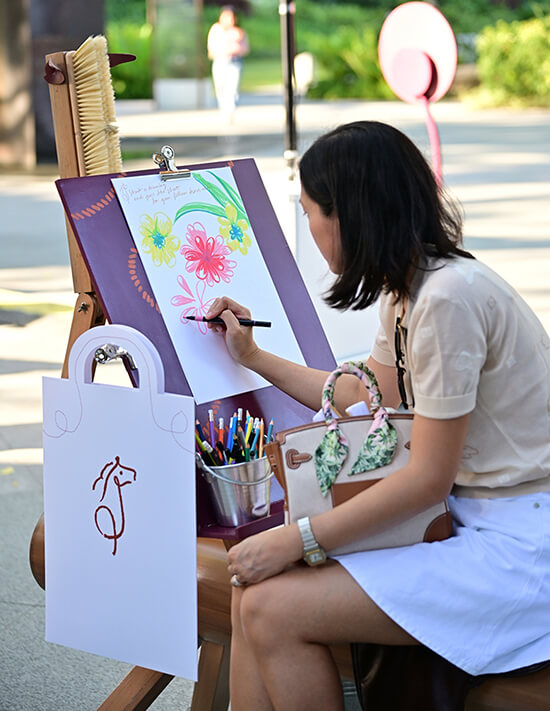
Art is usually something you do alone, but in the afternoon over a weekend in April at Ayala Triangle Gardens in Makati City, under the filtered light and the slow movement of people from one table to the next, it took on a different shape, something shared.
We live in a time where most things begin and end on a screen, where the hand has been reduced to a gesture, a swipe, a tap, leaving no trace. Sitting down with a pencil, feeling it meet paper, watching a line form without undoing it, the friction of graphite against paper anchors the moment.
Before that, there was lunch at Blackbird, in the private room upstairs where the windows open to a stretch of green and the leaves move so slightly you almost miss it. The table settled into its own rhythm as the courses came and went, goat cheese, fennel, and orange, mushroom agnolotti with sage and brown butter, barramundi with green pea purée and confit potato, and panna cotta with poached plum and pistachio tuile.
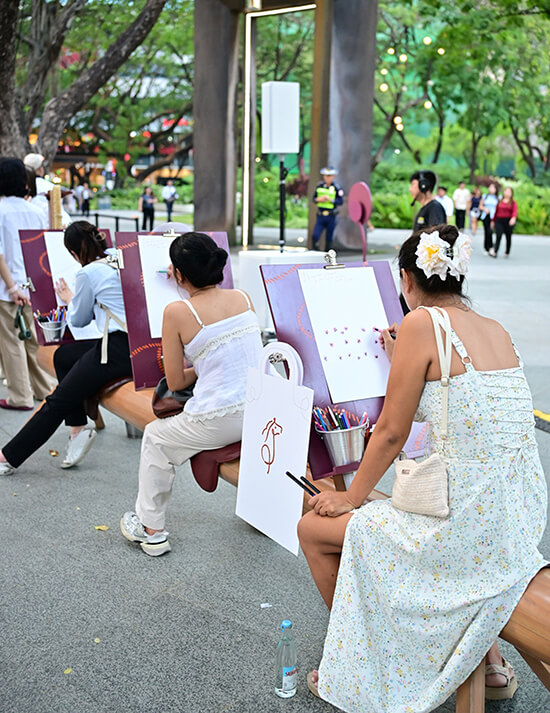
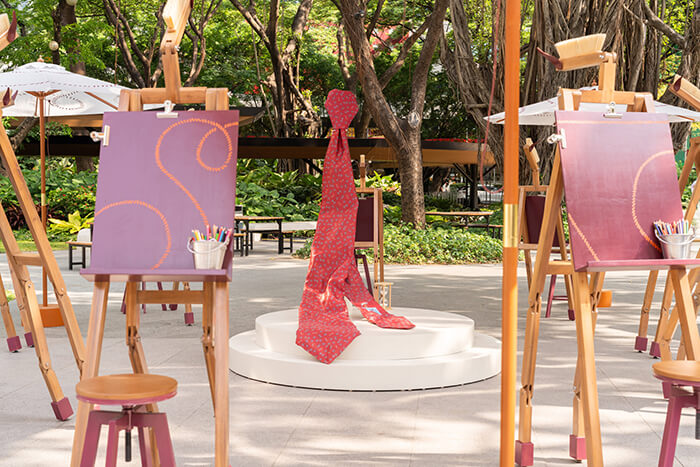
We set lunch late so that by the time we stepped out the light had softened. The walk to Drawn to Craft by Hermès at Ayala Triangle Gardens felt like a continuation rather than a shift. Tables were already in use, sheets of paper weighed down, pencils scattered, people leaning in, some certain, some hesitant, all beginning the same way, with a line that could not be taken back.
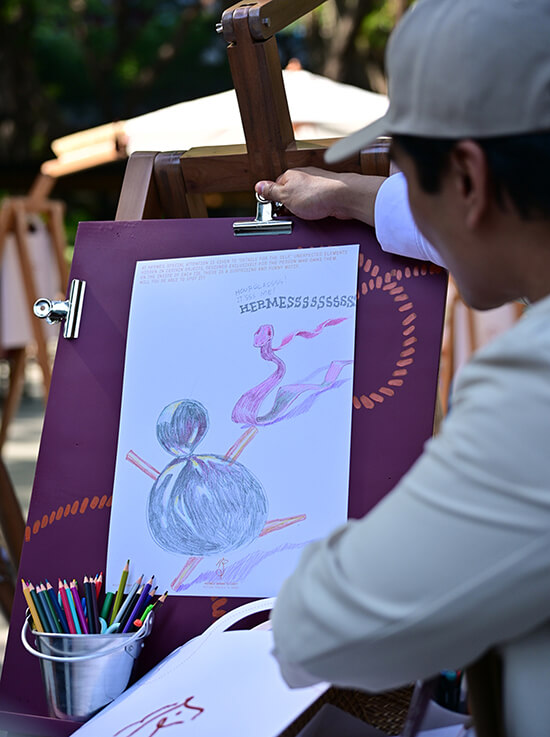
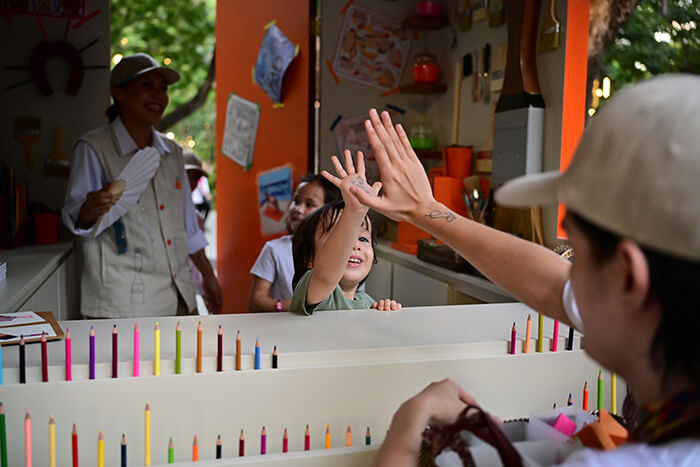
What Hermès set up was direct, long tables, loose sheets, pencils that passed from one hand to another, facilitators moving around, suggesting, pointing, keeping the flow going. Children began without hesitation. Adults took longer, then leaned, sketching, tracing, filling in familiar Hermès forms or ignoring them entirely.
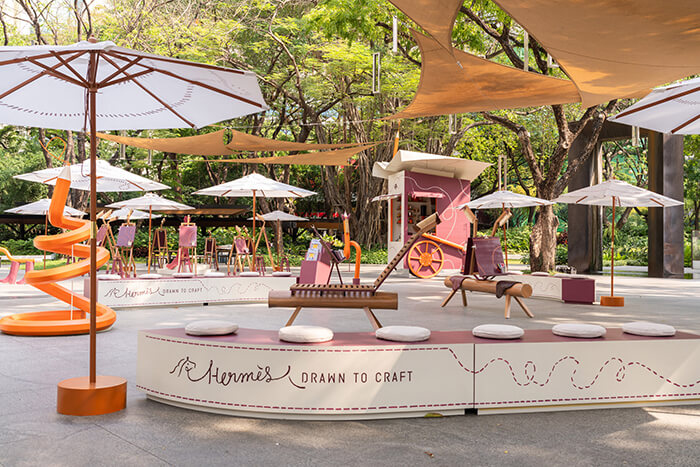
Every object at Hermès begins as a drawing, whether it ends up as silk scarves, leather goods, or jewelry. In the park, in the interminable hours of a summer afternoon, that first step stood on its own, carrying the full weight of a finished thought in every stroke. A blank sheet, a pencil, and the time to stay with it, to let the hand catch up with what the eye sees, to let thought slow down enough to take shape through pressure and line. It asked for attention in a way that felt simple rather than demanding, the kind that brings the hand, the heart, and whatever you call the soul back into the same motion.
CONTINUE READING BELOW

The set-up moved from one city to another, from Paris to Bordeaux to Biarritz in France, but in Makati, the first stop of its Asian tour, it settled into the afternoon, into the light, into the pace of people coming and going, sitting down, trying, stopping, starting again, until the page in front of them carried whatever they had decided to leave on it.
What happens there is simple. Once the line begins, it records everything, the pause before it, the pressure of the hand, the decision to continue or to stop. No second version exists anywhere else, no cleaner copy waiting somewhere off to the side, just what you have made and the time you have spent making it.
Children move through it quickly, adults take longer, but both end up in the same place, bent over the page, working through it in their own way. Around them, the gardens keep their own pace, the light shifting, the air moving, the day continuing whether the drawing works or not.
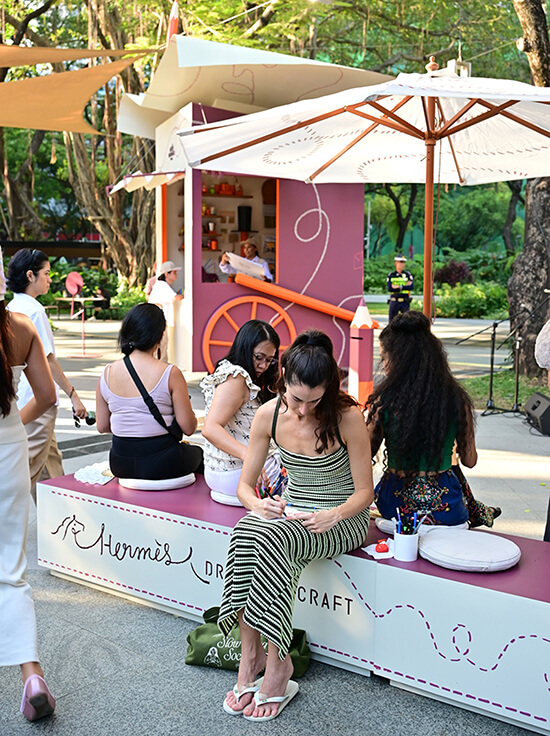
Drawing sits at the beginning of what Hermès makes, and you understood it there under the trees at Ayala Triangle Gardens without needing to be told, because everything returns to that first act, a hand, a surface, a line that becomes something only because someone stayed with it long enough.
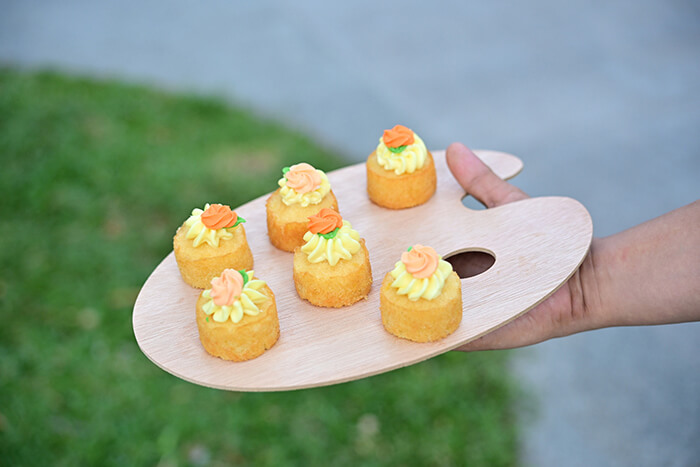
Palette of flavors: Served on a wooden artist’s palette, these playful pastries mirror the colorful, whimsical spirit of the afternoon.
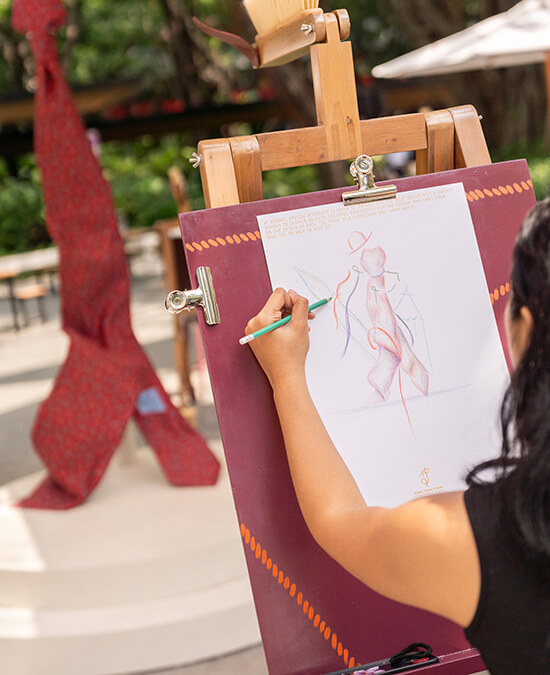
Drawn to whimsy:A guest takes a seat in the gardens inspired by the patterns of Hermès ties.

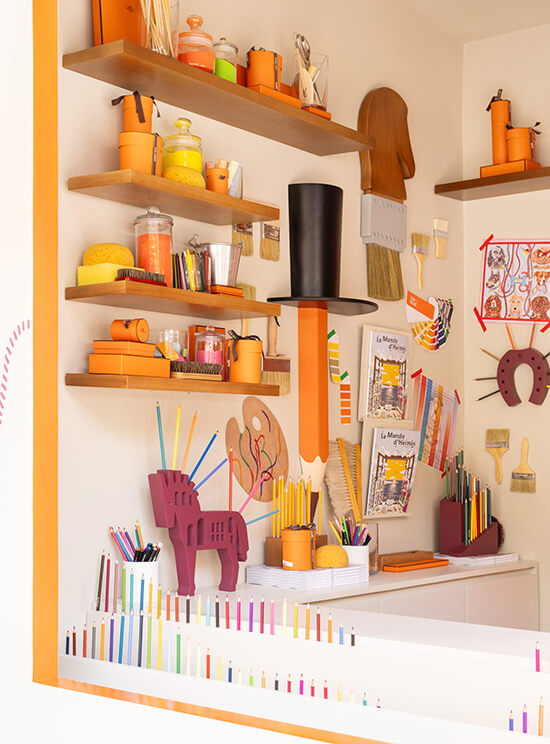
The welcome wagon: The drawing ambassadors of the house stand ready among a curated world of lead and color.
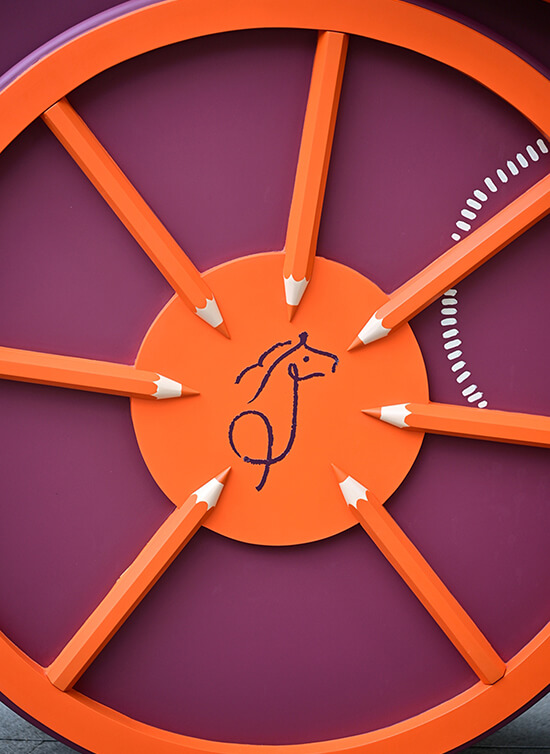
The playful wheel: A collection of pencils radiates from a central Hermès motif, a whimsical detail on the welcome wagon.
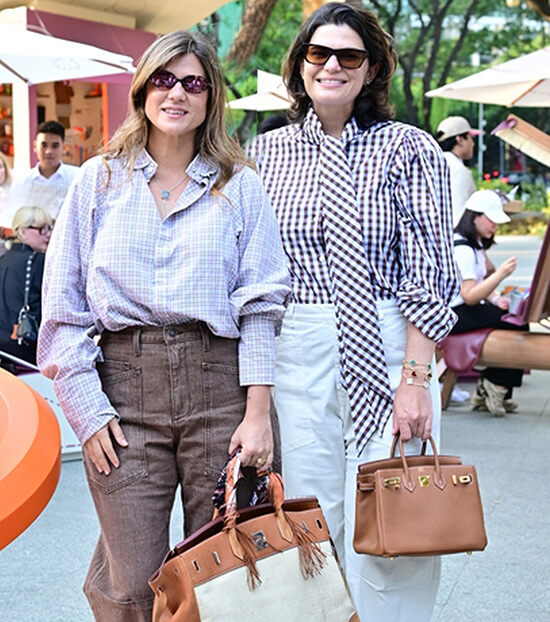
Guests of the house: Paloma Urquijo Zobel de Ayala and Mariana Zobel De Ayala

The stewards of style: Nikki Huang, SSI Group business development director; Mario Katigbak, SSI Group senior vice president; and Anton Huang, SSI Group president and CEO.
Palette of flavors: Served on a wooden artist’s palette, these playful pastries mirror the colorful, whimsical spirit of the afternoon.
Drawn to whimsy:A guest takes a seat in the gardens inspired by the patterns of Hermès ties.
The welcome wagon: The drawing ambassadors of the house stand ready among a curated world of lead and color.
The playful wheel: A collection of pencils radiates from a central Hermès motif, a whimsical detail on the welcome wagon.
Guests of the house: Paloma Urquijo Zobel de Ayala and Mariana Zobel De Ayala
The stewards of style: Nikki Huang, SSI Group business development director; Mario Katigbak, SSI Group senior vice president; and Anton Huang, SSI Group president and CEO.
CLOSE
In a moment when images can be produced without contact, without time, without even the need to look closely, sitting down to draw pulls you back into the act itself, into the small decisions that build on each other. What remains on the page is exactly what it is when you stop, a sentiment that lingered even as we stepped back out into the Makati rush, paper in hand, graphite dust on skin.

WATCH: Is OPM still as good as it used to be? (Generations Ep. 20)
September 9, 2026