

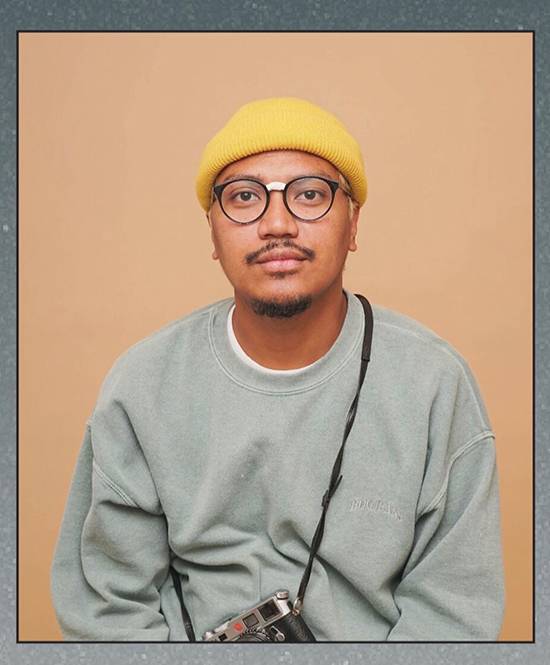
Geloy Concepcion and the invisible injection
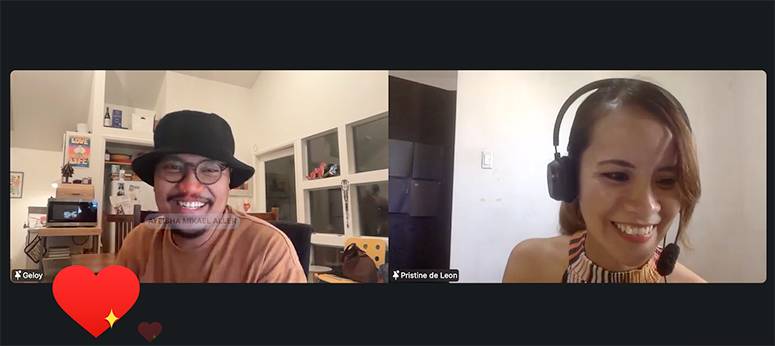
It was Geloy Concepcion’s birthday when Ateneo Art Gallery held a Zoom session moderated by Pristine de Leon. So in addition to hand waves sent out from our separate chat spaces, the artist encouraged us to send up emojis.
So, while he related his journey from portrait photographer in Manila to caretaker of the online project “What are the things you wanted to say but never did?”—which has grown over six years from a Google Forms prompt solicitating tons of anonymous responses to a book, and now an exhibit—onscreen, you could see waves of heart emojis and handclaps and smiles occasionally float up past him.
Maybe this was a Zoom version of the crowdsourced feelings his project has unleashed.
In a way, his journey from Manila to that project might not have happened without COVID. After emigrating to California with wife and daughter in 2017, he had to wait years for immigration papers to clear, taking whatever jobs he could find. Then the pandemic hit. He couldn’t wander around with his cameras, engage with people. The isolation, he suggests, brought his future into focus: “It didn’t happen suddenly. The universe did it. It started after almost 10 years of dancing with photography.”
He describes earlier meeting an undocumented immigrant in San Francisco, a Filipino: “I told him I’d take a picture of him. He agreed, but asked if he could turn around, so he can’t be seen. I took the picture. Then I told him to turn around and write what he wanted to say.” He had a thought: “Wait a minute. It’s possible to write anonymous messages to their emails. This is where the idea started.”
The flood of submissions to his Google Docs prompt grew and grew. Anonymity might have been part of the appeal, but even at first, people were more than willing to share personal info: names, traumas, everything. It reminded him of the street art he once gravitated toward photographing in Manila: no emotional filters. “I was inspired by vandalism in the Philippines,” he’s said previously. “Vandalism on walls that say ‘mahal pa rin kita’ (I still love you). Those were my main inspiration. Imagine it, someone was able to express something like that. It was so raw.”
CONTINUE READING BELOW

Emotionally, he’s said in past interviews, the flood of confessions can be difficult to process: “Before I read the messages I make sure I’m feeling well myself. I think it helps that I had a good childhood, so in a way even if I read them I won’t get triggered, otherwise I wouldn’t be able to do the project.”
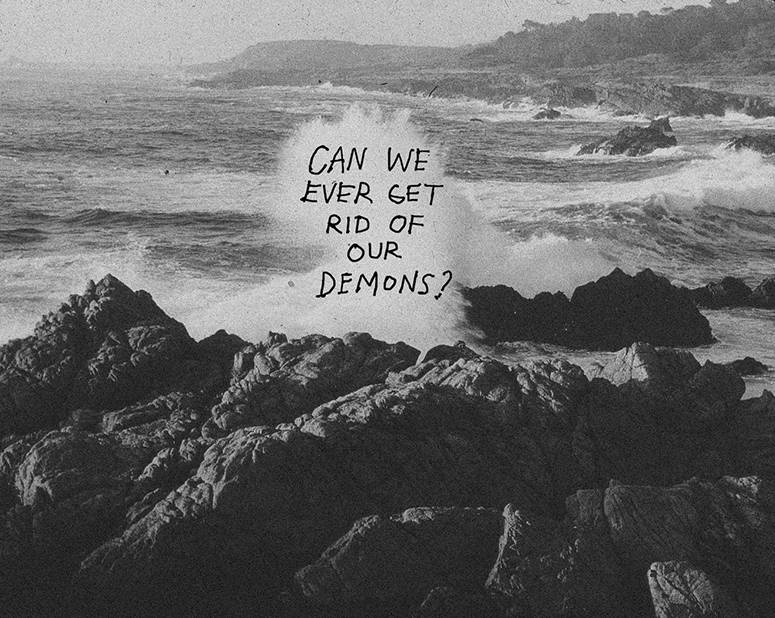
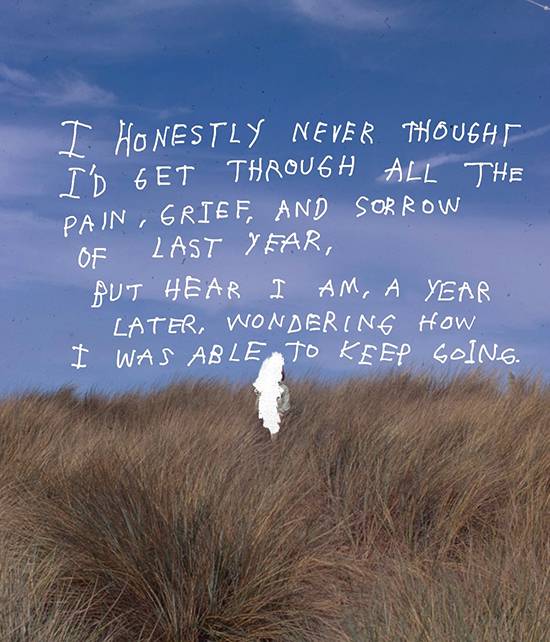
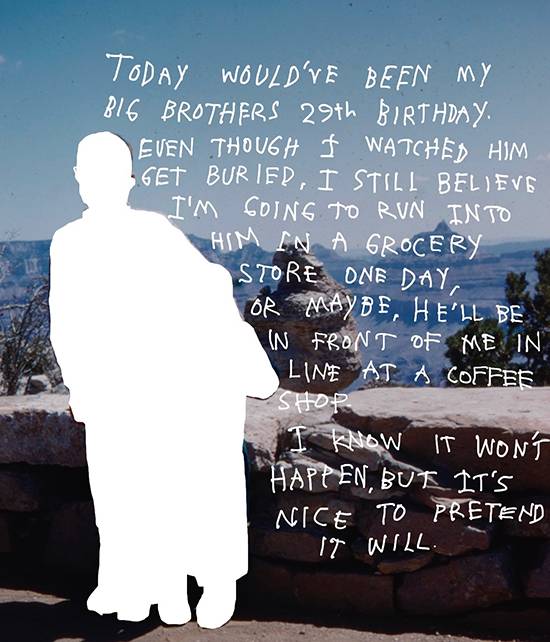
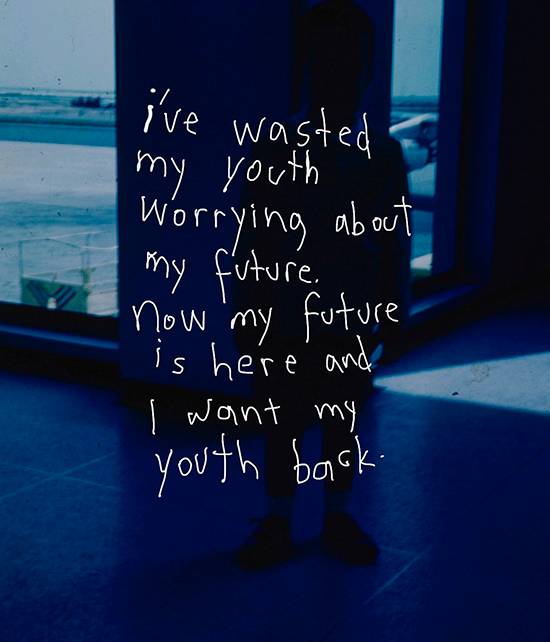
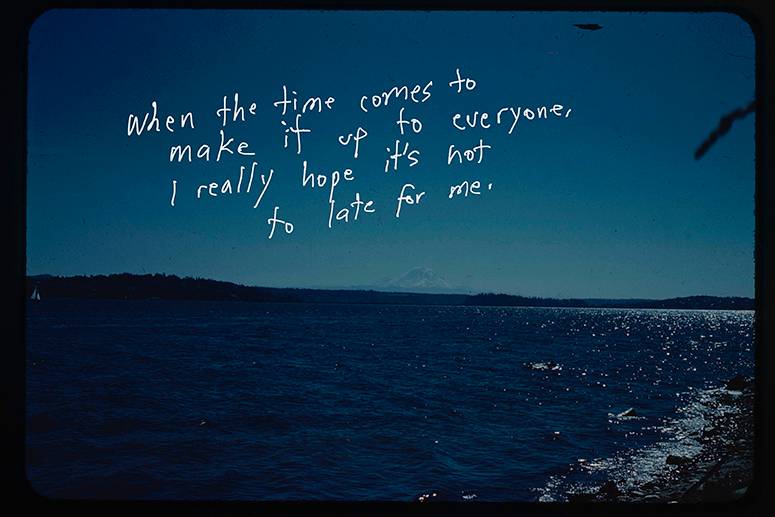
The trademark of Concepcion’s work is the etched-out white silhouette of a person—a cocoon of anonymity, but also a conferment of universality, that this could be anybody, anybody’s loved one—surrounded by a handwritten message culled from the online responses. During the pandemic, Concepcion had been sifting through boxes of his photographs and decided to put them to use in a project. After those ran out, he began perusing yard sales and flea markets in California and elsewhere, buying up old photo albums and picture slides.
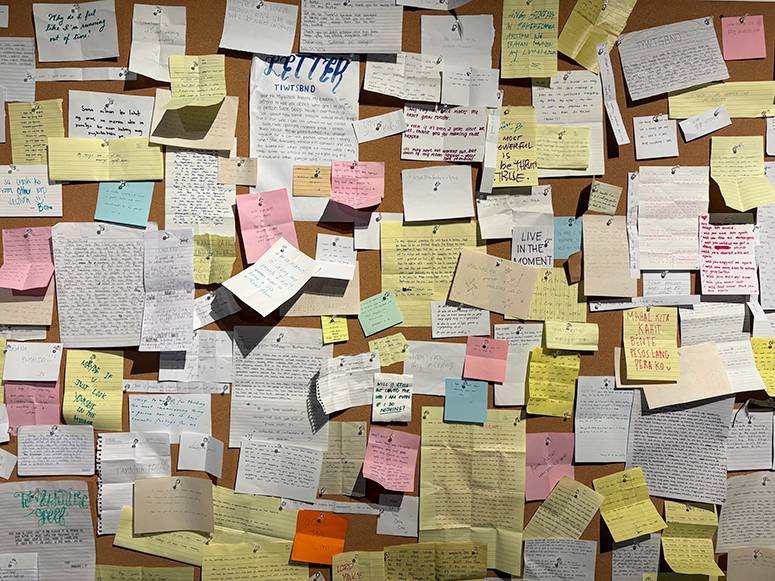
The Ateneo Gallery exhibit, titled “Things You Wanted To Say But Never Did,” draws from some 300,000 responses and 3,000 images published online. In addition to printouts of curated works lining the walls from over the years, the back room of Wilson L Sy Prints and Drawings Gallery is a more interactive space: the main wall is covered with handwritten notes on yellow and white paper, tacked to a corkboard; visitors are encouraged to add their messages, as I saw several young girls doing, seated on the floor around a worktable with yellow pad paper and pens. Other messages have been gathered from local communities at drop centers. A pile of books is scattered on another table—Madeleine, Joan Didion’s The Year of Magical Thinking, Raymond Carver short stories, an old McSweeney’s volume—for gallery visitors to insert their folded messages into the pages.
This is all part of the next phase in Concepcion’s project, an outreach he calls “Nice To Meet You My Friend.”
This new phase seems to break down yet another wall between artist and subject. Face-to-face contact. De Leon noted there’s something about photography that is “inherently relational.”
“The photographer breaks down the artist’s idea—that it’s the individual author, or you’re alone in the studio. In portraiture, we can also say that a photographer is not only a person who is famous but also a person who is getting to know the subject. It’s a way of getting to know each other.”
Concepcion describes part of this transaction as “invisible injection.”
“I believe in something other than photography,” he says in the vernacular. “In writing, or in dancing, there’s an invisible injection. It has a substance. That injection can be acquired while you’re getting deeper in what you’re doing. You’re pushing it into what you’re doing. And those who can see it can feel it. That’s what I’m looking for in images. I get excited when I see images or artworks have something to do with me.”
His creations are micro-stories that capture some of the shared intimacy of portraiture. Concepcion says there was a point where it felt like the project was not just “his” anymore.
“Because you’re not taking ownership of the photo,” he says. “That’s our thing, right? I’ll never be able to see the image that I took as an outsider, because I took it. I’ll never be able to see the photo that I didn’t take. Because I’m very attached to the picture; I know how everyone feels.”
This layer of Concepcion’s work is harder to quantify: people who relate to the traumas shared in the messages have a different reaction from those who don’t, as does the curator of all those secrets.
De Leon notes this is a load-bearing role for an artist: “You’re also carrying the weight of these stories, even if you don’t see all of them in person. As a photographer, you’re also a mediator. You’re not just producing an image, you’re also producing a space. It’s a social space, an affective space. The making of that public is tied to the digital space. How do people share it? Who are our participants?”
The artist has admitted at times it’s not easy coming face to face with so many intimate secrets, from people who are no longer anonymous. But it feels necessary. He is the caretaker of this journey he himself began, after all.
Concepcion’s work seems tailor-made not only for the times, but for the medium that exploded during a pandemic—a time when people were trying to be seen, even in their not-best moments. Simply to be seen.
“Things You Wanted To Say But Never Did” is on view at the Ateneo Art Gallery until July 12 at the Wilson L Sy Prints & Drawings Gallery.

WATCH: Is OPM still as good as it used to be? (Generations Ep. 20)
September 9, 2026