

Josephine Turalba’s work reconciles the imaginable and the unthinkable
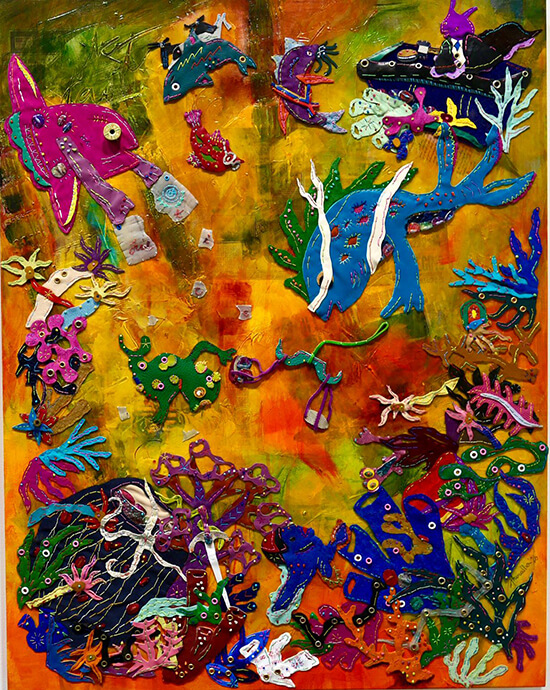
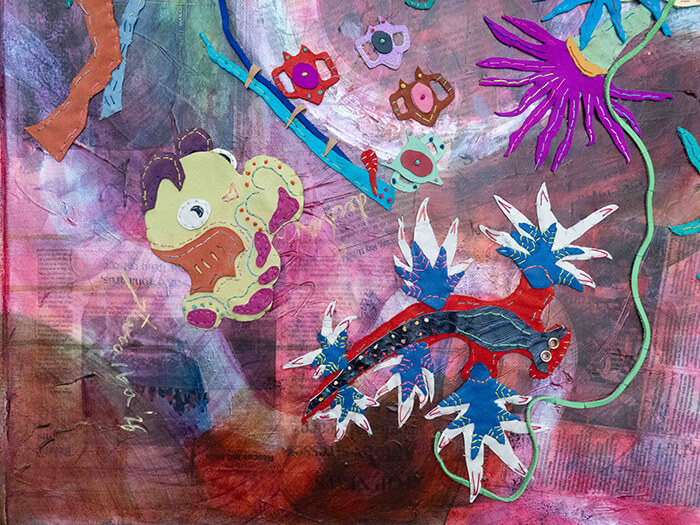
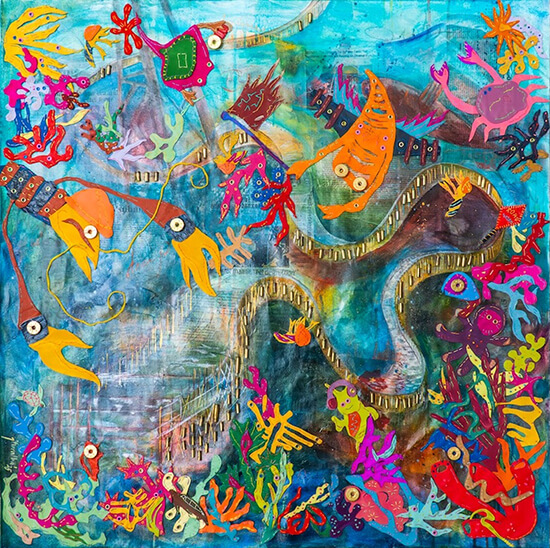
The work of Philippine artist Josephine Turalba is a balancing act of sorts: beds of undulating color reflect the calming world of nature and the sea, interspersed with vivid reminders of man’s tendency towards violence and extraction. There’s a push and pull in her work—between handcrafted, woven elements and stitched-in bullet heads, shotgun shell packaging, and childlike sea creatures, all set amidst fluctuating ocean backgrounds.
For her return to Art Basel Hong Kong this year at 10 Chancery Lane Gallery, she displayed four new works (Waterworks, PolySea, Fins and Verdicts, and Strait Lines) in a group show called Beauty Will Save The World curated by iola Lenzi. (She was also recently short-listed for the prestigious Sovereign Asian Art Prize for a piece called The Cables She Wears.)
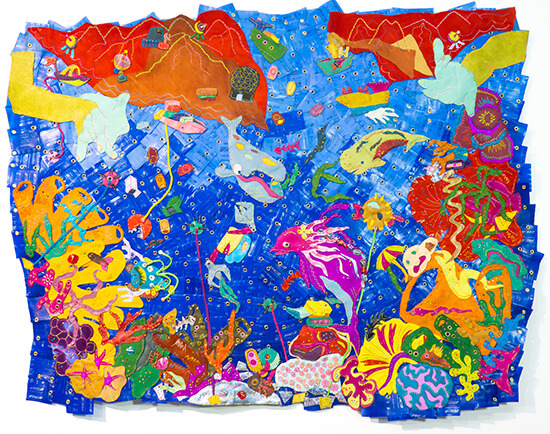
A scuba diver since age 12, Turalba’s latest pieces reflect on the struggles for territory in the West Philippines Sea, but expand to themes of ownership, authority, agency, geopolitical power—all expressed through a “hydrofeminist lens.”
It’s not a struggle so much as a condition of being, her works seem to imply: a place where metal grommets, leather patches, and brass bullet casings share space with vibrating colors in a restless underwater domain; where attack and conquest are locked together, fused in ironic commentary. The irony softens the blow.
Turalba has openly spoken of the incident that led her to incorporate bullet fragments into her work. In September 2006, her father was brutally murdered by thieves and killers—shot four times with a .45 caliber handgun. “The source of my life and the solid wall I was used to leaning on was gone,” she wrote at the time. “That was a very difficult time in my life. Fear gripped me, I couldn’t even watch a movie with shooting in it.”
She somehow reclaimed her agency and art by following another artist who wrote about shooting a gun at her own paintings; Turalba describes the cathartic release, firing the same kind of weapon that killed her father: “A sense of peace and acceptance pervaded,” allowing her to reclaim the experience and feelings over her father’s death, though she concluded: I am Marked Forever.
CONTINUE READING BELOW

Here, returning to the sea for inspiration, the symbols of violence are transformed into totems of resilience, transformation, strength, and survival.
PHILIPPINE STAR: How was Art Basel HK this year? How did your pieces fit into the overall scheme of things?
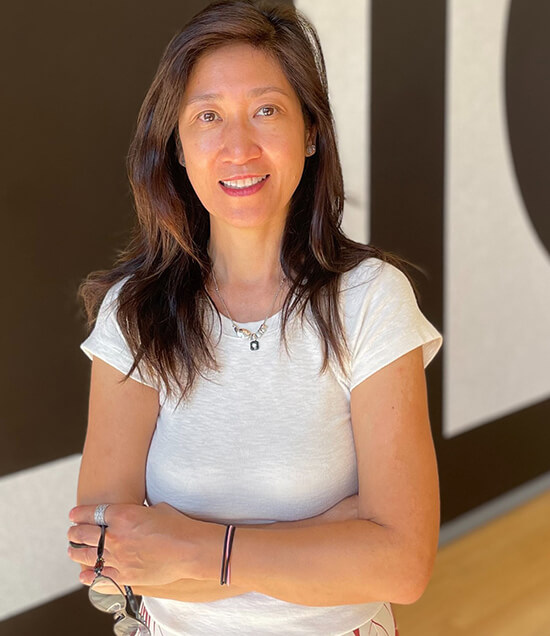
Josephine Turalba: There was definitely a strong sense of Asia-Pacific voices being central to the conversation, alongside a wider attention to history, material experimentation, and shifting political realities. My works fit into that atmosphere quite naturally. They speak from the perspective of water, territory, extraction, and power, but through imagined underwater scenes and hybrid creatures. So they carried political charge without becoming didactic. I think that balance resonated with people.
These pieces unfold slowly. At first, they can appear playful, colorful, even whimsical, but the longer you stay with them, the more the tensions inside them begin to surface.
Say a little about your relationship to the ocean.
I grew up in the Philippines, where water is never distant. Being underwater from such a young age changed the way I see the world. It taught me to pay attention to marine life not as scenery or backdrop, but as a living presence with its own rhythms, fragility, and intelligence. While my works may touch on ecological or political realities, they are (more) attempts to embody a way of feeling with the ocean, of imagining its vulnerability, its beauty, and the pressures placed upon it by human systems of ambition, conflict, and control.
You’ve often used bullet shells and material in your pieces. Can you expand on that?
I began using bullet casings and weapons-related materials many years ago, initially as part of my growing arsenal of materials and as a way of processing difficult concepts and personal trauma, including a violent personal loss. I was interested in how an object designed to wound could be transformed into something aesthetic, intricate, even seductive, while still carrying its emotional and political weight.
The bullet for me is never just a bullet. It carries trauma, state power, protection, fear, and control. In earlier works, that material allowed me to think through violence and its afterlives. In the Art Basel Hong Kong works, that language has evolved into a more oceanic register. The brass bullet heads and shells sit among coral forms, leather cutouts, and stitched surfaces. They are no longer only symbols of direct violence; they become part of a wider ecology of intervention, where territory, law, infrastructure, and extraction all leave their imprint on the sea.
Describe working with embroidering communities in Taal, Lumban, Laguna, and Aklan.
“Drifting Threads and Topographies” (shown at Nakanojo Biennale 2025, Japan) was already a work about place, water, memory, and craft lineages across different locations. By collaborating with embroiderers whose practice comes from a living tradition, those ideas became embedded not only in the imagery, but in the making of the work itself. The panels are delicate and translucent, suspended in space so that they shift with air and presence like a quiet tide, and across them stitching carries myth, ritual, technology, marine life, and speculative futures. The collaboration was not secondary to the concept. It was one of the ways the concept became real.
The four pieces at Art Basel HK reference geopolitics, but with a playful technique and style. How does this help focus your message?
Play is important in my work because play can disarm the viewer. If an image announces itself too quickly as political, people sometimes become defensive.
The creatures in these paintings are playful, but they are not innocent. They mimic us. They build borders, perform justice, patrol territory, or drift through infrastructures they do not fully understand. That irony matters to me because it allows the work to hold contradictions. Beauty and danger can exist together. Humor and grief can exist together.

WATCH: LGBTQIA+ people with unlikely professions
June 28, 2026