

The story behind the story
It hits different when you personally know the author of the book you’re reading—there’s something intimate about it. Going through the book feels like a conversation, only deeper than the ones you’ve had before—a realization that people we know have stories we have yet to read.
I first met the author José Daniel Alvior back in 2001 when we were both working in ABS-CBN Publishing, Inc. as editorial assistants for Metro magazine. He moved to New York a few years later, but we managed to stay in touch and remained close friends through the years.
For almost a decade, he has tried to get published, first in New York, where he stayed for 20 years, and then in the United Kingdom. After being one of two winners of the third Annual Unbound Firsts Competition for debut writers of color in 2024, Seven Days in Tokyo was published in 2025 by Unbound Firsts, and is now under Wilton Square. Locally, the book is available at Fully Booked stores.
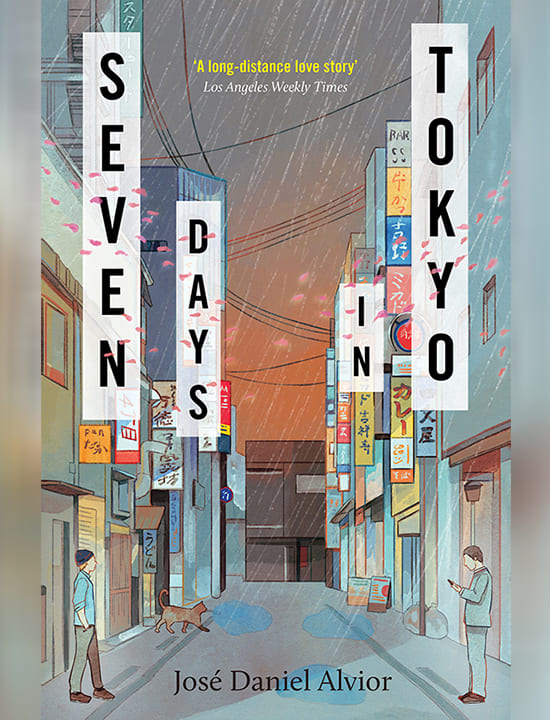
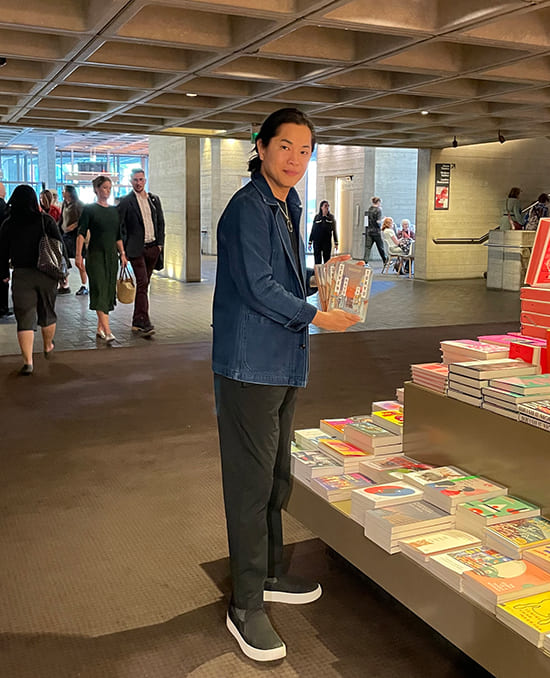
In a recent conversation, the author shares the ideas, experiences and moments that shaped his work. From the challenges of writing to the stories behind the pages, the author shares personal insights into his creative journey and what he hopes readers can take away from the book.
An interview with Filipino author José Daniel Alvior on his first novel ‘Seven Days in Tokyo.’
PHILIPPINE STAR: Can you briefly tell us about your life in Manila? Was it always your plan to move abroad and become a published author? Can you briefly share your early attempts in getting published?
José Daniel Alvior: I was born and raised in Quezon City, and when I’m in the Philippines, I still live in the house where I grew up. Ever since I was little I had always wanted to live in New York, but I was only able to leave in my mid-20s. In my first couple of years in New York, I had wanted to be an actor initially. I did pursue it—I’m still eligible to be a SAG (Screen Actors Guild) member should I take their offer from 20 years ago!

CONTINUE READING BELOW

A few years later I started writing my first novel thinking it was a more sensible career path (it isn’t). It was around the time the Kindle was introduced and self-publishing became an easier option for writers. After looking into it, however, I realized that the path for me was traditional publishing. It’s not for the faint-hearted—the rejection can take its toll on your soul. The first step, after finishing a book, is to find a literary agent and an author has to be prepared as this process can take a long time.
Luckily, I was signed up with an agent from an important agency in New York. The novel went on submission (when literary agents connect with editors from different publishing houses to secure a publishing deal), but we never received an offer. Many years later I had a look at that first novel, and thank heavens above it wasn’t published. It was awful. Back then, in my frustration, I would wonder why I couldn’t get published when there were so many crap books out there. Had that book been published, it would certainly belong in that category!
Nonetheless my agent needed another book from me, but I couldn’t find a project that I could pour my heart into. Two years later, we decided to part ways.
What inspired you to write this book and how did the idea first come to you?
A few years ago, I visited a Japanese friend in Tokyo who used to live in New York. She made sure I had a lovely time, and I experienced Tokyo’s secluded neighborhoods as a local would. I particularly loved going to supermarkets and coffee shops that tourists didn’t know about. I lived as locals would day-to-day. Coincidentally it was peak Sakura season, and it was insanely beautiful. I took so many photos. I wanted to post them on social media with narrative captions, which got longer and longer. Before I knew it, I had created a story.
What message or theme do you hope readers will take away from it?
I say take whatever you can as long as you take your time reading it. It’s a book written to be read slowly. Then tell me about it. I love hearing from my readers. There are of course the obvious themes of intimacy and transience, but I’ll let the reader take or leave whatever message or theme they wish.
In the year-long editing process, my editors would come back to me with themes I was unaware I had written. For instance, I had apparently written allusions to food. Meals shared by the narrator with specific characters were an allusion to their respective relationship. The same was true with readers who reached out to me when the book came out, and it’s fascinating and wonderful to know insights that resonated to them.
Why did you choose this particular title?
The original title of the novel was in fact The Cat’s Tongue. The love interest has a sensitivity to hot food and drinks, which the Japanese describe as having a tongue like that of a cat. Without giving anything away, it’s a metaphor of their relationship and his reaction to it. However, Seven Days in Tokyo sums everything up nicely. It evokes instantly a particular mood and establishes the confines of a time and place. And doesn’t it set it up well for sequels? Seven Days in QC, perhaps?
Was there a specific moment when you knew this story needed to be told?
I had always wanted to tell this story the moment I decided to write it, but I persevered even more when it was clear to me that the main characters were not the usual lead gay characters you find in mainstream media. As much as I celebrate the proliferation of gay love stories and their normalization, I lament that the majority of these depictions are almost always heteronormative, in a sense that these characters can pass off as straight men such that if one of them is replaced with a woman, it would hardly make a difference. It’s as if a gay man other than this type is inferior and unsuitable to be central characters.
Why couldn’t the obviously gay man be the lead? Seven Days in Tokyo is told through the lens of the narrator, Louie, whose inner thoughts, decision-making and demeanor lean toward the female energy. He is not necessarily effeminate nor camp, but it is certainly a fresher and much rarer perspective. I’m aware I’ve suddenly gone deep, but it’s a sentiment that’s very personal to me.
You mentioned that you wrote an earlier novel and tried to get published in New York—what made you decide to change your strategy and attempt to get published in the UK instead? Were there any lessons learned from that experience?
Being published in the UK wasn’t a deliberate change in strategy. My new agent happened to be based in London and belonged to the UK office of an American literary agency. Serendipitously, she found the publisher in London because by that time my partner and I had largely left New York and were spending more time in the UK.
I have no regrets with my publishing timeline. As I’ve said, I’m glad the first book didn’t see the light of day. Nevertheless, I’m grateful for that journey because I learned so much and gained wise friends like Kathryn Court, the former publisher of Penguin USA, who still advises me to this day.
What was the most challenging part in writing this book? Did the story or your ideas change significantly during the writing process? Were there any unexpected discoveries while writing?
Funnily enough, this isn’t my writing style normally. The book being atmospheric and immersive, I had to be deliberate in painting the world it’s in. It required a particularly languid mindset. It’s a deep dive on being in the present. It required a lot of patience, and I was surprised to discover that I could write lyrical prose. If you want two pages about receiving an Amazon parcel then this book is for you!
Which character or chapter is closest to your heart, and why? What was the most difficult scene or chapter to write and how much of the book draws from your personal experiences?
I’m fond of the last chapter the most; it’s one of the first scenes I wrote. Knowing the destination made it easier to write the rest.
Are there any authors or work that influenced your writing style? Were there any real-life events that shaped the story?
I’m unaware of any conscious influence on my writing style but I have received very flattering comparisons to great authors. Personally, I do love A.E. Housman and Jane Austen among the classics, and Kazuo Ishiguro for contemporary writing.
There are a few anecdotes from myself and my friends all woven into the story, but I’d say the main storyline is mostly based on a Guardian article about a couple who had conflicting attachment styles—insecure and avoidant—and how such a relationship is doomed to fail.
Who do you think will connect most with this book? What has been the most memorable feedback you’ve received from readers?
I’m continually surprised by my audience. The LGBT community obviously connects with it, but I’ve heard from many straight readers who have been deeply affected by the story. Thanks to the Spanish translation, I hear back from readers I never thought I’d reach. Readers all the way from Argentina and Mexico tell me how much they enjoyed it. Perhaps the most memorable feedback I’ve had so far is from Emilio, who is the father of a friend from university. He lives in Manila but he wanted to read it in Spanish. I gave him a copy and he told me that my writing reminded him of Hemingway. It’s flattering, and at the same time amusing—there must have been something in the translation that created a Hemingway undertone!
Did you learn anything about yourself through this project?
This project has been an exercise in detachment. If you want something so bad—in my case to be published—learn to make peace with the worst thing that could happen and let it go. When it went on submission, we received lovely feedback but a publishing offer eluded us. The consensus was that the book was too quiet, and in a very noisy market it couldn’t get past acquisitions (meaning it would be too difficult to market).
I reached a point where being published no longer consumed me, and that’s when it started to happen. The commissioning editor at Unbound suggested we submit the novel for their third annual Unbound Firsts, a competition for debut writers of color the prize of which was a publishing deal. Within three months it was one of six novels shortlisted from a pool of hundreds, and shortly after it was announced as one of two winners for 2025. The editorial calendar was laid out, and the publication date was set roughly a year to the announcement.
What advice would you give aspiring writers?
I have to say there’s nothing like seeing your printed book in bookshops and being part of that marketplace. The printed book—and books in general—endure much better in the digital age than other forms of media. However, the road to traditional publishing is paved with disappointment, so leave plenty of room for it. Keep pursuing, but don’t make it your life’s purpose! Live your life outside of it and enrich your life with experiences. Fall in love with people or places, and most especially, the present moment.
What’s next for you as an author?
I’m working on a couple of things radically different from Seven Days in Tokyo. One is a children’s book and the other is a love story set in New York City, details of which I’m not quite ready to reveal just yet!

WATCH: Can you still trust someone who betrayed you? (Generations Ep. 22)
September 23, 2026
WATCH: Do you still believe in marriage? (Generations Ep. 17)
August 19, 2026