

What does chemistry have to do with love and depression?
A play about a drug trial for antidepressants is intriguing enough, considering how depression is a worldwide plague that is increasing at an alarming rate. But The Effect, a play by Lucy Prebble presented by CAST PH and Areté at the Doreen Black Box Theater, goes deeper into the human condition to ask if feelings of depression or happiness are just the results of chemical reactions in the brain, or is there something else going on?
A medical trial, as Prebble sees it, is inherently theatrical since it takes place in one location over a set period of time, fulfilling what she sees as an “Aristotelian unity” designed to maximize emotional impact and create a believable illusion of reality. Both place human “subjects” in a confined environment, monitor their reactions, and watch how they cope with forces beyond their control.
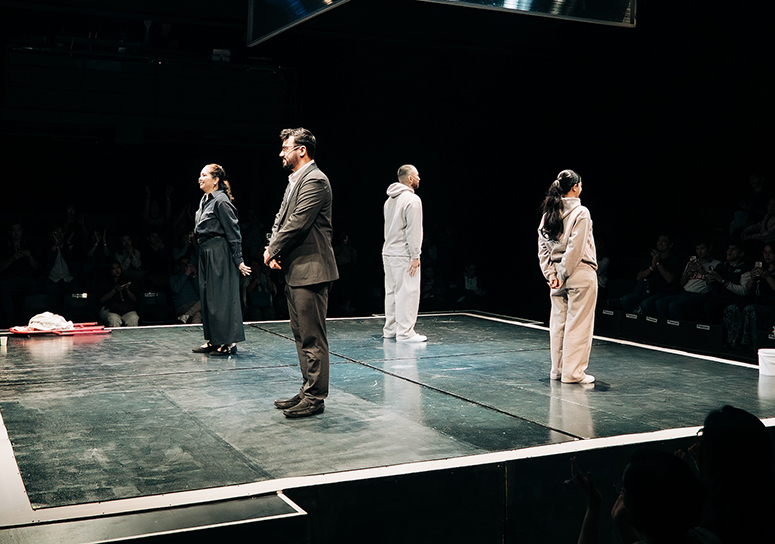
Here, the subjects are Connie Hall (Sue Ramirez) and Tristan Frey (Brian Sy), who have volunteered at a pharma lab’s clinical trials for an antidepressant under the supervision of Dr. Lorna James (Cathy Azanza-Dy) and Dr. Toby Sealey (Dean Daniel Rosen), who impose strict rules like no contact with the outside world and no sex between them to control the conditions while monitoring their reactions as doses are increased.
What they failed to anticipate was that the duo would fall in love, or at least think they are, after they manage to break the rules. Ramirez and Sy convincingly portray the slow burn from flirtation to eventual consummation. Ramirez, as the questioning psych student, gives the character the requisite uneasiness where intellectual skepticism and emotional vulnerability coexist, while Sy essays Tristan’s drifter spontaneity and openness in committing to the relationship. Connie is forever asking whether it could really just be the effect of the drug, while Tristan is oblivious and just goes with the flow.
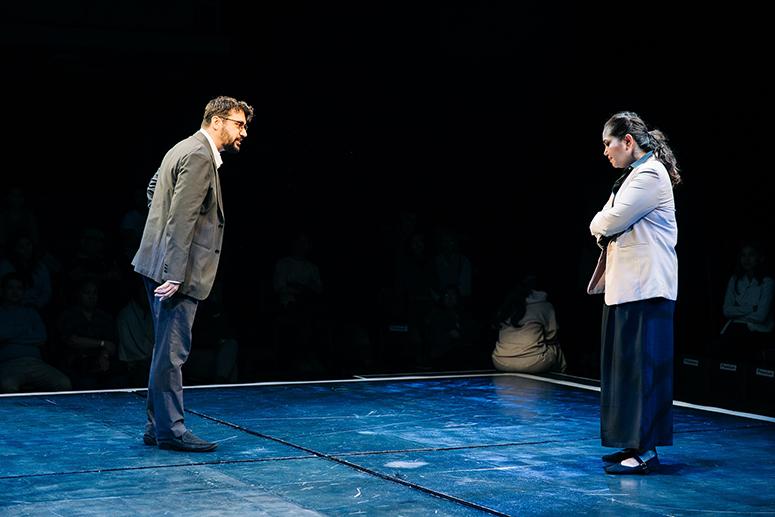

Another complication arises when they find out that one of them is on a placebo, confounding the couple even more. The supervising doctors, on the other hand, up the stakes, revealing they are ex-lovers and that Dr. James actually has a history of depression, giving her both an advantage and a disadvantage in handling the trial. Azanza-Dy skillfully navigates the character’s conflicted nature, trying to keep an objective professional authority but showing cracks of frailty and moments of empathy with the volunteers. Rosen makes the big pharma boss more relatable with the casual air of someone who genuinely believes in the cause of their company and how their product can help, even as Dr. James challenges him and verbalizes her cynicism about its efficacy.

It’s quite an engaging thriller as the story unfolds in scenes shifting swiftly between characters, time and emotional states that Director Sarah Facuri directs with acuity, turning debate into skillfully orchestrated theatrical conflict in the flesh.
The “petri dish” of human guinea pigs is conjured through a stark white square stage in the round designed by D Cortezano, with just two chairs and buckets on opposite ends, much like a boxing ring for intellectual and emotional warfare. Panels crisscross above as different ideas on love, brain chemistry, and psychology intersect and are tested directly against each other. It’s an enlightened choice that puts the focus on the actors and the drama in beautifully crafted tableaus, with nothing to distract from the incisive, rapid-fire dialogue and caustic wit as provocative concepts are postulated.

The lighting design by Jethro Nibaten complements the bare-bones set and follows the narrative from clinical detachment to the flares of emotional intensity, from a controlled environment to an unstable one. Carlos Hombrebueno supports the drama with his soundscape of beeping monitors that evoke a cross between medical and sci-fi sounds that become theatrical manifestations of the characters’ internal states and their encounters with one another. The sound quality is optimum, with every word clear in the intimate venue that heightens the immersion of the audience, who become virtual observers assessing the experiment unfolding.
Watching it brings many questions to light, the more obvious one being what is real and what is not in how we feel, but one thing clear is that biology alone is insufficient to provide explanations and solutions since we are much more complex than that and although drugs can ease suffering, we also have to be aware of their limits and should not abuse them to “cure” feelings such as sadness or uncertainty that are fundamental to human experience. In any case, Prebble warns that “it’s difficult to apply a consistent diagnostic model to something like human emotion, and human distress particularly, which is a natural part of being alive.”

WATCH: Pixar Summer Fest adventure at Hong Kong Disneyland
August 10, 2026