

A star-studded post-apocalyptic thriller
A post-apocalyptic thriller… from Disney?
If it’s directed by Ridley Scott and stars Jacob Elordi, Margaret Qualley, Josh Brolin and Guy Pearce—absolutely, why not?
The Dog Stars, released by Disney-owned 20th Century Studios and based on a 2012 novel by Peter Heller, is set in a bleak world leveled by a deadly flu epidemic. We open on beautiful Colorado mountainsides (actually shot in Italy’s Dolomites), where we zoom in on Hig (Elordi), a mechanic who’s lost his wife to the pandemic but kept his dog, Jasper; and Bangley (Brolin), an ex-military survivalist who shoots first and asks questions later. They hold camp at an abandoned airstrip in the mountains, and Hig is intent on picking up survivor radio signals during his frequent food and medicine recon flights (delivering much of these to a band of surviving Mennonites and their kids led by Benedict Wong). Bangley is intent on keeping “Reapers” at bay—tribes of tattooed maniacs who somehow survived all the flu strains and are intent on invading safe spaces and taking everything they can.
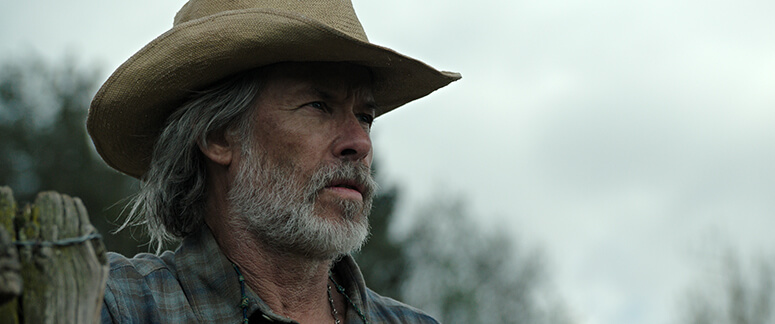
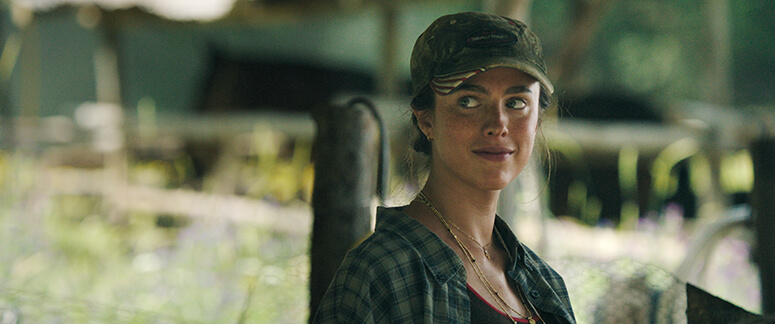
Enter Margaret Qualley and Guy Pearce, a father-daughter who’ve holed up in a farmhouse in adjacent mountains. Hig emergency-lands his Cessna there, and a whole other adventure opens up for the survivors.
In a Zoom presscon, we heard from the director and the males of this cast about making a hopeful post-apocalyptic thriller—yep, for Disney.

Josh and Jacob, the dynamic between the two of you is so much fun. How did you land on playing that?
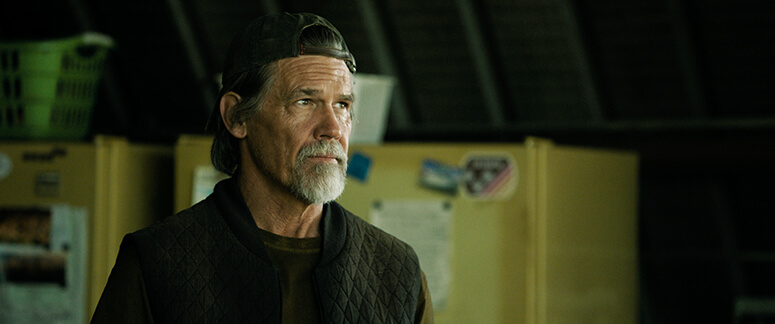
Josh Brolin: I mean, Ridley says it’s The Odd Couple (with Jack Lemmon and Walter Matthau), and I like that reference.
Ridley Scott: To be clear, The Odd Couple, where Matthau says, “If you clean the ashtray one more time, I’ll brain you with it.” (Laughter)
Josh: I think (Jacob and I) kind of hit it off right away, and Ridley creates a design on set that’s a little dangerous and a little elusive, so you don’t really know what direction you’ll get. You’re kind of rewriting and experimenting while you’re doing it, so we had our own thing, we started to really rely on each other, and I think that comes across in the movie.
The dynamic is funny at times. Tell us about finding the humor amid all the grief and darkness of the film.
Ridley: Unless you’re doing Macbeth, you have to always try and find the element of humor—providing it’s not humor for humor’s sake, it’s real.
How was working with Margaret Qualley?
Guy Pearce: The interesting thing for me playing her father (“Pops”) was, on some level, he’s a father who doesn’t really know her, other than just to try and protect her. The mother has passed away, and he’s left to raise this daughter. So he sort of really digs his heels in, in this kind of protectionist sort of way.
Once he starts to trust Hig and see that she has a connection to him, I think Pops then sort of softens a little, and some of who he used to be comes back. And, yes, I become very funny. I’m the comic relief.
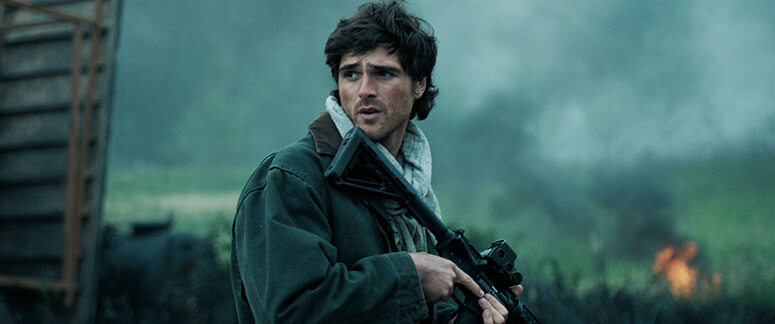
Jacob, there were multiple dogs playing Jasper. You’ve said that sausages were the key for acting between human and dog?
Jacob Elordi: Yeah, actually. They respond way better to cold cuts and things like that. But you know, you use both effectively.
Did that also enhance your performance, having something that you share a screen with that’s kind of unpredictable?
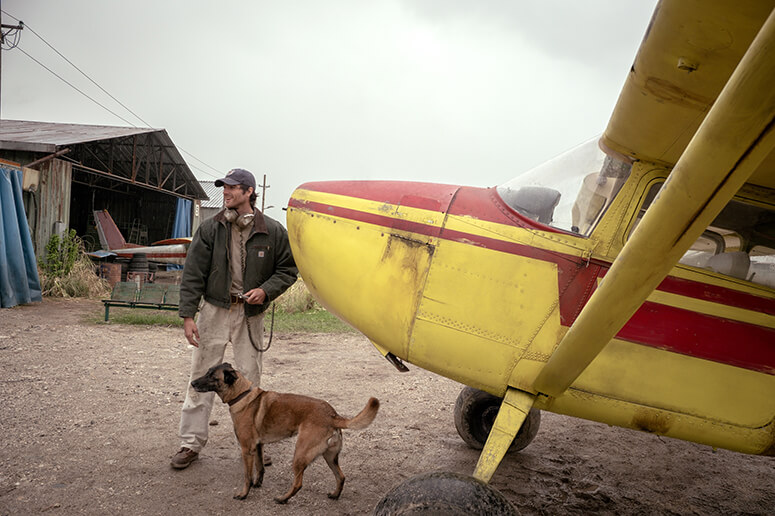
Jacob: I liked it very much, and I mean, no more unpredictable than working with Josh or Guy… (Laughter)
Guy: in a good way.
Jacob: In a great way, in a way that’s spontaneous and, uh, wonderful. They’re such talented dogs. (Laughter)
Your relationship with Margaret’s character is built on this sort of shared grief. How did you explore that behind the scenes?
Jacob: Margaret and I actually spent a lot of time not on set, kind of with the script and trying to personalize it and chop and change it and make it more real to ourselves. And we worked on that relationship, tried to inject some reality into those moments, I guess. But she’s such a great actress, a great collaborator.
Peter Heller’s book obviously predates COVID 19. What were your feelings about working on something closer to reality than we might have thought?
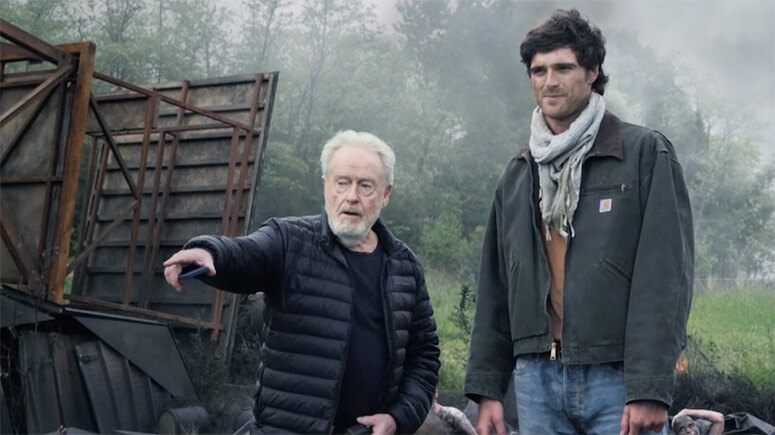
Ridley: Yeah, I didn’t want to make it into a documentary. It does need to, in loose terms, entertain. But “entertain” should also challenge you. You can’t just sit there grinning at some stupid movie. But it’s great when it kind of starts telling you something, the film starts speaking to you, as a platform. But I try and find, on top of that, the human behavior, which is the empathy, the sympathy, the humanity. So I try and hide what I think underneath, because I tend to get very dark, being Celtic.
Jacob, you’ve called Ridley a pioneer of cinema and a big part of what drew you to the project. What were some moments on set where you really felt like you were witnessing that spirit firsthand?
Jacob: Honestly, it was every single day. It’s like he mainlines the shooting process, just like that (claps); it just comes to life in the morning. It’s like nothing I’ve seen before, really.
How does he do that?
Ridley: It used to be Marlboros, then it became cigars. (Laughter)
What was the most memorable behind-the-scenes moment for you on set?
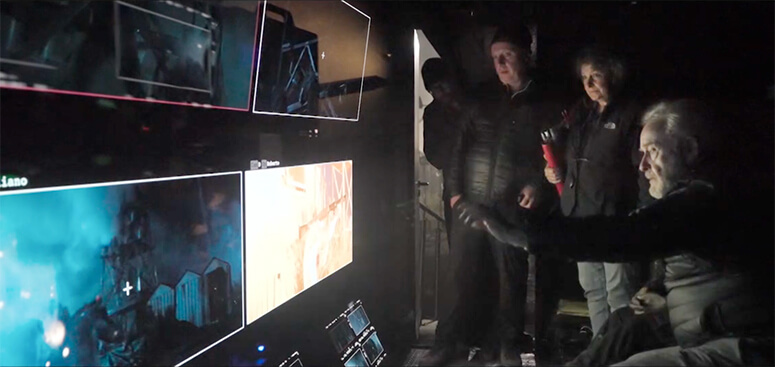
Josh: Before Margaret came in, Jacob and I had already figured out a rhythm. And when Margaret came on set, I remember her being a little shell-shocked because whatever that chaos was that we were reactive to in the beginning became an addictive process, because you never knew how a scene was going to go, no matter how much prep you did, and you were like, “Oh, I think I understand the scene” and all that. And then Ridley would say, “Why don’t we cut this? Why don’t we do this?” And in the beginning, you’re like, “This is chaos! This is going to be horrible!” And then it turns out that it’s like the most nutritious feeling creatively.
Ridley: I used to film documentaries with Don Pennebaker and Richard Leacock. It’s documentary (style), the natural process. I do like to try and shape the box and make it natural.
I could sit down and do a traditional rehearsal: round table, read it. But when I want something else, I’m going to throw the matchstick into the gunpowder.
Josh: I don’t think anybody’s as good at making things dynamic as he is.
He’s somebody who is enough of a visionary but also has the ability to manipulate his actors without his actors getting their tail between their legs, you know what I mean? So, he inspires but he’s also getting what he wants, and you’re happy about it; you know he’s manipulating you and you’re happy about it.
How do you develop the script so that we want to spend time with these characters in a post-apocalyptic world?
Ridley: Well, the hardest thing to do is adapt a script, (but) when it’s there, it’s the blueprint of the building you’re about to do. And so I spend a lot of time sitting with the writer, and I’m good at saying “This is getting boring, milestone… bit boring, milestone, adjust, adjust...” It’s like doing dressage with a great writer.
Ridley, you said you changed things from the novel, like the third act with the more unhinged scenes with Allison Janney’s character, which is so fun.
I’d watched the film I, Tonya, and I said, “Who the hell is playing Mom?” Allison Janney. So I then met with Allison. I thought she was actually pretty glamorous. So I made her into an old Pan American airline stewardess, and there’s a lot of anger there, and so evil…
The novel is so poetic, especially its descriptions of nature. How did you translate that poetry into the visual language of the film?
Ridley: The poetry of any film, whether it’s a horror movie or whether it’s a comedy, is the photography. The problem, frequently, is that people don’t know where to put the camera.
* * *
The Dog Stars is now showing in IMAX and other cinemas.

WATCH: Pixar Summer Fest adventure at Hong Kong Disneyland
August 10, 2026