

Remembering Nora Aunor
To remember Nora Aunor, whose first death anniversary was observed on April 16, is to remember greatness. She was not perfect, not at all, like all big stars are, but her imperfection made her a great actor with unrehearsed familiarity in the realm of subdued, profound performances both onscreen, on stage, even in recording.
At 4’11 1/2”, she stood like a giant. She made more than 170 films, mesmerized SRO crowds in both her concerts here and abroad and stage plays (Minsa’y Isang Gamu-gamo, DH, and Trojan Women), pioneered longevity in hosting the variety show Superstar for 22 years, and recorded 40 English and 13 Tagalog albums and 238 singles. Her singles sold like the proverbial hotcake that, she told me in an interview, she had to record almost every day and would find herself sleeping at the foot of the piano many times because of fatigue.

On top of that, her kindness was legendary—to the point of giving money to her fans. “I give without counting the cost. Even if I give it all, specially to my friends,” she told me in the vernacular in another interview. Not only that, she allowed her fans to sleep in her house that, “many times I had to tiptoe when I came home late from shooting. The sleeping fans, because there were many of them, spilled over to the floor of my house. I still know who snored the loudest and who snored like a princess.”
Her accomplishments were like the myriad stars in the sky. In fact, she was a Superstar. And her legacy in Philippine pop culture was all the more cemented when Nora became a National Artist for Film and Broadcast Arts in 2022, the highest national recognition for Filipino artists.
In my list, here are my five favorite Nora Aunor films.
Himala
CONTINUE READING BELOW

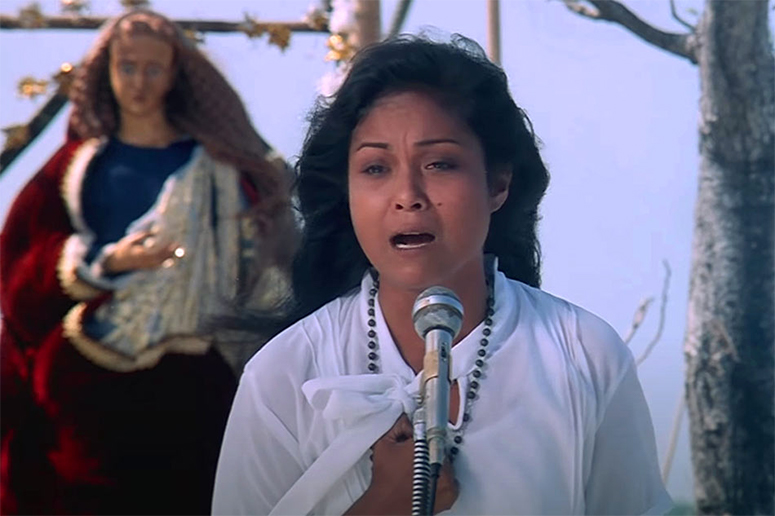
Himala (1982, directed by National Artist Ishmael Bernal), considered as one of the most important films in Philippine cinema. As Elsa, Nora was a young faith healer from drought-stricken Cupang and the aridness of the setting could actually be felt in her terse dialog heavy in emotion. The suffering among the people in Cupang was condensed in her eyes—all because Ate Guy, her moniker, brilliantly captured raw emotions in her eyes. Even temporary joy, or a make-believe miracle, was translucently present in her gaze that was innocent and deceptive at once.
Deceit had never looked better and more convincing than when Nora had them in her voice and eyes in Himala. Her silence was formidable. The iconic image of a young woman in a white dress genuflecting before a leafless, lifeless tree on a hill, has become a symbol of pop culture.
Bona
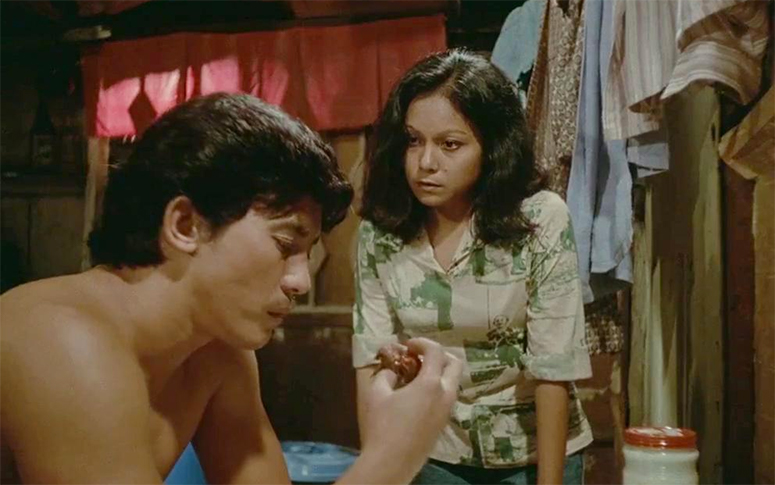
In Bona (1980, directed by National Artist Lino Brocka), Nora married obsession and elegance in several frames. Bona was not poor but she chose to settle with Gardo, a bit player, in a slum area all because of love. She was an obsessed fan. Nora gave life to Bona in every turn—first with a stubborn heart that only knew service to Gardo, proving that a heart that loved was a heart that followed rules blindly. Then, with a heart that was spurned, she became like a silent mad dog in her vengeance, throwing a casserole pot of boiling water to half-naked Gardo. Anger and anguish were seen in her eyes, fierce like fire.
Nora’s acting is a fountain of life lessons. Again, her expressive eyes are the classroom in Bona from which the Superstar gave a masterclass on pain, delusion, reprisal and freedom.
Minsa’y Isang Gamu-gamo
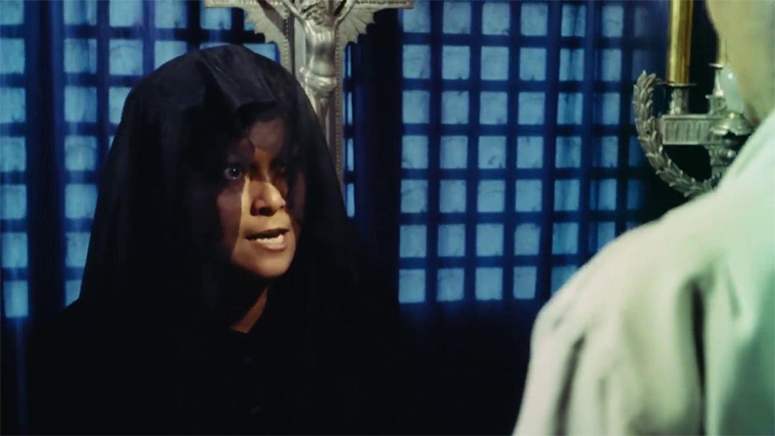
“My brother is not a pig!” is an iconic line from the script of Marina Feleo-Gonzales, who recently passed away, for the movie Minsa’y Isang Gamu-gamo (1976), directed by Lupita Aquino Kashiwahara. As Corazon dela Cruz, a nurse ready for employment in the US, Nora delivered this line with utmost conviction and stirring emotion to protest the killing of her brother by American guards who mistook him for a wild boar while flying a kite in an area near a US military base in the Philippines.
Minsa’y Isang Gamu-gamo was a hallmark film for Nora as it also defined her no-fear persona because the film is a powerful critique of American military presence in the Philippines. Like “Walang himala!” in Himala, from the script of National Artist Ricardo Lee, “My brother is not a pig” is recognized as one of the most memorable and classic lines in Philippine cinema history. Nora breathed life to this line that even Gen Z kids are familiar with this because Nora and the line had been subject of memes in social media.

Ina Ka ng Anak Mo
As Esther, a social worker and a barren wife, in Ina Ka ng Anak Mo (1979, directed by Lino Brocka), Nora was a desolate, incensed picture of a woman cheated on by her husband (Raoul Aragon) who had a one-night stand with his mother-in-law (Lolita Rodriguez) and impregnated her. When she uncovered the truth, Nora gave a tour-de-force performance with just a repetitive line said sparsely: “Hayup! Hayup! Hayup!” And that was enough to put Nora in the same league as the almost peerless Lolita Rodriguez in acting bravura.
That scene was, for me, one of the brilliant moments in Philippine cinema. Nora's restraint in this film is the spadework of both a genius and a legend. Ina Ka ng Anak Mo further cemented Nora’s quiet intensity and depth on screen. The acting prowess displayed in Ina Ka ng Anak Mo was so formidable that Nora and Lolita Rodriguez tied for the Best Actress award and Raoul Aragon won the Best Actor plum at the 1979 Metro Manila Film Festival.

Thy Womb
Lyrical paeans resided in Nora's countenance in Thy Womb (2012, directed by Brilliante Ma. Mendoza) when she played Shaleha, an infertile Badjao midwife who helps women in her community. Watch Nora in her sincere, quiet desire to find a second wife for her husband and your heart will sink in the placid waters of the fishing village in Tawi-tawi, the setting of the film. She was silent in Thy Womb yet she exploded inside you.
Nora, proven and tested, shone her brightest in films bearing seeds of social realism. It would be perhaps obscene to give Nora more speaking lines in Thy Womb because what the words could not say, her eyes, the signature La Aunor armament in the acting battleground, telegraphed to the viewers’ a gamut of emotions. So you feel her pain, her joy, her longing, her dignified submission to the test of circumstances not because she uttered them but because her eyes allowed you to see and feel those emotions in many a frame.
Thy Womb is another remarkable movie that proved she was a legend if not at all peerless—even after her death. She could be in sepulchral silence in a film yet her stare could wound or drown or set on fire the most delicate scene.
Hail the country’s Superstar!
